Middle East Erupts: US-Israel-Iran War Intensifies with Drone Strikes & Global Fallout

Published 9 hours ago4 minute read
Pelumi Ilesanmi
Pelumi Ilesanmi
Middle East Erupts: US-Israel-Iran War Intensifies with Drone Strikes & Global Fallout

The Middle East has plunged into a severe and rapidly escalating conflict following a joint US-Israeli strike that targeted and killed Iran's Supreme Leader, Ayatollah Ali Khamenei, on Saturday. This decisive action, dubbed "Operation Epic Fury" by President Donald Trump, was reportedly triggered by critical CIA intelligence revealing Khamenei's secret meeting at his palace in Tehran. The attack, which also eliminated other senior Iranian officials and members of Khamenei's family, aimed to halt Iran's nuclear ambitions and significantly weaken the regime. Despite Trump's boasts of success and a projected four-week timeline for the conflict, public approval for the strikes remains low in the US, with just 27% supporting the action, and concerns are mounting over the potential depletion of American missile and interceptor stockpiles if the war is prolonged.

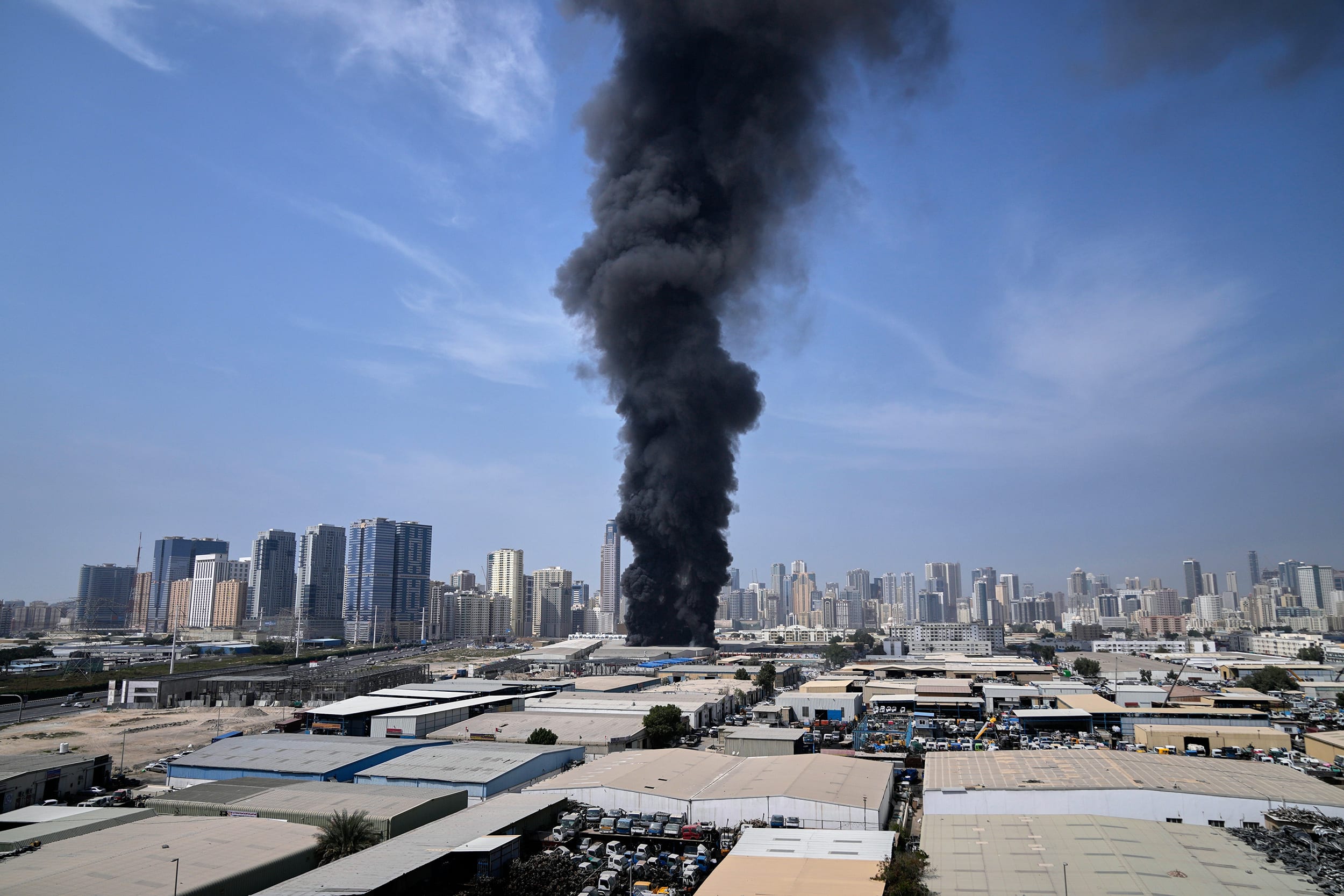
In a furious and widespread retaliation, Iran launched what it vowed would be its "most intense offensive operation in history," adopting a "scorched earth strategy" across the Middle East. Ballistic missiles and suicide drones pounded numerous targets, including major civilian and military infrastructure. Dubai was hit, with its airport, the iconic Burj Al Arab and Palm Jumeirah hotels, and the Jebel Ali Port suffering damage. Kuwait saw strikes on its international airport and Ali Al Salem airbase. Bahrain's US Navy 5th Fleet headquarters and the Crowne Plaza hotel were targeted. Abu Dhabi's airport and a French naval base were struck, while Qatar's capital Doha and energy facilities were also hit. Saudi Arabia's crucial Ras Tanura oil refinery was forced to shut down after a drone strike, marking a significant escalation. In Israel, Tel Aviv and Beit Shemesh were struck by Iranian missiles, resulting in at least 10 deaths, including nine in Beit Shemesh. An oil tanker off Oman's Musandam peninsula was also attacked. The Pentagon, however, denied Iranian claims of hitting the USS Abraham Lincoln aircraft carrier. Civilian casualties are tragically mounting, with three deaths in Dubai, one in Kuwait, two in Abu Dhabi, and an estimated 555 in Iran according to the Iranian Red Crescent, alongside three US service members killed and five wounded.

The widespread bombardment has had severe global repercussions, particularly for travel and commerce. Airspace closures over the United Arab Emirates, Qatar, Israel, Iran, Iraq, Kuwait, and Bahrain have left hundreds of thousands of travelers stranded, leading to nearly 6,000 flight cancellations and 30,000 delays worldwide. The UK government is drawing up plans to evacuate up to 300,000 British nationals, with 94,000 already registering their presence, many of whom were on holiday or are expats in the UAE. Evacuation options, including overland routes to Saudi Arabia, are being explored. Furthermore, Iran's effective closure of the Strait of Hormuz, a critical oil shipping lane through which 20% of the world's oil and 25% of liquefied natural gas passes, has caused oil prices to surge by 13%. This disruption threatens to push fragile economies closer to recession, with warnings of record fuel prices and higher electricity bills. Insurers are now declining to cover ships transiting the strait, leading to 150 tankers dropping anchor.

Internationally, the conflict has exposed diplomatic fractures. The UK, under Sir Keir Starmer, initially faced criticism for its refusal to openly back the US-Israeli strikes, with a Republican US senator branding the stance "pathetic." However, Starmer later granted the US permission to use British bases for "specific and limited defensive purposes" against Iranian missile sites, emphasizing the UK would not join offensive action. This decision followed a suspected Iranian drone strike on the British RAF Akrotiri base in Cyprus, which caused minor damage, and an RAF Typhoon successfully shooting down an Iranian drone headed for Qatar. The European Union was criticized for its slow reaction, although President Ursula von der Leyen eventually convened an emergency meeting and expressed "renewed hope" for the Iranian people following Khamenei's death. Spain, led by Foreign Minister José Manuel Albares, stood out as the only EU nation to openly condemn the US-Israeli "unilateral action" as lacking international legal backing, while also condemning Iran's retaliatory attacks. Meanwhile, Israel has mobilized 100,000 reservists and vowed "nonstop" strikes, targeting Hezbollah leaders in Lebanon.

Adding a controversial layer to the crisis, an online gambler operating on Polymarket, under the username "@Magamyman," made nearly half a million dollars by accurately betting on the timing of the US strike on Iran. This generated widespread outrage and accusations of insider trading on social media, prompting calls for greater transparency and regulation of prediction markets, especially concerning national security events. Polymarket had previously garnered controversy by refusing to pay out bets related to a US "invasion" of Venezuela, defining an invasion strictly as military operations intended to establish control, unlike the recent "strike" that matched the betting criteria.

The immediate aftermath of the US-Israeli strike on Iran has thus unleashed a torrent of consequences, from human suffering and economic instability to profound shifts in regional dynamics and international diplomacy, with the path forward remaining highly uncertain.

Loading...
Loading...
Loading...

You may also like...