Meta Connect 2025 Unveils Revolutionary Tech: All New Products Revealed!
Meta Connect 2025 showcased a significant shift for the tech giant, spotlighting a new generation of AI-powered smart glasses including the innovative Meta Ray-Ban Display, the athletic Oakley Meta Vanguard, and the enhanced Ray-Ban Meta Gen 2. The event underscored Meta's commitment to practical, buyable wearables and a robust supporting ecosystem, marking a pivotal moment in its hardware strategy.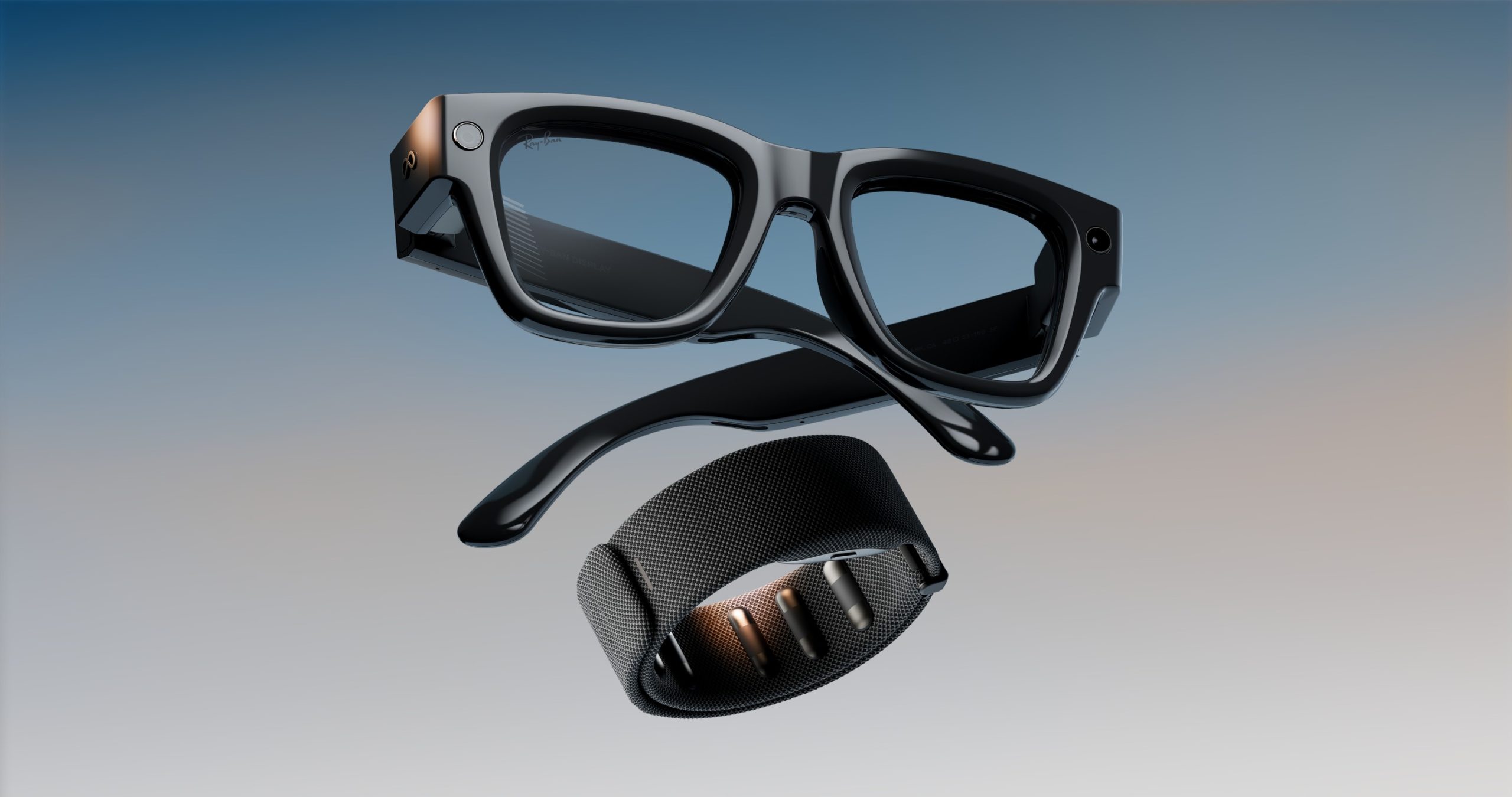
Meta Connect 2025, held from September 17–18, marked a pivotal shift for the technology giant, moving away from a singular focus on the distant metaverse to a more immediate and practical vision centered on AI-powered smart glasses. Mark Zuckerberg explicitly characterized the event as “entirely glasses-focused,” highlighting a comprehensive lineup of products designed for contemporary use. This strategic pivot unveiled three distinct models of smart glasses—the Meta Ray-Ban Display, Oakley Meta Vanguard, and the Ray-Ban Meta (Gen 2)—alongside significant advancements in its broader ecosystem, including Horizon TV and the foundational Horizon Engine.
Leading the new wave of wearables is the Meta Ray-Ban Display, codenamed Hypernova, representing Meta’s first smart glasses to incorporate a built-in color display. Positioned as a bridge between current AI glasses and future fully immersive AR headsets, these glasses maintain a classic, stylish Ray-Ban aesthetic, deliberately avoiding the bulky designs that hindered earlier smart glass adoption. This approach aims to gently introduce users to in-lens displays, paving the way for more advanced augmented reality experiences. The standout feature is a small, high-resolution display projected onto the right lens, which provides quick, context-aware information such as messages, live captions, translations, navigation cues, and even acts as a camera viewfinder. This display seamlessly disappears when not actively in use, ensuring an unobstructed field of vision.
Interaction with the Meta Ray-Ban Display is revolutionized by the accompanying Meta Neural Band. This innovative, water-resistant bracelet reads neural signals from the wearer’s forearm, enabling intuitive control through subtle finger movements, pinches, swipes, taps, or even mimed handwriting for communication. Integrated with Meta’s upgraded AI assistant, the glasses can answer queries, guide through recipes, or identify objects via the onboard camera. Technically, the display boasts an impressive 42 pixels per degree, surpassing Meta’s consumer VR headsets in sharpness, and achieves up to 5,000 nits brightness for clarity in diverse lighting conditions. Other specifications include a 12MP camera with 3X zoom, six microphones, and open-ear speakers. The glasses offer six hours of mixed use, extendable to 30 hours with the charging case, while the Neural Band provides 18 hours of battery life and an IPX7 water resistance rating. Though slightly heavier by approximately 20 grams, they preserve the iconic Ray-Ban style and will be available in black and tan, with options for prescription and Transitions lenses through a partnership with EssilorLuxottica. Priced at $799 bundled with the Neural Band, sales for the Meta Ray-Ban Display commence on September 30 in the US, with a global rollout planned for early 2026.
For athletes and fitness enthusiasts, Meta introduced the Oakley Meta Vanguard. These smart glasses prioritize durability, comfort, and performance, featuring Oakley’s distinctive wrap-around design engineered for secure wear during strenuous activities. With an an IP67 rating, they are sweatproof, dust-resistant, and can withstand brief water submersion. Weighing 66 grams, they come with three swappable nose pads for a customized fit and are compatible with helmets and hats, making them ideal for cycling, running, and outdoor training. The Oakley Meta Vanguard integrates with leading fitness platforms such as Garmin watches and bike computers, displaying live stats like speed, heart rate, and distance via Meta AI, and supports Strava for comprehensive workout tracking. A notable innovation is automatic video capture, which records short clips upon hitting predefined milestones (e.g., specific distance, new speed, altitude gain), compiling them into a highlight reel enhanced with data overlays. The glasses are equipped with a 12MP wide-angle camera offering a 122-degree field of view, capable of capturing 3K stabilised video. Audio is managed by open-ear speakers that are 6 decibels louder than the previous Oakley model, complemented by a five-microphone system optimized for wind noise reduction, ensuring clear calls and recordings on the move. The Oakley Meta Vanguard is priced at $499, with pre-orders currently open and shipping scheduled to begin on October 21.
The Ray-Ban Meta (Gen 2) builds upon the success of Meta’s popular first-generation smart glasses, addressing key user feedback regarding battery life and camera performance while retaining the beloved Ray-Ban aesthetic. Meta has also strategically adjusted pricing, positioning the first-generation model at $299 and the new Gen 2 starting at $379, establishing a clear tiered offering. This second generation boasts significantly improved battery life, now lasting up to 8 hours (nearly double its predecessor), with the charging case providing an additional 48 hours and supporting fast charging to 50% in just 20 minutes. The camera has been upgraded to a 12MP wide-angle lens with a 122-degree field of view, capable of capturing stunning 3K Ultra HD video at 60 frames per second with HDR. It also includes 32GB of local storage and an IPX4 water resistance rating for enhanced daily practicality. Software enhancements like Hyperlapse and Slow Motion video are slated for rollout for both new and older models. A new AI-driven Conversation Focus feature will reduce background noise to clarify voices, also coming to earlier versions via software updates. Live translation capabilities have expanded to include German and Portuguese. Launched immediately after the keynote on September 17, the Ray-Ban Meta Gen 2 is available starting at $379 in the US, Canada, and the UK, with Mexico, India, and Brazil to follow later in the year, offered in classic and new frame styles like Wayfarer, Skyler, and Headliner.
Beyond hardware, Meta introduced several ecosystem-wide advancements to enhance its wearable experiences. Horizon TV is a new entertainment hub integrated into Quest headsets, consolidating popular streaming applications such as Disney+, ESPN, Hulu, Prime Video, YouTube, and Twitch. It also features exclusive 3D movies from Universal and Blumhouse that leverage spatial effects, expanding into the user’s physical space. Horizon TV supports Dolby Atmos audio and will soon incorporate Dolby Vision for superior visuals, transforming Quest headsets into versatile entertainment devices. Furthermore, Hyperscape Capture, an early access app for Quest 3 and Quest 3S owners, allows users to scan their physical surroundings and rapidly convert them into interactive digital worlds—a demo illustrated this process taking only about five minutes. This innovation simplifies the creation and sharing of mixed reality content. Finally, the Meta Horizon Engine was revealed as Meta’s proprietary game engine, superseding Unity for its metaverse endeavors. This engine harnesses AI prompts to streamline VR world creation and now accommodates up to 100 participants in a single virtual space, a fivefold increase. This strategic move underscores Meta’s commitment to long-term metaverse development and making VR creation more accessible.
Meta’s new product lineup clearly embodies a tiered strategy, with each model meticulously designed to cater to different user segments, from fashion-conscious consumers seeking integrated AI features to performance-driven athletes and early adopters desiring advanced heads-up displays. This approach, offering choices across various price points, aims to broaden Meta’s market reach and build sustained trust in its wearable technology. Meta Connect 2025 solidified the company’s vision of AI glasses as the cornerstone of its future hardware strategy, emphasizing not just individual devices but a robust, evolving ecosystem powered by services like Horizon TV and Horizon Engine, thereby making its advanced technology more integral and useful in daily life.