Kogi Election Fury: Opposition Cries Foul as APC Dominates LG Polls!
The recent local government elections in Kogi State have drawn severe criticism from opposition parties and observers, who allege widespread irregularities and voter disenfranchisement, despite the ruling APC winning all seats. While KOSIEC and state officials lauded the polls as credible and transparent, opposition figures described them as a sham and a selection process.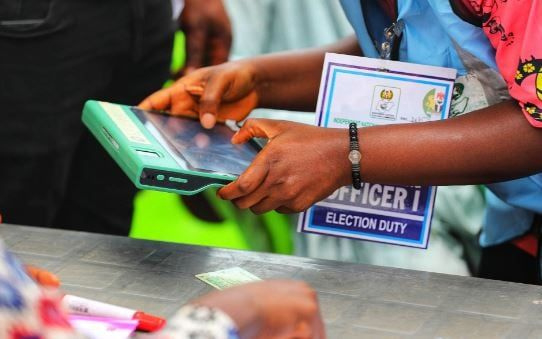
The recent local government elections held on Saturday in Kogi State have ignited a fierce debate, with opposition parties and election observers strongly faulting the conduct of the exercise.
Despite these widespread allegations of irregularities, inadequate election materials, and voter disenfranchisement, the ruling All Progressives Congress (APC) achieved a clean sweep, securing all 21 chairmanship seats and 239 councillorship positions across the state.
Opposition parties vehemently described the polls as a sham, arguing that the results did not genuinely reflect the will of the electorate.
A member of the Action Democratic Congress (ADC), Babangida Rimi has labeled that the election is a “kangaroo election” and announced his party’s intention to challenge the outcome in court.
He alleged a deliberate withholding of voting materials in many polling units, particularly in areas where the APC was perceived to lack ground support.

Rimi further criticized the Kogi State Independent Electoral Commission (KOSIEC) for conducting an election that denied voters the fundamental right to elect their representatives, characterizing it as a “selection, not election.”
The ADC chairman for Lokoja Local Government Area,Muhammed Hadi Lawal echoed that these concerns as express shock at the electoral process.
He specifically alleged that election materials were only supplied to a single polling unit in Ward A of Lokoja, leaving the remaining nine wards in the council area entirely without materials.
Lawal lamented that this alleged absence of materials frustrated a large number of eager voters who had turned out to cast their ballots, describing the situation as disappointing and detrimental to democracy.
In a separate interview, Muhammed Kabir, the Kogi State chairman of the Zenith Labour Party (ZLP), described the entire exercise as a “selection process” rather than a genuine election.
He asserted that such practices are common among ruling parties, accusing the APC of deceiving itself into believing it has no significant opposition.
Kabir emphasized that his party’s decision not to challenge the process should not be misconstrued as an endorsement of its credibility, stating unequivocally, “In simple terms, there was no election, and what happened on Saturday cannot pass for an election. It was simply a selection process.”
Adding to the criticism, Ambassador Idris Ozovehe Muraina, the Executive Director of the Renaissance Care and Empowerment Foundation (RECEF), urged KOSIEC to improve its management of local government elections.

Muraina reported that observers deployed by his organization across the state found widespread absence of election materials in various polling units, warning that this anomaly directly contributed to the disenfranchisement of eligible voters.
While acknowledging some improvements compared to previous local government elections in the state, Muraina stressed the critical need for further enhancements to strengthen the electoral process and boost public confidence in the system.
These strong allegations from opposition figures and election observers stand in stark contrast to the views expressed by the state government and the electoral commission. Governor Ahmed Usman Ododo praised the election as free, fair, and transparent, attributing its peaceful execution to enhanced security measures.
Similarly, Deputy Governor Comrade Joel Salifu, after casting his vote, described the exercise as seamless, transparent, and credible, commending KOSIEC for a smooth and hitch-free process.
The KOSIEC Chairman, Mamman Nda-Eri, also awarded the commission a pass mark for its thorough preparations and conduct of the elections.
He reiterated that KOSIEC was guided by the fundamental principle of respecting the will of the electorate, freely expressed through the ballot.

Nda-Eri clarified the commission’s role, stating, “Our responsibility as an electoral management body is not to decide who wins or loses, but to provide a fair, transparent and credible process through which the electorate can make their choices.”
Despite this defense, the significant disparity between the claims of the ruling party and the opposition continues to fuel controversy regarding the integrity of the elections.