Joel Kinnaman Sounds Alarm on 'Wars of Choice' After Saddam Doc Finale
Joel Kinnaman discusses his immersive role as John Nixon in <em>High Value Target: The Hunt for Saddam</em>, detailing his preparation, the intense experience of working with Waleed Zuaiter as Saddam, and the significant challenges faced during filming in Cairo. He shares how the series profoundly altered his perspective on international conflicts and American foreign policy, advocating for an end to avoidable 'wars of choice' driven by special interests.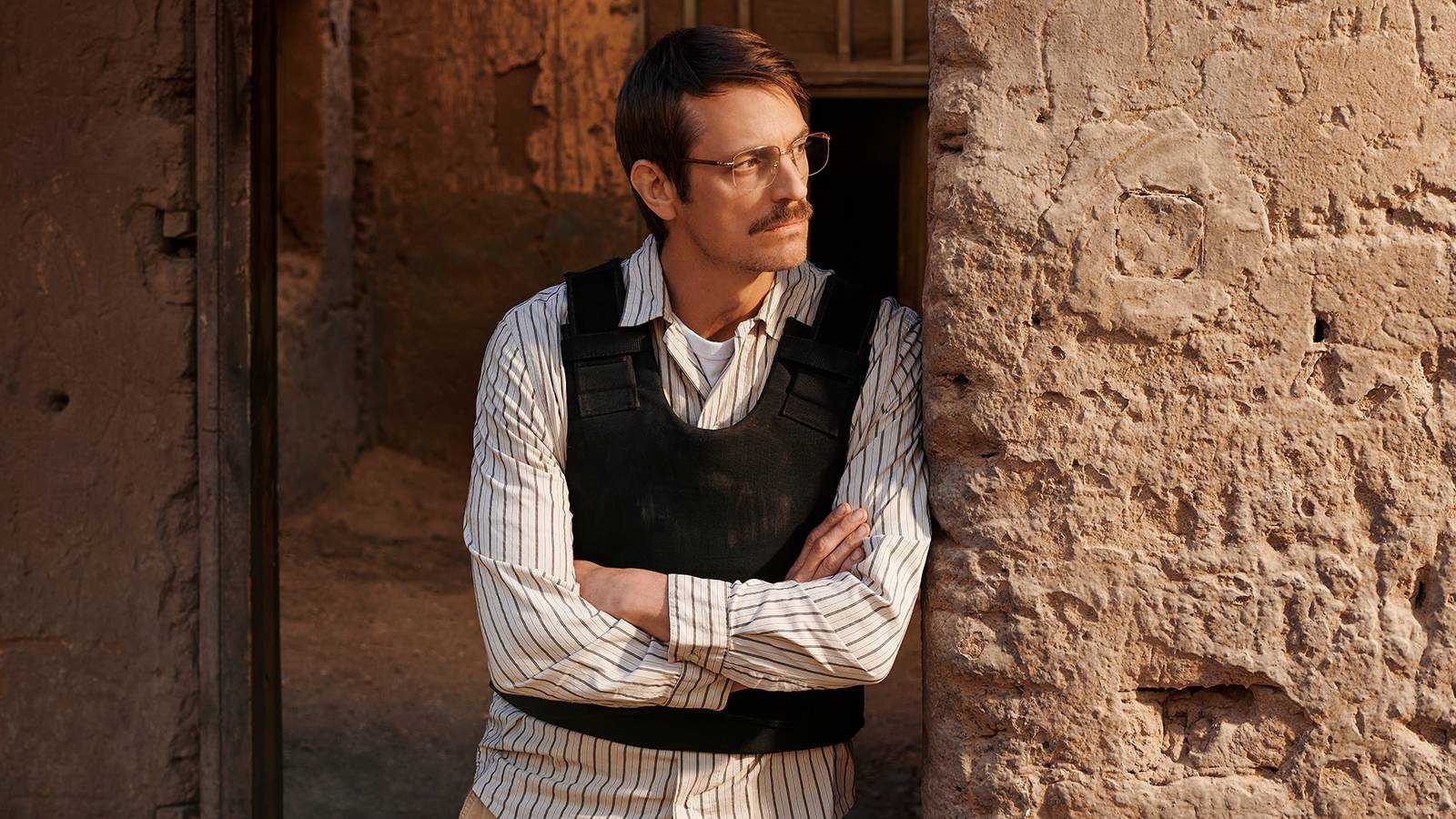
The TNT series High Value Target: The Hunt for Saddam recently concluded its eight-episode run, culminating in John Nixon's (Joel Kinnaman) return to D.C. to brief President George W. Bush, while Saddam Hussein (Waleed Zuaiter) awaited execution in Iraq. The series intimately followed Nixon's involvement in the hunt for Hussein and his subsequent interrogations, which aimed to uncover hidden WMDs but instead offered a nuanced look into the enigmatic dictator's perspective. Joel Kinnaman, in an interview with Collider, delved into his process of embodying the real-life John Nixon, his on-screen interactions with Waleed Zuaiter, the significant challenges of filming in Cairo, and his profound personal takeaways from the project.
Kinnaman emphasized the critical importance of spending extensive time with the actual John Nixon to truly understand his character. He found this particularly engaging due to his own strong fascination with international politics and the Middle East, making their conversations a rich learning experience. For Kinnaman, a pivotal insight into Nixon's essence came from understanding his dedication to his wife, which revealed a deeper layer of his personality. He noted that portraying a real person requires balancing the script's narrative arc with the real individual's unique 'flavor' and thoughts, allowing for a more authentic performance.
Discussing his scenes with Waleed Zuaiter as Saddam Hussein, Kinnaman recounted frequent discussions with John Nixon about these crucial interactions. He described feeling as though he was genuinely 'sitting in a room with Saddam Hussein' for three months, a testament to Zuaiter's powerful portrayal and striking resemblance to the dictator. Despite this intense feeling, the actual filming of these interrogation scenes was completed within the first nine days, contrasting sharply with the longer, more complex shoots involving outdoor sequences with camels, sandstorms, and helicopters. Kinnaman, having been fascinated with Saddam Hussein for many years and the project being long in development, felt well-prepared, yet found Zuaiter's performance to be truly magical, often perceiving him as Saddam himself in certain angles and lighting.
The production of High Value Target in Cairo proved to be one of Kinnaman's most challenging filming experiences. He humorously stated that 'the hardest days were like one to 100,' highlighting the constant difficulties. Logistical setbacks were common, with production frequently losing hours due to issues like generator failures, a reflection of the unique, albeit vibrant, film culture in Egypt. The project also operated on a tight budget, adding extra pressure to achieve ambitious goals with limited resources. Additionally, Kinnaman noted the environmental challenges of filming in Cairo, particularly the pervasive issue of trash, which, while wearing, did not overshadow the positive experiences of meeting incredible people and appreciating the city's charm.
Working on High Value Target profoundly shifted Kinnaman's outlook on international conflicts and American foreign policy. Through extensive research and conversations with experts, he gained a clearer understanding of the mechanisms behind 'tragic wars of choice,' the narratives crafted to sway public opinion, and the underlying power games benefiting special interests rather than normal citizens. While acknowledging Saddam Hussein's monstrous atrocities, Kinnaman highlighted the historical context that America has often cooperated with equally culpable figures. He found Saddam's perspective on the Iraq invasion particularly revealing: Saddam believed 9/11 would unite the U.S. and Iraq against a common enemy, not lead to an invasion, and justified his evasiveness with IAEA inspectors by fearing an Iranian invasion if he definitively proved he had no weapons. Kinnaman underscored the 'two-faceness' of American foreign policy, citing instances where the U.S. supported Saddam then armed his adversaries, concluding that nations should consistently uphold the morals they espouse.
Kinnaman's ultimate takeaway for viewers is a crucial one: these 'terrible wars of choice' are 'completely avoidable.' He asserted that government mechanisms, driven by special interests, allied governments, and the military-industrial complex, push narratives that justify these conflicts, despite their devastating impact on economies, human lives, and global stability. Kinnaman's message implores viewers to recognize these forces and advocate for a departure from such policies, stressing that a democratic system should prevent these unnecessary and damaging engagements.