How One Scottish Woman Ended a Deadly Tradition in Calabar
When the people of Calabar saw twins as a curse, one woman saw them as a miracle, Her story still echoes through Calabar today.
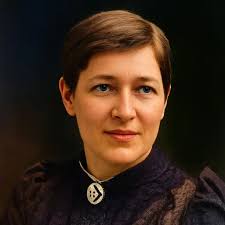
One Woman, Two lives
In the heart of old Calabar, cries of newborns once faded too soon,
Among the Efik people, twins were seen not as blessings but as curses, One was believed to be fathered by an evil spirit, and both were doomed to die.
Then came a fiery-haired woman from Scotland, small in stature, but fierce in faith, Her name was Mary Slessor, and she refused to look away, Where others saw danger, she saw destiny, Where others walked past, she stepped in.
Armed with nothing but courage, compassion, and an unshakable belief that every child deserved to live, Mary Slessor walked barefoot through the villages of Calabar, She picked up abandoned babies, faced angry chiefs, and challenged centuries of tradition, all for the sake of life.
It was the beginning of a revolution of the heart, one woman against a deadly custom.
A Childhood of Struggle
Mary Slessor was born on December 2, 1848, in Aberdeen, Scotland, into a working-class family that knew the meaning of hardship, Her father, a shoemaker, was an alcoholic who often spent his meager earnings on drink, leaving the family hungry and desperate, Her mother, a deeply religious woman, did her best to keep the family afloat and raised her children with strong Christian values.
From the age of eleven, Mary worked long hours in a textile mill to support her family. She received only basic education, attending night school after exhausting shifts at the factory. But what she lacked in privilege, she made up for in resilience. Those early years of toil toughened her spirit and taught her endurance, the same endurance that would one day carry her through the swamps and sicknesses of West Africa.
At home, Mary listened intently as her mother read stories of missionaries who carried the message of hope to faraway lands, Among them, the tales of David Livingstone stirred her deeply. She admired his bravery and devotion, and a quiet dream began to grow in her heart, ‘’one day, she too would go to Africa’’Life in Dundee was grim, but Mary saw it as her training ground to face anythung in Africa.
Walking Barefoot Into Danger
In 1876, Mary Slessor set sail for Calabar, part of present-day Cross River State in Nigeria. At that time, the region was known for its dense forests, sweltering humidity, and powerful tribal systems. To the Efik people, life was deeply spiritual, every illness, birth, or death was tied to unseen forces of the spirit world.
Among their customs was the killing of twins. It was believed that one twin came from a good spirit and the other from an evil one, but since no one could tell which was which, both were condemned. Their mothers were considered cursed and were often banished from the community. The newborns were left in the bush to die of starvation or to be eaten by animals.
To the people of Calabar, it was a way of maintaining spiritual purity. To Mary Slessor, it was unthinkable.
Unlike many missionaries of her time, Mary didn’t stay behind mission walls, She lived among the people, spoke their language, ate their food, and shared their struggles. She cut her bright red hair short, abandoned European dresses, and walked barefoot through the jungle so she could move freely among the villagers.
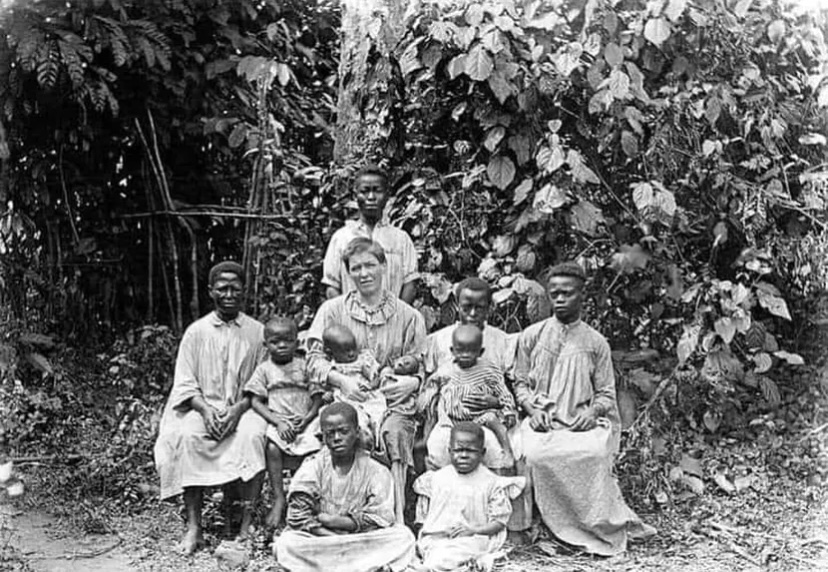
She was not simply preaching Christianity; she was demonstrating humanity, When she first encountered a pair of crying twins abandoned in the forest, she didn’t hesitate. She picked them up, carried them home, and cared for them as her own children. Word spread quickly, the “white woman” had defied the gods, and yet she lived.
That single act began to shift minds, Still her mission was not without danger, Chiefs warned her that she was meddling with sacred customs, Warriors threatened her for defying tradition, Malaria nearly killed her multiple times, and she buried many of her adopted children. Yet, nothing could stop her. “I shall not die,” she once wrote, “but live and declare the works of the Lord.”
Through patience and love, she won the trust of the people,She became not just a missionary, but a mediator, judge, nurse, and mother to the Efik and Ibibio communities. When tribal wars broke out, she would walk unarmed into the midst of battle to plead for peace. When disputes arose, chiefs asked her to sit in council. She had no army, no wealth, and no power only faith And it was enough.
Changing a Culture
Mary Slessor’s influence grew as the people saw her sincerity, Slowly, the old belief about twins began to crumble. Villagers who once hid their twins began to bring them to her compound for safety. She built small huts to shelter mothers and babies, feeding them with what little she had.
Her home became known as the “Mission House of Mercy.” Around her, the sound of laughter and baby cries replaced the silence of death, She trained young girls, taught women new skills, and showed them that their lives and their children’s lives had worth.
Her courage caught the attention of the colonial government, which began to see her as a valuable peacemaker, The British administration appointed her as a vice-consul and magistrate, one of the first women in the empire to hold such a role. But Mary never sought authority; she saw leadership as service, She often said, “The only power I have is the power of love.”
When she wasn’t rescuing twins or settling disputes, she was educating local children and teaching the message of forgiveness and equality, Her work laid the foundation for modern education and social reform in the region.

By the early 1900s, the practice of twin killing had all but vanished in areas she influenced, Mary Slessor had done the unthinkable, She had turned compassion into cultural transformation.
A Legacy That Still Breathes
Mary Slessor served in Calabar for nearly forty years, surviving tropical diseases, loneliness, and loss, She never returned home to Scotland for long; Africa had become her home. She often said she felt more at peace in the villages of Calabar than in the bustling streets of Dundee.
She adopted many local children, including several pairs of twins, raising them as her own, Even when she was frail and sick, she continued to teach, mediate, and comfort the people around her, Her hands trembled, but her heart never wavered.
On January 13, 1915, at the age of 66, Mary Slessor passed away in Use Ikot oku, a village near Calabar, Her death was mourned by thousands, Europeans and Africans alike, She was buried in Nigeria, the land she loved, and her grave remains a site of honor today.
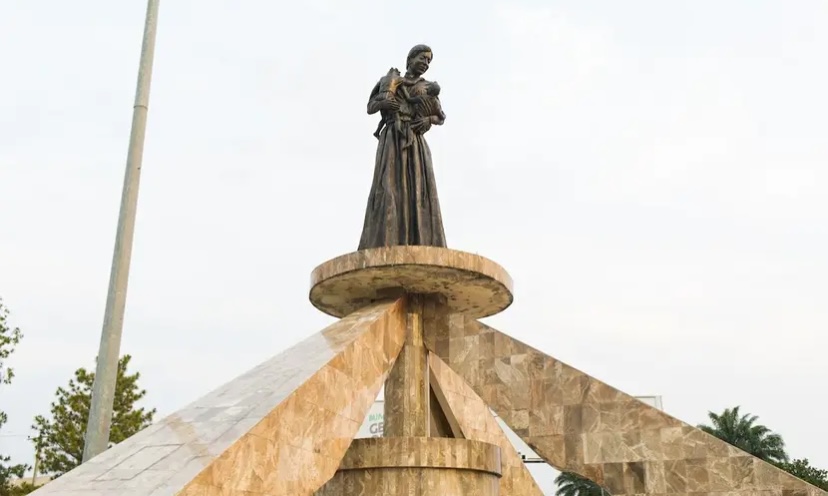
Her legacy is still felt across Nigeria. Streets, schools, and churches bear her name, Statues have been raised in her honor, and she is celebrated every year for her role in ending the killing of twins. In Calabar, she is not remembered as a foreign missionary, but as “Eka Kpukpru Owo” which means “The Mother of All the People.”
Even in modern times, when twin births are now seen as blessings, the name Mary Slessor reminds Nigerians of a woman who stood alone for what was right, She taught the world that true courage is not in fighting wars or wielding power but in choosing compassion when others choose fear.
A Lesson To Humanity
Mary Slessor’s story is not just history, it is a lesson in humanity, In an age when the world was divided by race, gender, and class, she proved that love knows no boundaries.
She walked barefoot into danger, lifted dying children into her arms, and changed an entire culture with gentleness and faith. From the slums of Dundee to the forests of Calabar, she showed that one ordinary life, lived with extraordinary love, can change the course of a people.
More than a century later, her legacy still whispers through the streets of Calabar, in the laughter of twins who now run free, and in the hearts of all who believe that courage, when born of compassion, can truly change the world.