Nigeria Launches Sustainable Aviation Fuel Programme to Drive Africa's Green Aviation Transition
Nigeria has launched a Sustainable Aviation Fuel Programme and inaugurated a national steering committee to accelerate aviation decarbonisation, attract investment and position the country as a leader in Africa's green aviation sector.
Nigeria has taken a major step towards reducing carbon emissions in its aviation industry with the launch of its Sustainable Aviation Fuel (SAF) Programme, an initiative expected to strengthen the country's position as a leader in Africa's transition to cleaner air transport.
The Federal Government inaugurated a seven-member National High-Level Sustainable Aviation Fuel Steering Committee in Abuja to coordinate the implementation of the programme. The event also featured the presentation of Nigeria's National Sustainable Aviation Fuel Feasibility Study and the launch of an ICAO-supported Sustainable Aviation Fuel Business Implementation Study.
Speaking at the launch, Minister of Aviation and Aerospace Development Festus Keyamo, represented by the Director of Air Transport Management, Mohammed Ahmed Tijani, described the initiative as a milestone in Nigeria's efforts to build a resilient, competitive and environmentally sustainable aviation industry.
According to the minister, sustainable aviation fuel offers Nigeria an opportunity to reduce carbon emissions while attracting investment, creating jobs, strengthening energy security and unlocking value across the country's agriculture, energy and industrial sectors.
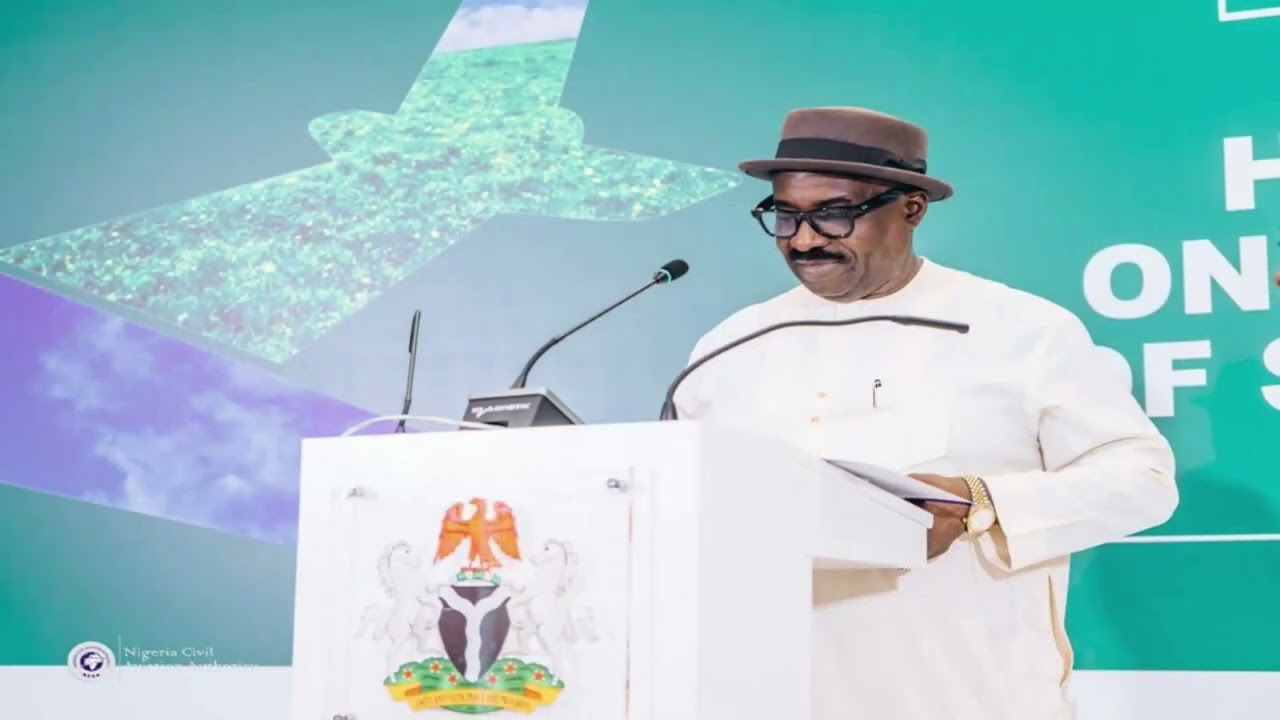
Director-General of the Nigerian Civil Aviation Authority (NCAA), Capt. Chris Najomo, said the programme marks Nigeria's transition from planning to implementation.
He explained that the feasibility study, developed under the ICAO Assistance, Capacity-building and Training for Sustainable Aviation Fuels (ACT-SAF) Programme with funding from the European Union and technical support from the European Union Aviation Safety Agency (EASA), provides a roadmap for converting Nigeria's abundant feedstock resources into commercially viable sustainable aviation fuel.
Najomo added that the newly inaugurated steering committee will coordinate government agencies, industry stakeholders and international partners to drive the successful implementation of the programme. He also acknowledged the continued support of the International Civil Aviation Organization (ICAO), the European Union and EASA in advancing Nigeria's aviation sustainability agenda.
Sustainable Aviation Fuel is widely regarded as one of the aviation industry's most important tools for reducing greenhouse gas emissions because it can significantly lower lifecycle carbon emissions compared with conventional jet fuel while remaining compatible with existing aircraft and airport infrastructure.
Nigeria's initiative could also create new economic opportunities. With vast agricultural resources, biomass and other feedstocks suitable for SAF production, the country has the potential to develop a domestic green fuel industry capable of supplying both local airlines and international carriers operating across Africa.
If successfully commercialised, the programme could stimulate investment, expand industrial activity and create jobs throughout the aviation and energy value chains.
The launch forms part of Nigeria's broader strategy to modernise its aviation sector while aligning with global efforts to achieve cleaner and more sustainable air transport.
As airlines around the world pursue ambitious net-zero emissions targets, officials believe the country's early investment in sustainable aviation fuel could strengthen its competitiveness and position it as a future hub for green aviation on the continent.