GOP Unleashes New Bill to Lock In Trump's Pro-Bitcoin 401(k) Stance
Rep. Troy Downing is introducing the "Retirement Investment Choice Act" to codify President Trump's August executive order, aiming to allow alternative assets, including Bitcoin, in 401(k) retirement plans. This legislative push seeks to expand investment options for Americans and could unlock significant capital flows into digital assets. While supported by Republicans and industry groups, its passage faces uncertainty due to potential Democratic opposition and the lack of a Senate version.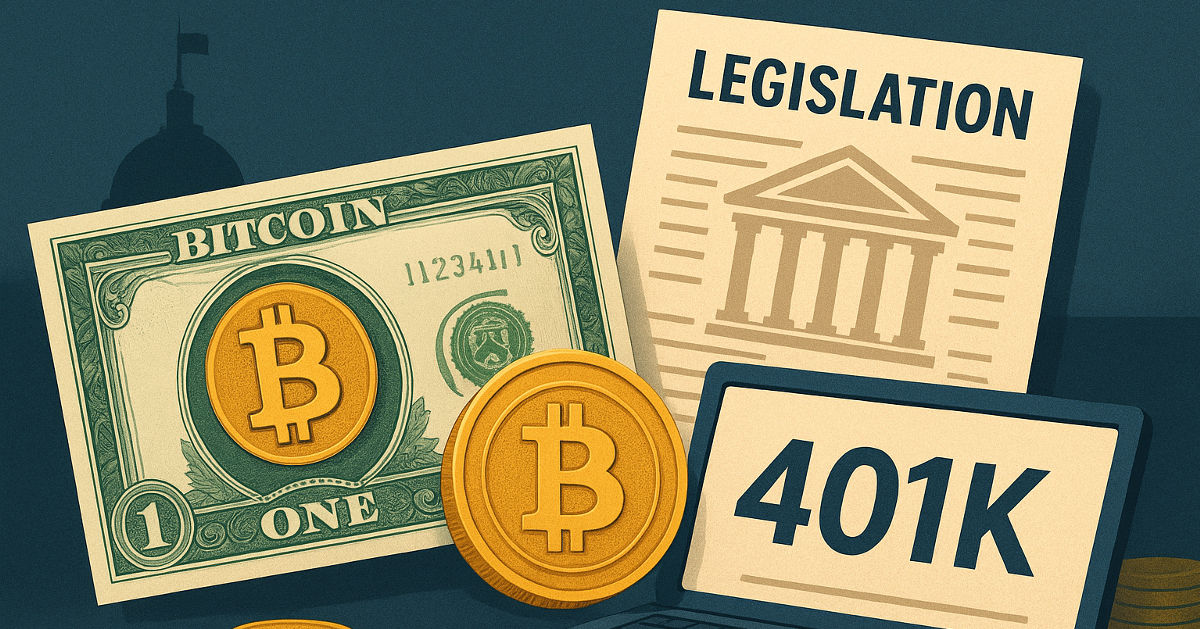
A significant legislative effort is underway in the United States Congress to permanently integrate alternative assets, including cryptocurrencies like Bitcoin, into Americans' retirement savings plans. Representative Troy Downing (R-Mont.) is set to introduce the "Retirement Investment Choice Act," a new House bill designed to solidify President Donald Trump’s August executive order into law. This executive order, specifically Executive Order 14330, directed the Labor Department to create pathways for retirement plans to offer alternative investments.
The core objective of the proposed one-page bill is to grant Executive Order 14330 "the force and effect of law," thereby cementing President Trump’s directive. This directive asserts that Americans saving for retirement should be afforded the opportunity to access crypto and various other alternative assets, provided that their plan providers deem such investments appropriate. Representative Downing emphasized the transformative potential of alternative investments, stating they "supercharge the financial security of countless Americans saving for retirement." He also lauded President Trump's leadership in "democratizing finance" and expressed pride in leading the congressional effort to codify the executive order.
If enacted, the Retirement Investment Choice Act would permanently authorize 401(k) providers to include products exposed to cryptocurrencies alongside traditional investment funds. This legislative move has the potential to unlock billions of dollars in new capital flows directed towards Bitcoin and other digital assets, significantly impacting the financial landscape for retirement savers.
President Trump's August executive order (EO 14330) specifically tasked the Labor Department (DOL) and the Securities and Exchange Commission (SEC) with the responsibility of expanding access to a broad range of "alternative assets." These assets include not only cryptocurrencies but also private equity, commodities, and insurance products. The EO set a deadline of 180 days for the DOL to propose new rules, a period that concludes in early February. However, concerns have been raised that recent government shutdowns and staffing reductions at the Employee Benefit Security Administration (EBSA) could potentially delay the progress of these regulatory proposals.
The initiative has garnered support from various quarters. Senate Republicans, for instance, urged the DOL in August to expedite its work, advocating for the establishment of a "regulatory safe harbor." This safe harbor would serve to protect plan sponsors who opt to offer such alternative investments, thereby maximizing the order's effectiveness and providing the industry with the necessary certainty to deliver on behalf of American retirees. Industry groups have largely expressed a welcoming stance towards this shift, with Brian Graff, CEO of the American Retirement Association, highlighting that "Professional retirement plan fiduciaries — not the federal government — are in the best position to assess what is in the financial best interest of participants."
Despite the growing momentum, the ultimate fate of the bill remains uncertain. It is anticipated that Democrats may be disinclined to support legislation perceived as expanding crypto access within retirement accounts. Furthermore, no corresponding Senate version of the bill has been introduced yet, which is crucial for its passage into law. Nevertheless, for a political party that is increasingly embracing Bitcoin as a symbol of financial sovereignty, Downing’s proposal serves as a clear signal of intent, indicating that a segment of lawmakers envisions Bitcoin as an integral component of America's retirement future.
It is worth noting that this legislative push follows President Trump's earlier actions regarding digital assets. In March, he signed a separate Executive Order establishing a Strategic Bitcoin Reserve and a U.S. Digital Asset Stockpile. This earlier order aimed to centralize government-held crypto, including an estimated $14 billion in seized Bitcoin at the time, to be held as a store of value rather than being sold. This broader context underscores a consistent effort to define and integrate digital assets into national financial strategies.