GN Savings & Loans Scandal Erupts: Ndoum Slams BoG After Court Victory, Citing Insolvency Controversy and Job Losses
The Court of Appeal has ordered the restoration of GN Savings and Loans' licence, reversing a 2019 Bank of Ghana decision. While GN founders express gratitude and vindication, citing false insolvency claims and unpaid government debts, former officials warn of significant fiscal risks and politicization concerns. Analysts also criticize the clean-up process and Bank of Ghana's supervisory failures.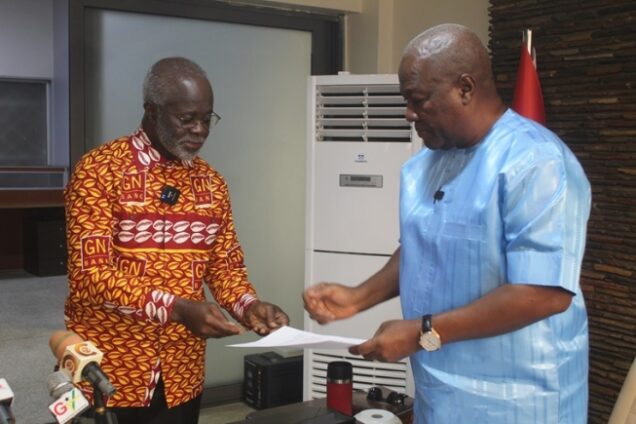
A recent ruling by the Court of Appeal has ordered the restoration of GN Savings and Loans' licence and the return of its assets to the company and its shareholders, marking a significant development in the institution's long-running legal battle with the Bank of Ghana (BoG). This decision stems from the 2019 banking sector clean-up exercise which led to the revocation of several financial institutions' licences, including GN Savings and Loans.
Dr. Papa Kwesi Nduom, founder of GN Savings and Loans, expressed profound gratitude to President John Dramani Mahama following the favorable ruling. In a Facebook post, Dr. Nduom thanked President Mahama for a campaign promise made as a presidential candidate to restore the licences of banks and financial institutions he believed were unjustly collapsed. He also commended the President for fostering an enabling social and economic environment, viewing the ruling as a vindication of his institution's position.
Dr. Nana Kweku Ndoum, President of Groupe Ndoum, reiterated that the company and the Ndoum family were shocked by the revocation, insisting that GN Bank (later downgraded to GN Savings and Loans) had met all regulatory requirements and was solvent at the time. He alleged that false claims about the bank's financial position, coupled with deliberate misinformation, played a major role in its collapse. According to Dr. Ndoum, the institution's financial difficulties originated in 2017 after the New Patriotic Party (NPP) administration initiated a review of government contracts previously financed by GN Bank. Although these contracts were not deemed fraudulent, several were terminated, leaving approximately GH¢300 million in unpaid Interim Payment Certificates (IPCs) owed to contractors and, consequently, to GN Bank. He claimed that the Bank of Ghana falsely asserted only GH¢30 million was due, a statement he described as a "bald-faced lie" that served as a key piece of evidence for the licence revocation. Dr. Ndoum maintained that the bank's reclassification to a savings and loans company was on the advice of the Bank of Ghana, and the institution had diligently met all subsequent requirements, making the eventual revocation a shock.
Cletus Alengah, lawyer for Dr. Papa Kwesi Nduom, clarified that the Court of Appeal's victory was a result of a legal process and not linked to any political promises, despite President Mahama's previous pledge. Alengah argued that the Bank of Ghana specifically revoked GN's licence under Section 123 of the Banks and Specialised Deposit-Taking Institutions Act, 2016 (Act 930), which permits revocation solely on grounds of insolvency or impending insolvency within 60 days. He contended that the BoG conflated this with Section 16, which deals with other regulatory breaches (like capital adequacy violations or related-party exposures) and requires notice and an opportunity to remedy. Alengah suggested that the court's ruling effectively accepted their argument that GN Savings and Loans was not insolvent when its licence was revoked, thereby reinforcing concerns about the processes and decisions during the banking sector clean-up. He emphasized that many of the breaches publicly cited by the BoG have specific administrative fines under the law, not automatic licence revocation.
The collapse of GN Bank and the subsequent revocation of GN Savings and Loans' licence led to significant social and economic consequences. Dr. Nana Kweku Ndoum revealed that over 4,500 direct and indirect jobs were lost, including 3,000 direct employees at GN Bank before reclassification, reduced to 1,600, who then lost their jobs entirely, along with 1,200 indirect jobs such as security personnel and cleaners across 300 branches. He stressed that public discussions often overlook these devastating impacts on workers and their families.
However, the Court of Appeal's decision has also triggered warnings from political and financial analysts. Mohammed Amin Adam, former Finance Minister and Karaga MP, cautioned that the ruling could expose Ghana to significant fiscal and financial-stability risks. He warned of a potential wave of similar claims from other collapsed institutions, leading to compensation demands, depositor settlement disputes, asset-return claims, and recapitalisation pressures, all at a time when Ghana is exiting an IMF arrangement with limited fiscal space. Dr. Amin Adam also raised concerns about moral hazard, stating that politically influenced reversals could weaken deterrence against prudential standards, telling future bank owners that regulatory breaches might be revisited under different political conditions. He stressed that licence restoration does not automatically mean a return to operations; regulators must conduct fresh assessments covering capital adequacy, liquidity, governance, asset quality, and depositor protection before any operational restart. He urged the Bank of Ghana and the Ministry of Finance to immediately clarify the regulatory and fiscal implications of the ruling, emphasizing that financial stability is a national asset, not a campaign promise, and that politicizing banking regulation could damage Ghana's post-IMF credibility.
Critiques of the banking sector clean-up itself also emerged. Lawyer Bobby Banson suggested that while intervention was necessary, authorities could have handled the clean-up differently to mitigate the impact on jobs, businesses, and customers, questioning the heavy reliance on collapsing and merging institutions. Senyo Hosi, convener of the OneGhana Movement and finance policy analyst, criticized the Bank of Ghana for its supervisory failures, arguing that it should have acted earlier to prevent the crisis from deteriorating, despite acknowledging the severity of the financial challenges at the time. Hosi pointed to publicly known issues like branch closures and inability of depositors to withdraw funds from GN Bank, along with alleged poor corporate governance practices, including self-lending. He concluded that BoG failed in its pre-emptive role, as its responsibility extends beyond correcting problems to preventing them. Both Banson and Hosi agreed that the Court of Appeal decision does not necessarily bring final closure, as the Bank of Ghana still has the right to appeal to the Supreme Court. Such an appeal, Banson noted, could serve as an important legal reference point for future financial sector regulation in Ghana.