Global Inferno: Middle East Crisis Escalates as EU Debates War, US Considers Powers, and Protests Rage
A US-Israeli airstrike killing Iran's Supreme Leader has ignited widespread conflict in the Middle East, sparking protests in Manchester and triggering debates in the US Congress over war powers and homeland security. The escalation has also left thousands of Americans, including tourists, stranded abroad due to travel disruptions, while exposing deep political divisions within the European Union regarding the legality and implications of the military intervention.
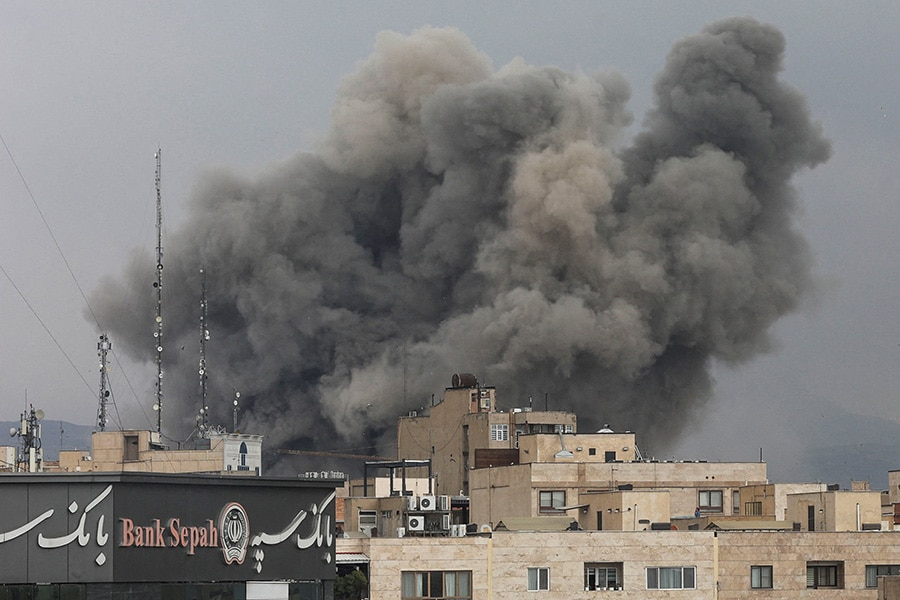
The Middle East has plunged into a spiraling conflict following a large-scale air strike by the United States and Israel that targeted Iran on February 28.
This coordinated attack resulted in the death of Supreme Leader Ayatollah Ali Khamenei, along with his wife and family members, immediately triggering widespread geopolitical tension across the region.
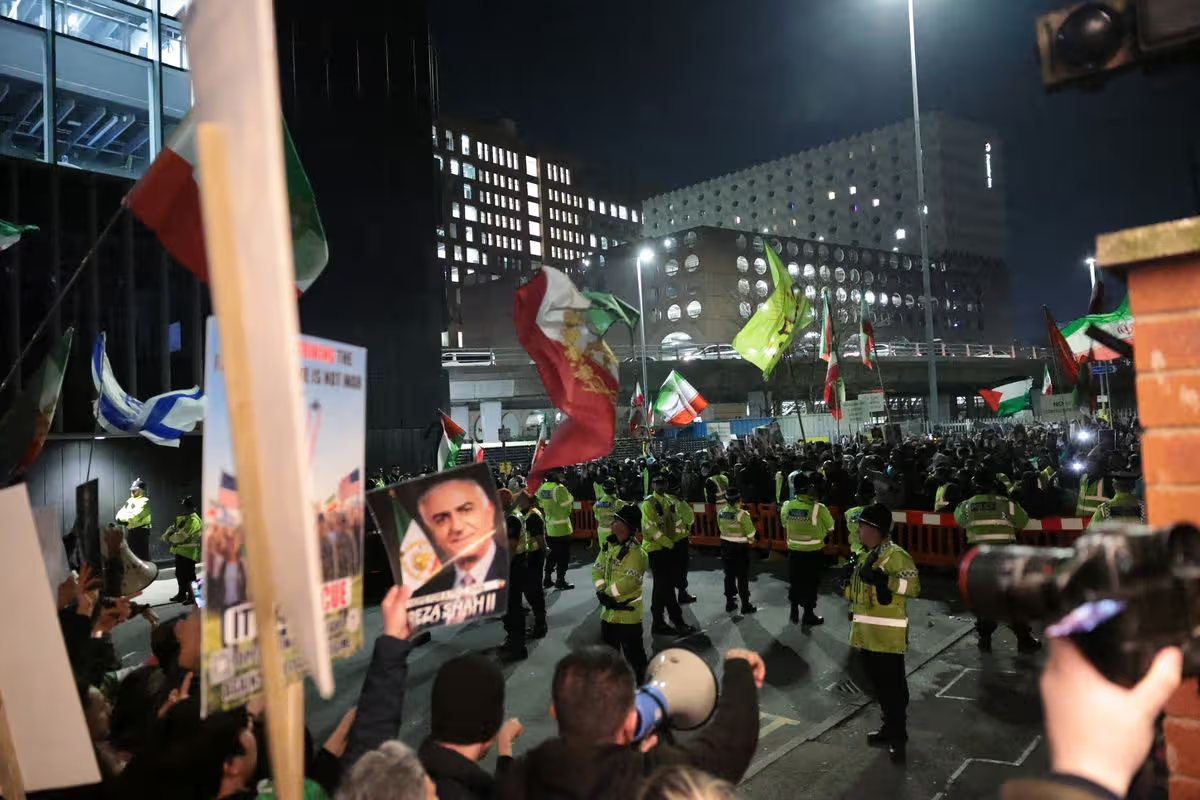
The profound impact of these events was evident in Manchestercity centre on March 4, where rival protest groups confronted each other.
A solemn candlelit vigil on Sydney Street was organized to commemorate the late Ayatollah, with attendees laying candles, flowers, and photos of Khamenei alongside placards condemning the US/Israeli actions.
Kayam Hussain, an 18-year-old from Rochdale, warned that the killing of Khamenei was a grave mistake with the potential to affect the entire world. He described the conflict in the Middle East as "chaotic," warning it was bringing humanity closer to something catastrophic.
In stark contrast, a largercounter-protest celebrated Khamenei's death with loud music, chanting, and dancing. This group waved US, Israeli, and pre-1979 Islamic Revolution flags, burned a photo of the Supreme Leader, and brandished images of Reza Pahlavi and Donald Trump.
Dozens of police officers kept the two factions separated, and while a few scuffles broke out as the groups dispersed, the stand-off remained largely peaceful and was quickly contained.
Within the United States Congress,a proposed War Powers Act aimed to block President Trump from initiating further strikes on Iran without congressional consent.
Democrat Tom Suozzi announced his support, citing opposition to "unchecked authority," while GOP Representatives Nick LaLota and Andrew Garbarino firmly opposed the measure, aligning with the president's actions.
Republicans simultaneously advanced a Department of Homeland Security funding bill, arguing that military action against Iran had heightened domestic threat levels.
However, most House Democrats rejected this push, insisting on reforming Immigration and Customs Enforcement and Customs and Border Protection within the bill's language.
Beyond political arenas, the conflict had immediate tangible effects on American citizens abroad, with the State Department issuing urgent warnings for Americans in over a dozen Middle East countries to leave immediately.
Donna Caltabiano, a retired board of elections supervisor from Floral Park, found herself stranded in Dubai, confined largely to her hotel room amid canceled flights and intercepted projectiles visible in the sky.
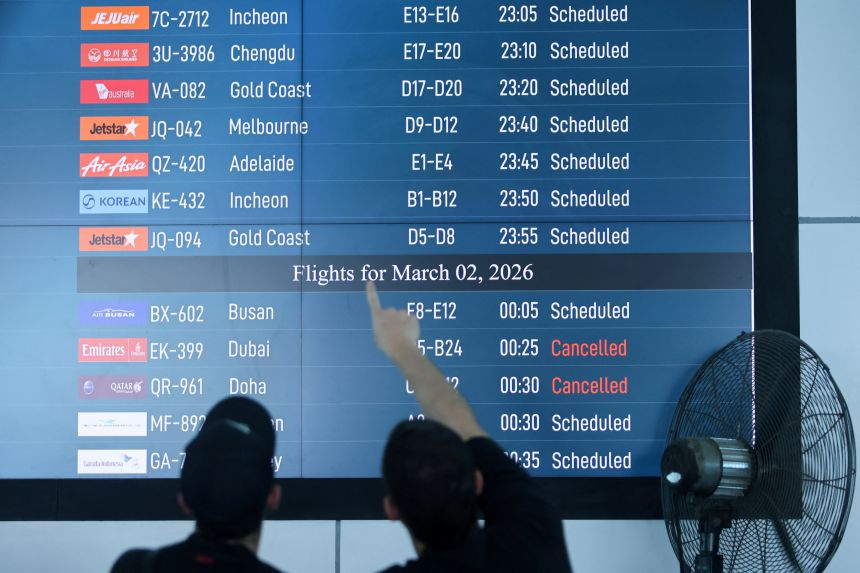
More than 19,000 flights into and out of the region were canceled, leaving thousands of travelers stranded across the Middle East.
Caltabiano described receiving alerts from Dubai's Ministry of the Interior to stay away from windows, and found the State Department's automated system largely unhelpful.
The escalating conflict also exposed deep fault lines within the European Union, with Spain becoming the sole EU country to publicly condemn the initial US and Israeli attack on Iran.
This stance drewa direct threat from President Trump to sever all trade ties with Madrid.
Austria's MEP Reinhold Lopatka, while acknowledging the questionable legality of the strikes, deemed the intervention "justified" in order to constrain Iran's nuclear capabilities and its support for proxies like Hezbollah and the Houthis.
Cyprus, an EU member, also reported being directly impacted by an Iran-made drone during the escalating hostilities.

Ultimately, the EU faces a pivotal moment with potentially massive implications for its energy security, economy, and overall stability.
As its nations grapple with being inevitably drawn into the wider conflict, the bloc must navigate deep internal divisions over how to respond to an increasingly volatile Middle East.