Global Football Turmoil: FIFA's Multi-Billion Investment Plan Sparks UEFA Boycott
FIFA's proposed $20 billion investment plan, aimed at strengthening member associations, has drawn starkly contrasting reactions. While former NFF President Amaju Pinnick defends it as vital for football's growth, UEFA has unanimously rejected the plan, announcing a boycott of all FIFA competitions, fearing private investor influence on the sport's core values.
A significant proposal from FIFA President Gianni Infantino to raise $20 billion through the sale of a stake in FIFA Forward Enterprises (FFE) to private investors has ignited a fierce debate within the global football community, drawing starkly contrasting reactions from key figures and organizations.
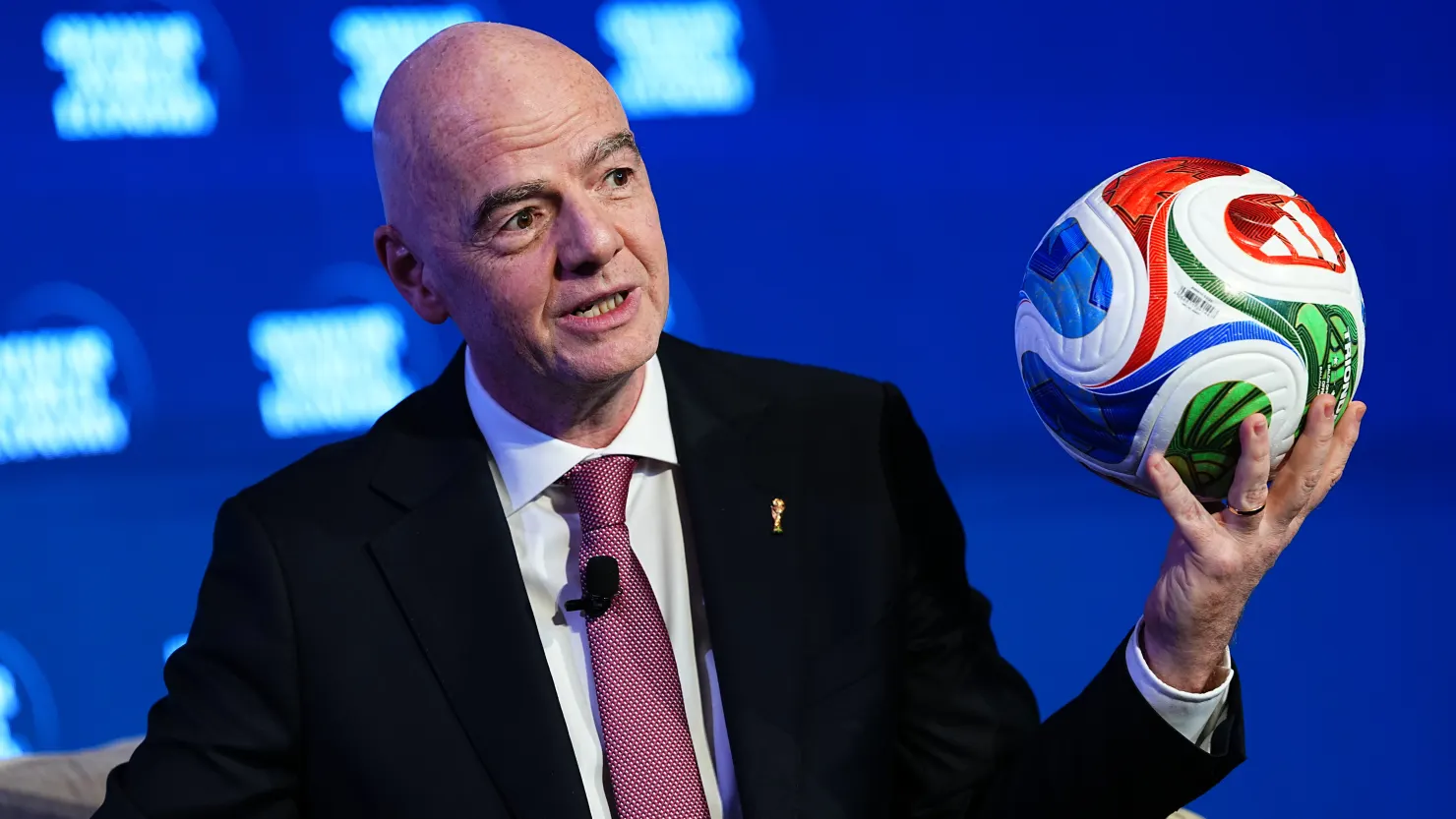
The Former Nigeria Football Federation (NFF) President and Deputy Chairperson of FIFA’s Men’s National Teams Competition Committee, Amaju Pinnick, has emerged as a staunch defender of FIFA’s proposed investment plan.
He spoke to ARISE News, that he rejected criticisms, arguing saying that the governing body seeks to strengthen its member associations through increased funding.
He emphasized that Infantino, as FIFA president, has the right to table such proposals for consideration.
Pinnick highlighted the direct financial benefits for member associations, stating that each could receive $20 million upon approval of the proposal, with further access to an additional $20 million through FIFA’s Forward Programme.
For Pinnick, the crucial aspect is not the proposal itself, but rather the integrity and transparency of how these funds are managed and disbursed, assuring that FIFA has control mechanisms in place to safeguard the process.
He believes this investment is vital for the global development of football by empowering national associations financially.
In stark contrast, UEFA, representing 55 European member associations, has unanimously and unequivocally rejected FIFA’s proposal, announcing a boycott of all FIFA competitions, including the men’s and women’s World Cup.
This decision, following an emergency meeting, means major European football nations like Germany, France, England, and Spain would abstain from FIFA tournaments if the plan proceeds.
The UEFA's strong opposition, backed by over 50 member associations, stems from the belief that the World Cup and other FIFA competitions are not mere investment products.
They are considered integral sporting legacies, built over generations, and should never be surrendered to private investors. The governing body asserted, “The World Cup is not for sale.”
UEFA’s statement outlined that its national teams would not participate in any FIFA competition as long as these proposals remain active, demanding binding assurances that FIFA will never again open its governance or competitions to private ownership.
The organization condemned FIFA for conceiving such a significant proposal in secret and bringing it to the brink of approval without meaningful consultation with stakeholders, labeling it a profound failure of leadership and an abdication of FIFA’s duty as custodian of world football.
UEFA further criticized the proposal as “governance by intimidation,” presenting member associations with an ultimatum to accept or face consequences, which it deemed unworthy of an institution entrusted with the global game.
Moreover, UEFA warned of the permanent alteration to world football governance if external investors acquire ownership interests.
It argued that such a model would prioritize commercial returns and investor expectations, dictating decisions on the international calendar, competition formats, and the future of football, rather than what best serves the game itself.
UEFA emphasized that football cannot mortgage its future for financial gain and that no one has the moral authority to sell what they hold in trust for the next generation.
The first competition likely to be affected by this boycott is the FIFA Women’s U-20 World Cup, scheduled to be hosted by Poland in September.