Ghana Wants More of Its Gold Refined at Home. Can the Industry Keep Up?
Ghana is requiring Self-Financing Aggregators to refine gold doré locally before export, putting more of the country’s gold trade under domestic processing.

Ghana is about to change the way some of its gold leaves the country.
From September 1, 2026, Self-Financing Aggregators (SFAs) will no longer be allowed to export unrefined gold doré under arrangements with approved international offtakers.
GoldBod issued the directive on August 24 and gave SFAs until August 31 to amend existing offtake agreements to include the new requirement.
Export applications will only be processed after the Board confirms that the gold has been refined locally, refining charges have been settled and the necessary assay and export requirements have been met.
What is gold doré?

Gold doré is a semi-refined form of gold. It contains a high concentration of gold but also other metals and still needs further refining before reaching the purity required for many international markets.
Ghana wants more of that work done at home.
In January, GoldBod signed an agreement with Gold Coast Refinery to supply one tonne of gold a week for local refining. Operations began in February. The refinery says it can process up to two tonnes a week, although the current agreement covers one tonne.
Ghana also holds a 15% interest in Gold Coast Refinery through GoldBod. The stake gives the state a direct financial interest in one of the refineries already involved in its local refining programme. GoldBod says the arrangement is intended to build refining capacity and help Ghana work toward international recognition for a local refinery.
Why Small-Scale Mining Is Central to the Policy

The rule also arrives as artisanal and small-scale mining has become a much larger part of Ghana's gold industry.
Ghana produced about 5.94 million ounces of gold in 2025, according to GoldBod. Small-scale mining accounted for about 3.11 million ounces, or 52.4% of national production. For the first time in more than a century, the sector produced more gold than large-scale mining.
With small-scale mines now accounting for more than half of production, GoldBod has a much larger stream of gold to oversee. Under Ghana's current system, the Board is responsible for buying, selling, weighing, grading, assaying, valuing and exporting gold and other precious minerals.
What Local Refining Could Change
Refining the gold in Ghana would keep that part of the business inside the country instead of sending the doré abroad for the next stage of processing.
Local refineries would handle work that currently takes place outside Ghana. That could bring more business to the technical, laboratory, logistics and financial services linked to refining. The economic benefit will depend on available capacity and the cost of using it.
GoldBod has separatelyordered the mandatory use of X-ray fluorescence (XRF) testing as the standard method for determining gold purity from September 1.
The Challenge of Refining at Home
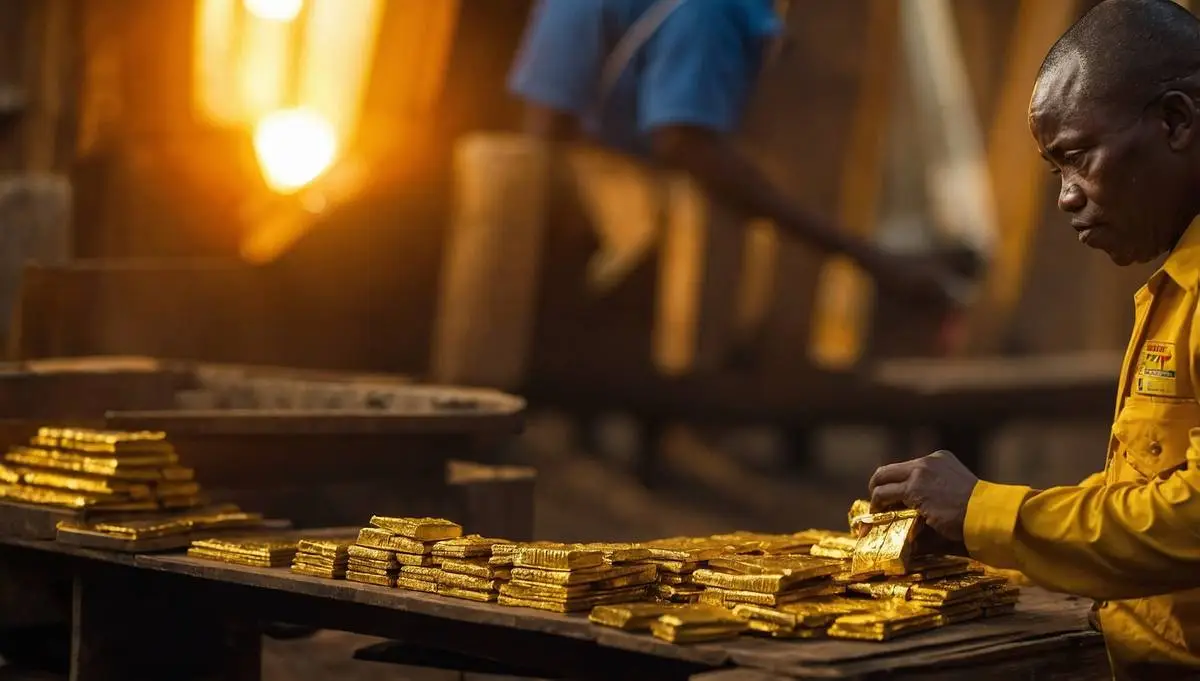
Ghana's gold output is already large. Its refineries will have to handle more of it while securing financing, trained personnel and internationally recognised standards. A shortfall in any of those could leave traders waiting longer or paying more.
GoldBod is already facing pressure elsewhere in its system.Reuters reported this week that some gold traders had gone as long as three weeks without receiving expected advance funding for purchases. GoldBod denied that it had a funding shortfall and said financing decisions were tied to creditworthiness and risk assessments.

Traders will also have to factor refining arrangements and costs into the export process. Delays in financing or refining could hold up payments to miners and slow the movement of gold through the supply chain.
Miners, buyers, aggregators, refineries, banks and international offtakers will all have to adjust. Higher costs or longer processing times could make the formal route less attractive to some traders.
GoldBod's 15% stake in Gold Coast Refinery adds another layer to the policy. The new directive gives the Board the power to approve or designate the refinery where particular gold is refined, although it does not say that all affected gold must go to Gold Coast Refinery. The stake does not by itself establish a conflict of interest. It does, however, make transparency around refinery selection important as the system expands.
Africa's Push to Process More Minerals
For many years, many African economies have earned money by extracting minerals while other countries handled more of the processing and manufacturing. Governments are now trying to keep more of that processing on the continent and building a refinery is easier than building a competitive refining industry.