Ghana's Political Firebrand: Afenyo-Markin Shapes NPP Narrative and National Vision
Minority Leader Alexander Afenyo-Markin has shared comprehensive views on the NPP's future, stressing his neutrality in the flagbearer race and the party's upcoming rebranding. He also advocated for substance over numbers in parliamentary leadership, defended the NPP's social intervention achievements despite economic challenges, and championed the inclusion of Ghanaian languages in international schools to boost national identity and attract investment.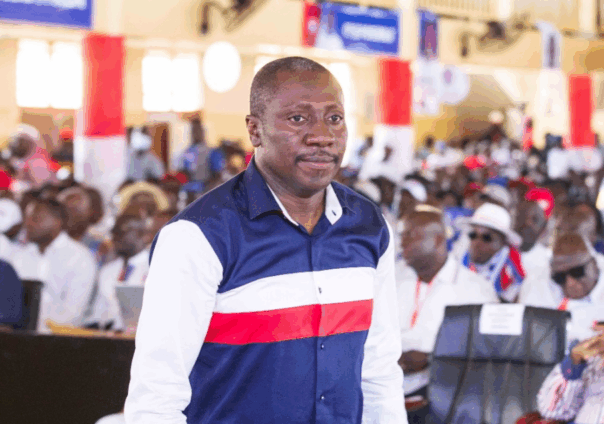
Minority Leader Alexander Afenyo-Markin, speaking on JoyNews’ PM Express on October 27, offered extensive insights into the future of the New Patriotic Party (NPP), the dynamics of parliamentary leadership, Ghana’s cultural identity, and the NPP’s governance record. He expressed unwavering confidence in the NPP's strength and attractiveness, citing the ongoing internal contest for flagbearer as a clear indicator of the party’s vitality and determination to rebuild and transform.
Afenyo-Markin described the upcoming primaries as a crucial test for the party, applauding the calibre of the five candidates vying for the flagbearer position. He saw their ambition as proof that the NPP remains relevant and possesses a mission beyond individual aspirations. Despite potential divisions, he dismissed fears that the primaries would weaken the party, asserting that only a party with a future would attract such dedicated contenders. He outlined that once a flagbearer is chosen by January 31, the party would embark on a rebranding process, aligning the new leader's vision with the NPP’s core ideology.
Crucially, Afenyo-Markin underscored his strategic neutrality in the flagbearer race, a stance he maintains due to his leadership role in Parliament. While acknowledging private preferences, he stated, “I cannot publicly say I am going to campaign for this person,” emphasizing the necessity of being a “credible referee” to unite factions after the primaries. He revealed that while some Members of Parliament (MPs) have openly declared their support for various aspirants, they have largely conducted themselves with decency, ensuring parliamentary work remains unaffected. He encouraged MPs to sell their candidates’ messages respectfully, even as he himself abstains from public endorsements to preserve his reconciliatory role.
Regarding his role as Minority Leader, Afenyo-Markin declared himself unfazed by the numerical disadvantage of his caucus in Parliament. He asserted that his leadership would be defined by “substance, not numbers,” drawing inspiration from the resilience shown by the National Democratic Congress (NDC) when led by Alban Bagbin in opposition after their 2000 defeat. He recounted how the NDC, through hard work and determination, regained momentum by 2004 and surprised the nation by 2008. He stressed the importance for politicians to learn from both successes and failures, a lesson he applies to the NPP's current challenges.
Reflecting on the NPP’s time in government, Afenyo-Markin candidly admitted challenges in areas such as combating illegal mining (galamsey), stabilizing the economy, and managing public discontent. He acknowledged that tough economic measures, including “haircuts” during the post-COVID period, alienated key segments of the party’s base, particularly the middle class, businessmen, and pensioners. He cited the disappointment of loyal supporters, even a former Chief Justice, as evidence of the pain caused by these necessary but unpopular decisions.
However, Afenyo-Markin firmly maintained that the NPP must not shy away from celebrating its significant achievements. He highlighted transformative social intervention programs such as Free Senior High School (Free SHS), the One District One Factory (1D1F) initiative, school feeding, and the National Health Insurance Scheme (NHIS) as enduring legacies that have changed countless lives and boosted the economy. He challenged the NDC to name a single comparable social intervention program initiated and successfully implemented by their party since 1992, arguing that their record is “zero.”
Afenyo-Markin's strong defense of Free SHS stems from a deeply personal experience. He shared how financial hardship nearly forced him to drop out of St. Augustine’s College in his final year, until a competitive bursary from businessman and politician Dr. Paa Kwesi Nduom allowed him to complete his secondary education. This personal narrative fuels his belief that Free SHS is a powerful equalizer, creating opportunities for many Ghanaians who otherwise might not have accessed education. He insisted that the policy has successfully built human resource capacity across the nation, benefiting families from all economic backgrounds.
Beyond internal politics and governance, Afenyo-Markin passionately advocated for the strategic use of Ghanaian culture and language to attract investment and strengthen national branding. He reiterated his long-standing call, first made in Parliament in 2018, for international schools in Ghana to incorporate at least one Ghanaian language into their curricula. He argued that this cultural integration would not only promote Ghana’s heritage and provide a source of pride for foreign students but also enhance the country’s global image and appeal to investors. He stressed that investment decisions are influenced not just by policies but also by the way of life, culture, and hospitality of a nation, seeing Ghana as “a heaven within our subregion.” He connected these “little variables” of cultural promotion to job creation and economic opportunities, urging the Minister of Tourism to take up the initiative seriously. This call aligns with recent directives from Education Minister Haruna Iddrisu to enforce mother tongue instruction in Ghanaian schools, reinforcing efforts to bolster local language education and cultural identity.