Ghana's Anti-Corruption Body Declares 'Rebirth,' Exposing Massive Graft
The Special Prosecutor, Kissi Agyebeng, has declared the "rebirth" of the Office of the Special Prosecutor (OSP), highlighting its resilience against sustained attacks and a recent Supreme Court victory affirming its independent prosecutorial mandate. Agyebeng defended the OSP's performance with quantifiable achievements, including financial recoveries and significant savings, while also outlining future plans to strengthen anti-corruption efforts through enhanced lifestyle audit powers and a reverse-onus clause for unexplained wealth. The OSP also provided an update on its ongoing domestic investigation into the Asante Kwaku Berko corruption case.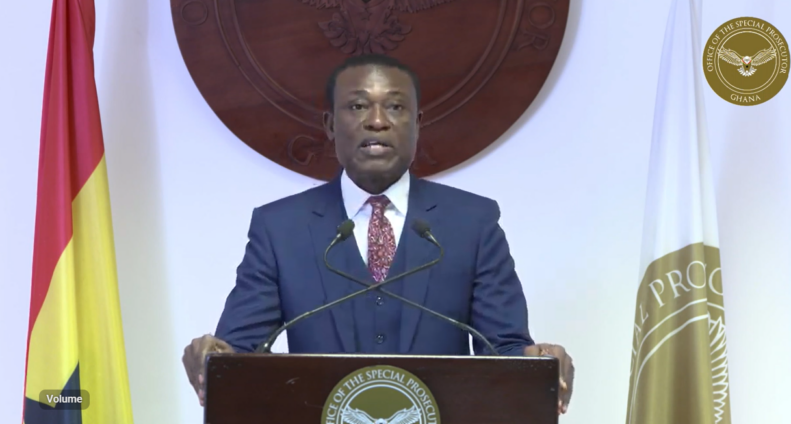
Ghana’s Anti-Corruption Body Declares ‘Rebirth’ After Legal Battle
Ghana’s Special Prosecutor, Kissi Agyebeng, has declared the “rebirth” of the Office of the Special Prosecutor (OSP) following years of criticism, institutional challenges and a major legal battle over its prosecutorial powers.
Speaking on August 26, 2026, Agyebeng defended the agency’s record, saying attempts to weaken or abolish it were largely connected to discomfort with its independent investigative and prosecutorial mandate.
As of December 31, 2025, the OSP was prosecuting 33 people, had 79 cases under full investigation and 161 under preliminary investigation, while securing seven convictions through plea bargains.
The OSP also reported recovering GH¢8.518 million and US$2 million, alongside assets subject to ongoing recovery proceedings. Agyebeng said the agency had prevented further losses through interventions involving natural resources, seaports, customs and the government payroll system, including savings of more than GH¢100 million from its payroll intervention.
He maintained that the OSP has saved the country more than 20 times the total funds released to it since its establishment.
Supreme Court Ruling Restores OSP’s Powers
The declaration follows a major constitutional dispute that began when an Accra High Court ruling on April 15, 2026, held that the OSP lacked an independent prosecutorial mandate and directed that its cases be transferred to the Attorney-General. The Supreme Court subsequently overturned the lower court position in a unanimous 7-0 judgment on July 29, 2026, upholding the OSP’s prosecutorial powers and legal framework under Act 959 and related legislation. Agyebeng credited civil society organisations, including the Ghana Center for Democratic Development, Transparency International Ghana and IMANI Centre for Policy & Education, with helping defend the institution’s mandate.
The OSP now says it will continue with investigations, prosecutions, asset recovery and corruption-prevention measures without fear or favour, while advocating stronger powers for lifestyle audits and non-conviction-based asset recovery. Regarding the Asante Kwaku Berko case, Agyebeng confirmed that the OSP assisted the FBI in the US prosecution but stressed that a foreign conviction does not automatically establish criminal liability in Ghana. He also clarified that persons identified as “persons of interest” in the domestic investigation are not necessarily suspects and cannot be presumed guilty without evidence meeting Ghanaian legal standards.