Ghana's 69th Independence: A Nation's Reckoning with Promises and Perils
Ghana's 69th Independence Anniversary on March 6, 2026, saw widespread reflection on national progress and future aspirations. Leaders, including King Charles III and President Mahama, delivered messages emphasizing unity, combating corruption, and accelerating economic and agricultural transformation. Discussions also highlighted the imperative of pan-African integration and addressing persistent challenges like unemployment.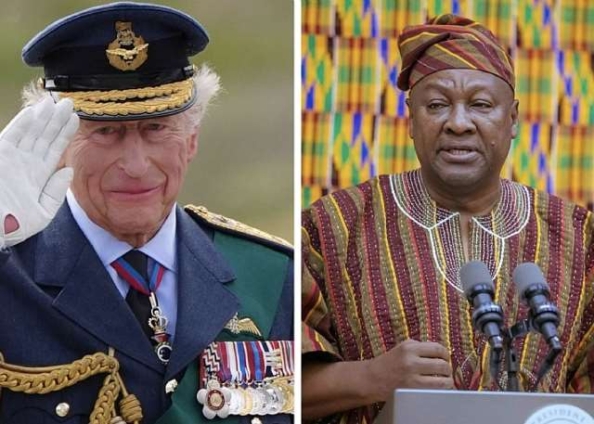
Ghana commemorated its 69th Independence Anniversary on March 6, 2026, with celebrations held nationwide and at the Jubilee House in Accra, bringing together government officials, dignitaries, and citizens. The national theme for this year's observance, "Building Prosperity, Restoring Hope," highlighted a collective commitment to national growth and socioeconomic transformation.
International leaders extended their congratulations, with King Charles III sending warm wishes to President John Dramani Mahama and the Ghanaian people. The British monarch underscored the strong historical ties, enduring partnership, shared values within the Commonwealth, and the significant contributions of the Ghanaian diaspora in the United Kingdom. He also referenced Prince Edward’s visit to Accra, emphasizing the deep historical and cultural connections between the two nations. Similarly, H.E. Assiélou Félix Tanon, the Ambassador of Côte d’Ivoire to Ghana, Togo, and Benin, conveyed greetings on behalf of President Alassane Ouattara. Ambassador Tanon praised Ghana's "remarkable" development journey and its status as a model of democracy, while affirming the strong relations of friendship and fraternity between Côte d’Ivoire and Ghana.
President John Dramani Mahama, in his address at the Jubilee House, warned that corruption continues to undermine Ghana's development, asserting that every misused public resource directly affects essential services such as education, healthcare, and infrastructure. He declared the fight against corruption a central pillar of his administration’s broader "Resetting Ghana" agenda, which aims to strengthen governance, rebuild institutions, and ensure national resources are used responsibly. The President noted steps taken to stabilize the economy, including gradually declining inflation, a stabilizing Ghana cedi, and renegotiated debt terms, but stressed that economic recovery would only be meaningful if corruption is decisively tackled. He pledged to serve with integrity and humility, emphasizing accountability and transparency in public service.
Local officials also echoed calls for unity and hard work. Anwel Sadat Ahmed, the Municipal Chief Executive of Oforikrom, emphasized that Ghana, with its rich human and natural resources, can only thrive if citizens collectively pursue nationalistic goals. Speaking at a colorful parade at the Kwame Nkrumah University of Science and Technology (KNUST), he called on residents to embrace unity, hard work, discipline, innovation, and integrity. Michael Kwasi Aidoo, Member of Parliament for Oforikrom Constituency, stressed that true prosperity begins with patriotism, urging actions like environmental protection and supporting local businesses. Dorothy Opare-Baidoo, Municipal Director of Education, elaborated on the theme, highlighting education's foundational role in equipping young people for societal contributions. In Tamale, Mayor Abu Takoro reported rapid transformations, particularly in education and infrastructure, citing the procurement of numerous desks and the initiation of classroom block constructions. He also appealed for cooperation in maintaining law and order, expressing concern over rising drug abuse among youth, and encouraged participation in the National Sanitation Day Exercise.
Reflecting on Ghana's journey since independence, former Minister of Chieftaincy and Religious Affairs, Stephen Asamoah Boateng, urged national introspection beyond mere celebration, compelling citizens and leaders to evaluate the nation’s progress. While expressing pride in Ghana's democratic stability and relative peace, he voiced reservations about the pace of development, noting that some African nations, like Botswana, have surpassed Ghana. Dr. Hassan Ayariga, Founder and Leader of the All People’s Congress (APC), contended that Ghana is yet to fully realize the vision of its first president, Dr. Kwame Nkrumah, criticizing failures in governance, education (in preparing thinkers and innovators), and the divisive "winner-takes-all" approach in politics. He called for inclusive leadership to ensure continuous progress. Dr. Abu Sakara, an agronomist and politician, acknowledged significant strides, particularly in democratic stability, but highlighted persistent urgent challenges such as youth unemployment, lack of industrialization, and economic gaps, pointing to Ghana’s GDP per capita of around $2,000 compared to much higher figures in other countries. He stressed the need to accelerate industrialization, create meaningful employment, and strategically position Ghana geopolitically.
The critical role of agriculture in Ghana's future was highlighted by the Chamber of Agribusiness Ghana. The Chamber noted agriculture's historical role as the economy's backbone since independence, accounting for over 50% of national GDP in early years. Despite current structural competitiveness challenges, including rising food import dependency and significant post-harvest losses (estimated at 20-50% of agricultural produce), the Chamber advocated for a Seven-Year National Agriculture and Agro-Industry Development and Transformation Strategy. This strategy proposes ambitious national targets, including reducing Ghana’s national food import bill by 60%, cutting post-harvest losses by 80%, and expanding domestic agro-processing capacity. Key recommendations included significantly increased budgetary allocations to agriculture (at least 10% of national budgets, per the Maputo Declaration), large-scale agricultural infrastructure development, nationwide deployment of post-harvest technologies, enhanced farmer education, and the establishment of structured agricultural value chains.
Beyond national borders, the Africa Prosperity Network (APN) convened a high-level webinar titled "Ghana @ 69: From Africa’s Independence to Integration," reflecting on Kwame Nkrumah's warning that Ghana's independence was meaningless unless linked to the total liberation of Africa. With 2028 set as the target for completing critical stages of Africa’s economic union under the Abuja Treaty (customs union, common market, single currency, and free movement of 1.5 billion people), the webinar aimed to assess progress and deliver a "2028 Delivery Scorecard." Pan-African leaders, politicians, and cultural icons discussed challenges like trade barriers and slow ratification of the Free Movement Protocol, urging collective action through initiatives like "Make Africa Borderless Now!" to hold governments accountable to integration commitments.
In conclusion, Ghana's 69th Independence Anniversary served as a multifaceted occasion for celebration, critical reflection, and renewed commitment. Leaders and citizens alike acknowledged significant achievements in democratic stability while confronting urgent challenges in economic development, corruption, youth unemployment, and agricultural transformation. The calls for unity, integrity, hard work, and a transformative national agenda underscored a collective aspiration to build a prosperous Ghana that truly fulfills the vision of its founders and secures a hopeful future for all its people within a fully integrated Africa.