Federal Government Declares 'No Safe Level' of Lead, Launches Bold Plan to Eliminate Poisoning
Nigeria's federal government has launched a national plan to eliminate lead poisoning, acknowledging no safe exposure level and its severe impact on health and human capital. The initiative, revealed at the National Lead Poisoning Elimination Day, includes a five-year strategic plan, inter-agency collaboration, and expanded testing, signaling a unified effort to protect its citizens from this grave public health emergency.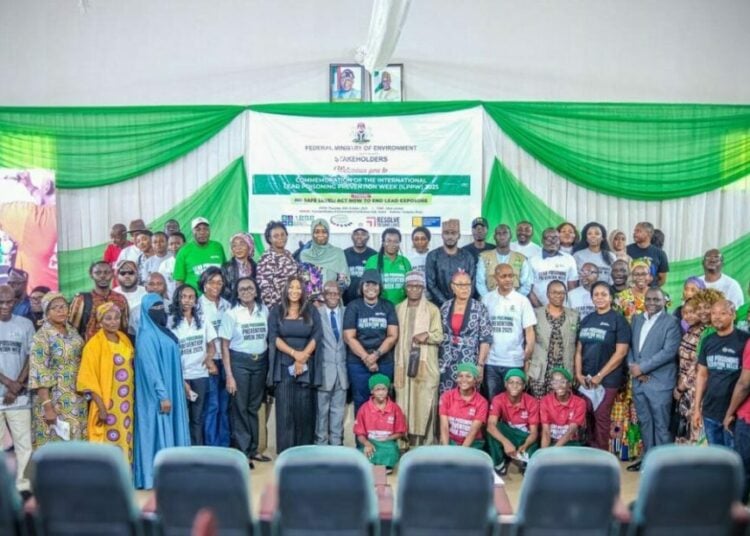
Federal Government Declares ‘No Safe Level’ of Lead, Launches Bold Plan to Eliminate Poisoning
The Federal Government of Nigeria has officially launched a comprehensive national plan aimed at eradicating lead poisoning across the country. This critical initiative underscores the severe threat posed by lead exposure, emphasizing that there is no safe level of the toxic metal, which continues to claim lives and compromise the health of both children and adults nationwide. The Coordinating Minister of Health and Social Welfare, Prof. Muhammad Ali Pate, announced this landmark development during the inaugural National Lead Poisoning Elimination Day held in Abuja.
The event, themed “No Safe Level: Act Now to End Lead Exposure,” served as a crucial platform for government officials, health experts, and development partners to renew their collective commitment to combating lead poisoning. Representing Minister Pate, the Permanent Secretary of the Ministry, Daju Kachollom, highlighted the gravity of the situation, describing lead poisoning as a profound public health emergency. She noted that the crisis significantly undermines human capital development and carries extensive social and economic consequences.
“Lead poisoning is not merely an environmental issue; it is a serious public health emergency. There is no safe level of lead exposure, and the youngest among us are the most vulnerable,” the minister stated.
Minister Pate further outlined the devastating health consequences of lead exposure. Among children, it causes brain and nervous system damage, reduces IQ, and triggers behavioral problems. In adults, prolonged exposure can lead to hypertension, kidney failure, and reproductive health complications. Citing alarming data from the World Health Organization (WHO), he revealed that globally, one in three children—approximately 850 million—have detectable blood lead levels. In Africa alone, lead poisoning accounts for an estimated 47,000 deaths annually and results in an economic loss of nearly $135 billion in productivity each year.
Recalling past tragedies, Pate referenced the mass lead poisoning incidents in Zamfara (2010), Niger (2015), and Sokoto State, which remain stark reminders of the urgent need to protect vulnerable populations, especially children, from preventable exposure. In response, the Federal Government has developed a National Lead Elimination Policy and a Five-Year Strategic Plan. These guiding documents outline prevention, detection, and response strategies across critical sectors including Health, Environment, Mines and Steel Development, Agriculture, and Water Resources.
To strengthen these efforts, an Inter-Agency Working Group on Lead Poisoning Elimination was inaugurated in September 2025. The group is mandated to enhance surveillance systems, review existing regulations, and mobilize sustainable financing to achieve total eradication of lead poisoning in Nigeria. In partnership with Médecins Sans Frontières (MSF), the government has also supplied laboratory equipment to high-risk states, significantly improving their capacity for blood lead testing. Children diagnosed with elevated blood lead levels have received appropriate treatment, supported by nationwide sensitization campaigns promoting preventive measures such as regular handwashing, safe water use, and proper hygienic dust control.
Looking ahead, the Ministry plans to formally launch the National Lead Elimination Policy and Strategic Plan. Future initiatives will include expanding diagnostic and laboratory networks, reinforcing surveillance systems for vulnerable groups, ensuring sustained access to treatment, enforcing stricter regulations to reduce lead content in paints and consumer products, and continuing broad-based public education campaigns.
Minister Pate reaffirmed the Federal Government’s unwavering commitment to working with international partners, including the WHO and the United Nations Environment Programme (UNEP), to achieve the complete elimination of lead poisoning in Nigeria. He concluded with a compelling call to action:
“Together, let us act with urgency and unity to create a safer, healthier Nigeria—one where every child can live, learn, and grow free from the dangers of lead exposure. Protecting our children from lead poisoning is protecting the future of our nation.”