Ekiti Goes To Polls: Over A Million Voters Decide Fate, Observers Deployed
Voters in Ekiti State are heading to the polls today to elect a new governor from 13 candidates, marking the first governorship election under the Electoral Act 2026. Extensive security measures, including vehicular restrictions, are in place, while INEC has deployed materials and introduced new validation processes. Stakeholders, including Yiaga Africa, express concerns over vote-buying and inclusion, urging transparency and adherence to electoral guidelines for a credible outcome.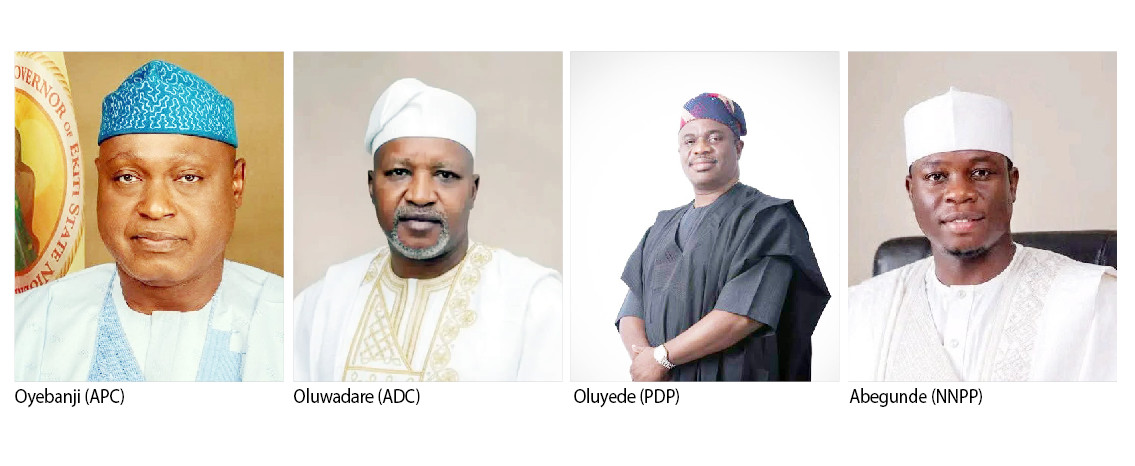
Today, 1,028,929 eligible voters in Ekiti State are heading to the polls to elect a governor from among 13 candidates. This election is significant as it marks the first governorship election to be conducted under the Electoral Act 2026. The state's 1,059,360 registered voters saw 97.1 percent, or 1,028,929, collect their Permanent Voter Cards (PVCs) ahead of the exercise. The election is set to take place across 2,445 polling units, distributed among 177 wards in the state's 16 local government areas.
Among the candidates contesting are Opeyemi Falegan (Accord), Oluwasegun Akande (AAC), Oluwadare Bejide (ADC), Ojo Ayodeji (ADP), Olanrewaju Anifowose (APM), Biodun Oyebanji (APC), Dr Oluwole Oluyede (PDP), Olaiya Awogbemi (APP), Oyebanji Olajuyin (LP), Praise Ayodele (PRP), Damilola Adetunji (ZLP), Olusegun Osinkolu (YPP), and Blessing Abegunde (NNPP). Notably, the APM candidate, Chief Joseph Anifowose, stepped down to endorse the incumbent governor, Biodun Oyebanji of the APC, who also has the backing of the SDP. Conversely, members and supporters of the Accord Party are reportedly supporting the PDP candidate, Dr Oluwole Oluyede.
The Independent National Electoral Commission (INEC), under the supervision of Resident Electoral Commissioner Dr. Bunmi Omoseyindemi, has been actively preparing for the election. Sensitive election materials were deployed from the Central Bank of Nigeria (CBN) in Ado-Ekiti, monitored by security agencies, election observers, civil society organizations, and media representatives before being escorted to local government areas. The Commission also disclosed that registered voters increased from 987,647 to 1,059,360 following a Continuous Voter Registration (CVR) exercise. Additionally, INEC has introduced a primary results validation process through the e-EC8A system, enabling polling officials to enter result data directly from physical result sheets into the Bimodal Voter Accreditation System (BVAS), aiming to strengthen public confidence by allowing comparison with scanned result sheets uploaded to the IReV portal.
To ensure a peaceful and violence-free election, the Ekiti State Police Command announced restrictions on vehicular movement across the state from 12:00 a.m. to 6:00 p.m. on election day. Exemptions apply to students writing national examinations, designated INEC officials, accredited journalists, election observers, medical personnel, and emergency responders. The police strictly prohibited VIPs from moving with armed escorts to polling units and collation centres and barred vigilante groups and other quasi-security outfits from providing security services. Only members of the Inter-Agency Consultative Committee on Election Security (ICCES) are permitted to provide election security. Commissioner of Police for the election, CP Abayomi Shogunle, assured residents of adequate security and urged peaceful participation.
Security presence has been heightened, with personnel from the Nigeria Police Force, Army, Department of State Services (DSS), Nigeria Security and Civil Defence Corps (NSCDC), and Immigration Service deployed across the state. The NSCDC alone deployed 10,000 personnel, drawn from several state commands and operational reinforcements, to ensure a peaceful, credible, and violence-free electoral process. Strategic locations in Ado-Ekiti and major highways linking the state with neighboring states were manned by security operatives as of Friday evening.
Despite preparations, concerns remain. INEC, through ICCES, identified between 469 and 500 polling units as vulnerable areas requiring additional security. Yiaga Africa also highlighted potential flashpoints in Ado-Ekiti, Ikole, Oye, Ikere, Ilejemeje, and Moba local government areas, citing security concerns and recent kidnapping incidents that could impact voter confidence. A significant concern raised by Yiaga Africa and other stakeholders is the persistent threat of vote-buying, which is seen as a major challenge to election integrity, potentially exacerbated by economic hardships. Furthermore, both Yiaga Africa and the New Generation Girls and Women Development Initiative (NIGAWD) expressed concern over inclusion in the electoral process, noting that none of the 13 governorship candidates publicly identifies as a person with disabilities, and no female candidates were fielded for the governorship race.
Various civil society organizations and electoral stakeholders have called for responsible conduct from all parties. The European Union Support to Democratic Governance in Nigeria (EU-SDGN) Election Observation Hub, comprising groups like the Kukah Centre and Yiaga Africa, urged INEC to ensure timely deployment of materials and seamless electronic transmission of validated polling unit results in real-time, as stipulated by the Electoral Act 2026. They also called on political parties to respect the Peace Accord, condemn vote trading, shun thuggery, and refrain from spreading fake news. Security agencies were urged to remain neutral, and the media advised to verify information before publication. Similarly, a coalition led by NIGAWD and the Youth Electoral Reform Project (YERP-Naija) emphasized transparency, integrity, and peaceful conduct, urging strict compliance with electoral laws, especially electronic transmission of results to the INEC Result Viewing Portal (IReV), and calling on voters to reject vote trading.
Yiaga Africa has independently deployed 272 election observers across the state under its Watching The Vote (WTV) methodology, including 250 stationary and 22 mobile observers, to monitor electoral processes and promote transparency. Using its Process and Results Verification for Transparency (PRVT) system and Election Result Analysis Dashboard (ERAD 2.0), Yiaga Africa aims to independently assess the performance of the IReV and verify official outcomes. The organization stressed that this election serves as an important test of Nigeria’s electoral preparedness, transparency, and public confidence under the new legal framework, providing an early indication of how reforms relating to result management and electronic transmission will function.
Lastly, the International Press Centre (IPC) and the Centre for Media and Society (CEMESO) urged journalists covering the election to maintain professionalism, non-partisanship, and prioritize their safety by displaying accreditation tags and avoiding expressions that identify with any political party or personality.