US Congress Stalls Crypto Clarity Act: Republicans Blame Democrats Amid Looming Recess
The U.S. Senate is racing against time to pass the crypto Clarity Act before its August recess, facing Republican criticism over Democratic delays. The bill, which seeks to establish a regulatory framework for digital assets, has been stalled by concerns over its wording, banking lobby interests, and ethics, despite strong bipartisan support from the House and backing from major financial institutions.
The highly anticipated crypto Clarity Act faces a critical juncture in the U.S. Senate, with Republicans vehemently criticizing Democrats for delaying its passage as the August recess looms.
The senator Bill Hagerty, who spoke to Fox News, emphasizing on the urgency, stating that the U.S. cannot afford to lag behind other nations in digital asset regulation.
With lawmakers who has a mere two days to vote on the bill before the Senate enters its recess, a situation that has intensified partisan tensions.
A bipartisan draft of the Clarity Act has been circulating among legislators, yet some Republicans allege that a number of Democrats are being overly meticulous regarding the bill's precise wording.
Senator Hagerty specifically questioned whether the bill could pass with Democratic support, expressing concern that "midterm politics" might be impeding progress.
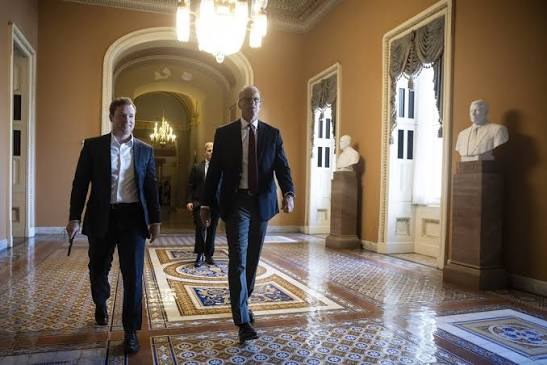
He highlighted the global shift towards digital systems, referencing the "Genius Act" as a step towards maintaining the digital dollar's dominance, and stressed the necessity of the Clarity Act to regulate the broader digital asset market.
Republican majority leader John Thune indicated that an initial vote on the bill might still occur this week, despite the Senate's heavy legislative agenda.
The bill had previously garnered strong bipartisan support and passed the House of Representatives last year.
However, a significant number of Democrats have voiced concerns over the bill's current language, arguing it requires further refinement.
Pro-crypto Republican, Senator Cynthia Lummis has been particularly vocal, accusing Democrats of deliberately obstructing the bill's passage.
The former Republican Senator, Pat Toomey underscored the urgency of passing the legislation this week, noting the transformative potential of blockchain technology across finance and other economic sectors.
He asserted that establishing legal clarity is essential for this technology to flourish.
The Clarity Act has been in a deadlock for much of 2026, partly due to the banking lobby raising concerns over stablecoin yield, fearing a potential loss of their deposit base if crypto exchanges offer attractive rewards.
An updated version of the Clarity Act was introduced in July, specifically addressing ethics concerns.
This revised language now includes a ban on government officials and their families from issuing or promoting cryptocurrency.
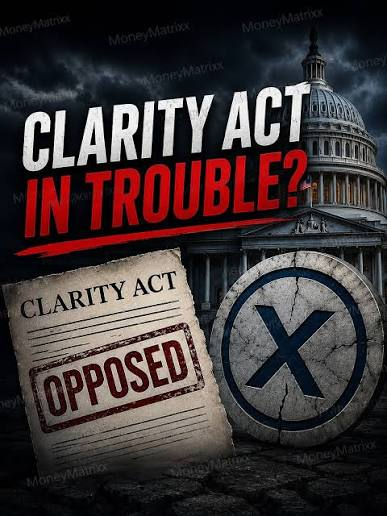
Despite this, Democratic Senator Elizabeth Warren has maintained her criticisms, suggesting that the bill could facilitate money movement for criminals and cartels and potentially enrich former President Donald Trump.
She has also questioned the "electoral invincibility" of crypto in the Senate.
Further complicating matters are allegations from some lawmakers regarding potential conflicts of interest related to President Trump's business ventures, particularly his family's reported earnings from meme coins and the decentralized finance protocol, World Liberty Financial.
These claims contribute to the skepticism among certain Democrats.

Despite these challenges and slow legislative movement, the Clarity Act continues to receive strong backing from various influential entities.
Major financial institutions, including Fidelity and Goldman Sachs, alongside law enforcement organizations, have thrown their weight behind the bill.
The president of the Solana Institution and former Blockchain Association CEO, Kristin Smith, confirmed that the ongoing bipartisan collaboration, specifically mentioning Republican Thom Tillis and Democrat Ruben Gallego's work on new ethics language for the act.
A prominent crypto company, Coinbase, has also expressed optimism last week, with its Chief Policy Officer, Faryar Shirzad, acknowledging the diligent efforts of both Democratic and Republican lawmakers in drafting the legislation.
If passed, the Clarity Act would establish a much-needed comprehensive regulatory framework for the cryptocurrency market in the U.S.