Education Is the Common Goal, But Is It Really?
For years, education was seen as the key to escaping poverty—but is that still true today? But, however, the key question to asked; Is education still the ultimate path to success, or has the definition of success changed with a new generation?
For generations, education has been regarded as the foundation of success and personal development.
But in the past, education was widely regarded as the most reliable way to escape poverty, particularly for people from disadvantaged backgrounds. While wealthy families often had easier access to quality education, those from poorer households had to work much harder to obtain the same opportunities.
For many, a degree or academic qualification represented a pathway to a better life and greater economic stability.
According to the World Bank, each additional year of schooling increases individual earnings by approximately 9%, while UNESCO estimates that education has contributed to a 40% reduction in extreme poverty since 1980.
But, however, in recent years, some people have argued that the value placed on education is gradually declining as social media, digital entertainment, and alternative career paths attract the attention of younger generations.
This raises an important question: Is education still viewed as the primary route to success, or is its influence slowly being replaced by new opportunities in the digital age?
As a result, parents encourage their children to pursue it, governments promote it, and society often portrays it as the key to a brighter future.
From an early age, many people are taught that obtaining a good education is essential for achieving their dreams.
However, this raises an important question: Is education truly the only shared path to success, or have changing times created alternative routes to achieving one's goals? In my opinion, while education remains highly valuable, it is no longer the sole measure or pathway to success in modern society.
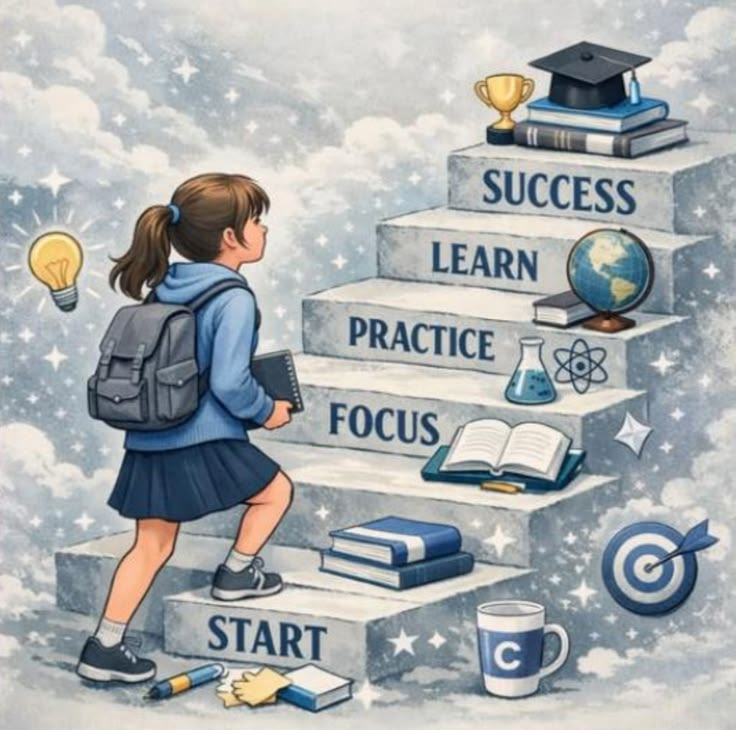
Education Is No Longer the Only Path to Success
Traditionally, academic qualifications were seen as the most reliable route to financial stability and social mobility.
For instance, some observers point to the gradual reduction in admission cut-off marks in Jamb over the years as a sign that academic performance may not be as strong as it once was.
In my view, this reflects a growing shift in priorities among some young people, many of whom appear to devote more attention to social media and online activities than to studying and preparing for important examinations.
As a result, some students may approach examinations without adequate preparation, relying on guesswork rather than knowledge.
Despite these concerns, education continues to be highly valued and remains an important pathway to success.
However, the modern world has also increased the importance of practical skills, entrepreneurship, and digital expertise.
Today, possessing a degree alone is often not enough; employers and society increasingly place value on skills that can be applied in real-world situations.
This is why I believe that while education remains a key foundation for success, it now works best when combined with relevant skills and experience.
That’s why the rise of entrepreneurship, digital content creation, skilled trades, and technology-driven careers has challenged this belief.

Many successful individuals have built thriving careers outside conventional educational pathways, leading some people to view education as one option among many rather than the ultimate destination.

Economic Realities Are Changing People's Priorities
In many societies, rising unemployment and underemployment among graduates have raised questions about the value of formal education.
Seeing degree holders struggle to secure jobs has caused some young people to prioritize financial independence, practical skills, and business opportunities over academic achievements.
This is the reason why one of the realities of modern life is that people do not always rely solely on qualifications when seeking services or opportunities.
In some cases, personal recommendations and affordability influence their decisions more than academic credentials.
For example, a person may choose a service provider who has been recommended by friends or family because the cost is lower than what they would pay at a professional clinic or established institution.
This often happens when people are trying to save money or when they trust the experiences of those close to them.
As a result, qualifications are not always the only factor that determines who people turn to, even though professional training and expertise remain important.
Because of this, earning a living often appears to be the immediate goal, with education becoming a tool rather than the main objective.

Personal Fulfillment Means Different Things to Different People
Not everyone defines success in the same way, and while some pursue higher education to achieve their dreams, others focus on creative passions, family life, community impact, entrepreneurship, or personal growth.
For many people, success is measured not by the certificates they earn but by the lives they build, the impact they make, and the happiness they find.
The idea that everyone shares a single goal overlooks the diversity of human ambitions and the different paths people choose to reach them.
Education can support these aspirations, but it may not always be at the center of them.
In today's world, personal fulfillment is increasingly shaped by individual values, opportunities, and life experiences rather than by academic achievement alone.
Conclusion
In my opinion, education remains one of the most valuable investments a person can make, but I do not believe it is the common goal for everyone.
Instead, I believe most people are ultimately seeking success, financial security, personal fulfillment, and a better quality of life, with education being just one of several paths that can help them get there.
As society continues to evolve, opportunities beyond the traditional classroom are becoming more visible, allowing people to achieve their goals in different ways.
That said, I still believe education provides a strong foundation by equipping individuals with knowledge, critical thinking, and opportunities that can open doors throughout life.
The common goal, therefore, is not education itself, but the better future that people hope to create through whatever path best suits their ambitions.