Economic Crisis: Atiku Links National Hardship Directly to Tinubu's Policies!
Atiku Abubakar, through Phrank Shaibu, has asserted that Nigeria's path to prosperity lies in domestic production, not solely through borrowing, importing, or taxing. Criticizing the current import-reliant model and its dire consequences like soaring food inflation and declining industrial output, Atiku proposed rebuilding the economy on agriculture, manufacturing, and value addition, emphasizing a "Produce in Nigeria" mission for job creation and a stronger naira.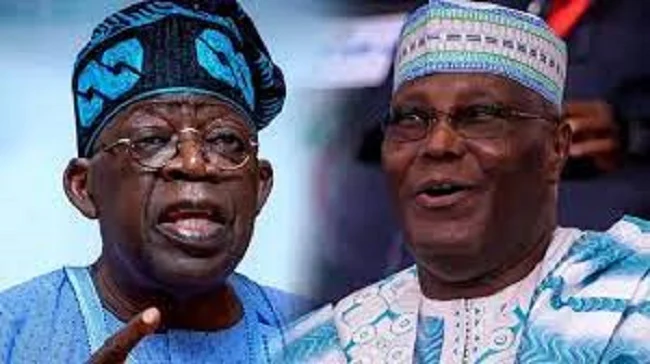
The presidential candidate of the African Democratic Congress, ADC, Atiku Abubakar, has criticised President Bola Tinubu’s economic policies, arguing that the country’s worsening hardship is the result of policies centred on borrowing, importation and taxation instead of production.
Atiku disclosed this in a statement by his spokesperson, Phrank Shaibu onMonday, where he argued that the country’s worsening economic hardship reflects years of policies that encouraged importation at the expense of local production.
That Nigeria cannot achieve prosperity by relying solely on borrowing, importing, and taxing.
He strongly advocated that the country’s economic salvation is intrinsically linked to its ability to produce what it consumes, manufacture what it utilizes, and export what it creates.
Shaibu criticized Nigeria's prolonged economic strategy, which he described as an overemphasis on importation at the expense of domestic production.
He highlighted that the nation imports food that could be grown locally, goods that should be manufactured in Nigerian factories, and even raw materials that ought to be processed by Nigerian hands.
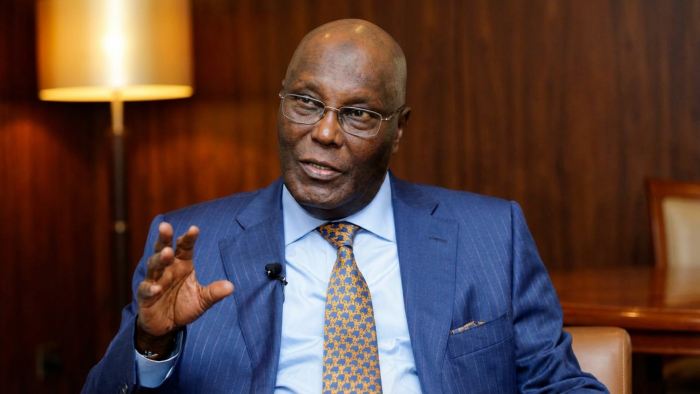
He firmly stated, “No nation has ever become prosperous by exporting jobs and importing poverty.”
The consequences of this flawed economic model are evident across various sectors, that food inflation, for instance, has reached a national average of 17.52 percent, climbing significantly higher to 53.02 percent in Kogi and 43.83 percent in Niger State, thereby pushing millions of families beyond the reach of basic nutrition.
Furthermore, Nigerian manufacturers incurred expenses of ₦3.53 trillion importing raw materials within a mere six-month period.
Industry experts have also raised concerns that dwindling manufacturing tax contributions reflect a weakening industrial activity and a reduction in factory output.
Shaibu emphasized that “A nation cannot build prosperity when its factories are falling silent. We are exporting jobs, importing inflation, weakening the naira and mortgaging our future.”
Atiku underscored the urgent need for Nigeria to rebuild an economy fundamentally anchored on agriculture, manufacturing, solid minerals, technology, and value addition.
He illustrated this vision by explaining that every bag of cocoa processed from Idanre and the rich cocoa belt of Ondo State, every bag of rice harvested in Kebbi, every yam cultivated in Benue.
And every tomato processed in Kano, even the pharmaceutical produced in Aba, every leather product made in Kano, and every machine assembled in Nnewi directly contributes to job creation, strengthens the naira, and diminishes reliance on imports.
The former vice president also reminisced about the Obasanjo-Atiku administration's economic achievements.
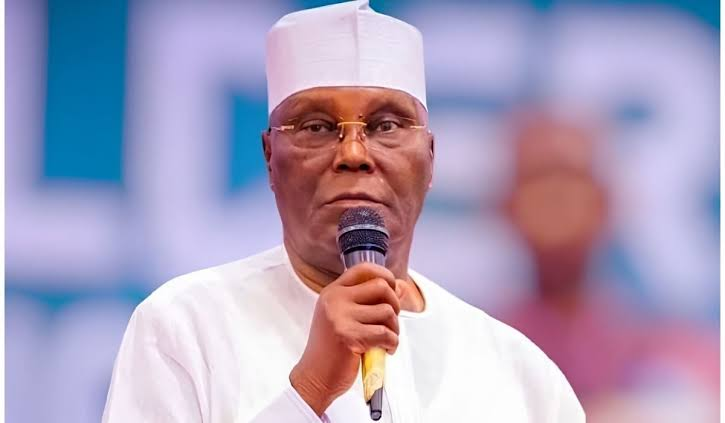
He recalled that their government successfully implemented market-oriented reforms that revitalized investor confidence, liberalized key sectors, and attracted unprecedented private investment, thereby laying a robust foundation for one of Nigeria’s most significant periods of economic growth.
Looking forward, Atiku stated that an ADC government would prioritize restoring security to farming communities and industrial corridors, stressing that “food security begins with farm security.”
He detailed a comprehensive plan of action, which includes reducing import duties on industrial machinery not produced locally, providing affordable long-term credit for farmers and manufacturers, guaranteeing competitive electricity and fuel pricing, and restoring stability to the naira.
Additionally, significant investments should be channeled into critical infrastructure such as power, roads, rail, irrigation, and storage facilities.

The administration would also promote agro-processing and industrial clusters, reform the tax system to incentivize production, and ensure decent wages to bolster Nigerians’ purchasing power.
He concluded that by reiterating that factories cannot thrive in an environment where borrowing is prohibitive, energy is unaffordable, the national currency is unstable, and consumers lack the purchasing power to acquire locally made goods.
Atiku then articulated a straightforward yet powerful mission: “Produce in Nigeria. Employ Nigerians. Consume Nigerian products. Export Nigerian excellence.”
He firmly believes that the true wealth of nations is measured not by their imports but by what they produce, process, and export, pledging to rebuild Nigeria on these principles, just as they had done in the past.