Caitlin Clark's Footwear Finally Arrives in a Roar
Nike has finally unveiled Caitlin Clark's signature shoe, the "Caitlin 1," and an accompanying apparel line, set for an October 1 release. This major promotional push comes after years of minimal engagement despite Clark's explosive marketability, sparking questions about Nike's delayed strategy amid its own financial struggles. The launch represents a critical step for Nike as it aims to capitalize on Clark's unparalleled popularity and rejuvenate its brand.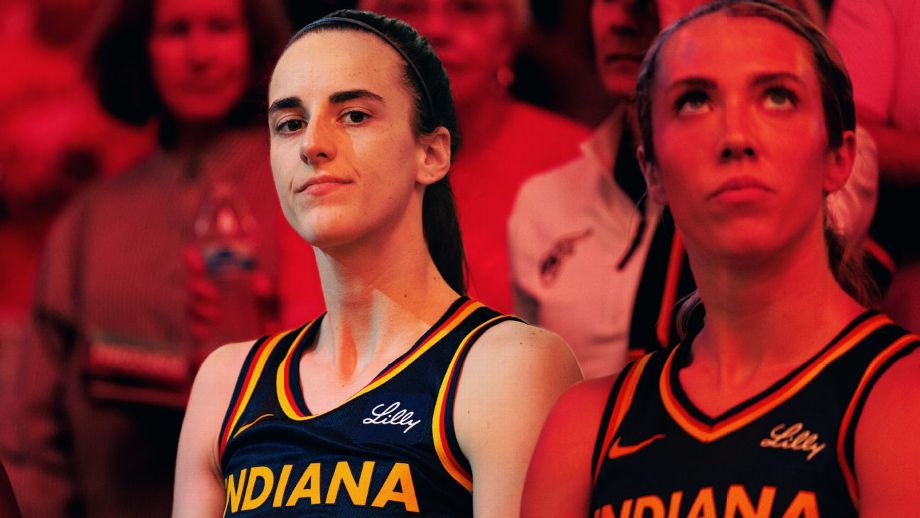
The highly anticipated signature shoe for WNBA star Caitlin Clark, dubbed the "Caitlin 1," along with an 18-piece apparel line, was officially unveiled by Nike on Wednesday, marking a pivotal moment for both the athlete and the brand. Featuring a distinctive sharp blue color scheme and incorporating new performance technology designed to reduce drag and enhance movement efficiency, the collection is set to go on sale October 1. Clark herself might debut the shoes as early as Thursday's Indiana Fever game. This launch represents a significant product and promotional push aimed at boosting Nike's sales, reinvigorating the company, and elevating Clark's already formidable public profile. Clark expressed her hope that the initiative would inspire the next generation, saying, "If it inspires even one kid to work harder or fall in love with the game, that's what makes it special."
Despite the excitement, the unveiling has sparked a persistent question: why did it take Nike so long? The company initially signed Clark to a name, image and likeness (NIL) deal in October 2022, prior to her junior season at the University of Iowa. This was followed by a fresh eight-year, $28 million contract in April 2024, coinciding with her entry into the WNBA. Yet, for over three and a half years, Nike largely sidelined Clark, despite her rapid ascent to become one of the most popular and marketable athletes in the country. During this period, Nike's engagement was minimal, limited to a single national standalone commercial ("From Anywhere"), a few T-shirts and pullovers, and sparse promotional efforts or in-store signage. Her treatment on Nike's social media accounts was also notably light, with only three posts in 2026 prior to the shoe release.
This perceived inaction stands in stark contrast to Nike's historical strategy of leveraging superstar athletes, especially in basketball. Sonny Vaccaro, the retired sneaker executive renowned for signing Michael Jordan to Nike in 1984, critiqued the delay as "one of the biggest failures I've ever seen." Vaccaro argued that Clark was "bigger [than Jordan] in some ways because she was a known commodity when she entered the WNBA," captivating the public beyond just her sport. He emphasized the disconnect, stating, "She is more than just a basketball player. It makes no sense."
The extended delay becomes even more perplexing when viewed against the backdrop of Nike's significant financial struggles. Since 2021, the company's stock has plummeted over 70%, equating to a loss of approximately $200 billion in valuation. Its stock price has fallen nearly 50% since Nike first signed Clark, trading at levels not seen since 2014. In fiscal year 2025, Nike, despite remaining the world's largest athletic apparel company, saw its revenue drop by $5.1 billion, nearly 10%, while its competitor Adidas reported a 13.3% increase. The company has also undertaken significant layoffs, cutting around 2,000 employees since January alone. While Nike declined comment to ESPN regarding its past non-use of Clark, its current focus is clearly on the path ahead.
Meanwhile, Caitlin Clark's marketability exploded across various sectors, demonstrating her immense appeal. She has appeared in national commercials for State Farm, Xfinity, and Gatorade, alongside targeted spots for Eli Lilly and Hy-Vee. Her presence extends beyond the court; in May, she served as grand marshal of the Indy 500 and made a memorable appearance with Morgan Wallen at a concert. Social media consistently buzzes with highlights of her performances. Other brands capitalized on her popularity, with Gatorade selling CC-branded towels and water bottles, Panini America offering trading cards and memorabilia, Stanley producing flip-straw tumblers, and Wilson Sporting Goods launching a line of signature balls, which they hailed as their most successful basketball launch "since Michael Jordan." This widespread commercial success by other entities underscores the "strange, if revealing, development" of Nike's initial cautious approach.
Analysts point to several systemic issues within Nike that may have contributed to this broader lack of focus and urgency. These include a "disastrous, post-Covid shift to direct-to-consumer sales" which led to ceding crucial retail space, a general lack of innovation in product design, and intensifying competition from emerging brands like On and Hoka, as well as established players like Asics and New Balance. Additionally, the once Nike-dominant Chinese market faces headwinds from domestic companies such as Anta Sports and Li-Ning. Jay Sole, a UBS industry analyst, highlighted another challenge: the NBA's struggle to produce new global superstars. While investors might struggle to name NBA stars under 35, "they almost assuredly know Caitlin Clark," making her a uniquely valuable asset. This emotional connection, or "mindshare," as BMO Capital Markets analyst Simeon Siegel describes it, is crucial, especially when Nike's biggest sellers are often established "retros" like Jordans, Kobes, and Air Force 1s. A global superstar can remind consumers that "the best athletes in the world wear Nike" and drive innovation stories.
Theories abound regarding the specific reasons for Nike's delay in fully activating its partnership with Clark. While Nike was undeniably aware of her popularity—evidenced by her multi-million dollar contract, inclusion in a Super Bowl commercial, a dedicated brand logo unveiled in December 2025, and a "Caitlin Clark colorway" Kobe 6 Pronto released in 2025—internal sources suggested the organization had grown complacent. CEO Elliott Hill has since initiated a "Win Now" strategy to streamline decision-making. Critics also point to indecisiveness in investing in women's sports, contrasting it with the swift release of LeBron James' signature shoe during his rookie season, just seven months after signing. Furthermore, Nike and its Jordan Brand currently feature eight NBA signature shoes but only two in the WNBA, despite the success of WNBA signature shoes like Sabrina Ionescu's "Sabrina 1," which was marketed as "just basketball" and appealed to both men and women.
Some speculate that a push existed within Nike to prioritize a signature shoe for a more accomplished veteran like A'ja Wilson, a four-time WNBA MVP and three-time champion. The sensitive issue of race also often intersects with WNBA discussions; until Wilson's A'One, Nike hadn't released a signature shoe for a Black WNBA player since Sheryl Swoopes in 2002, having more recently invested in white players like Ionescu, Elena Delle Donne, and Diana Taurasi. The extent to which this factored into the delay on Clark remains "unclear." Regardless, many argue that Nike did not need to make this an "either-or" choice, especially given the crowded men's market. Simple, low-cost promotional efforts like TV commercials, general advertising, and increased social media engagement for Clark could have been implemented swiftly.
David Picioski, head of marketing for team sports at Wilson Sporting Goods, noted the "insatiable" demand for anything Caitlin Clark from the moment she signed with them, a demand that has "persisted." Nike, however, "let that moment pass," even as its business faced significant challenges. Now, with a "full steam ahead" approach, Nike is dedicating the summer to promoting Clark in anticipation of the crucial shoe and apparel line release. While this belated effort may not fully compensate battered investors or laid-off employees for past oversights, it signals Nike's belated entry into the robust "Caitlin Clark business," perhaps illustrating the adage: better late than never.