Breaking Barriers: How Women-Centered FinTech is Empowering Africa’s Entrepreneurs
Women-centered Fintechs in Nigeria and across Africa have taken the initiative in transforming the idea of financial inclusion, empowering women through credits to contribute meaningfully to their society.
Financial technology has become an important part of modern life, and has proven to be needed to navigate one's finances and business models no matter the kind.
Nigeria — one of the leading Fintech countries in Africa boasts a community of thriving women entrepreneurs.
According to Women World banking, Nigeria has world’s highest proportion of activity by women entrepreneurs, comprising a remarkable 23 million women who command 41% of the country’s micro-businesses.
Despite the flaunt of these statistics, a quiet struggle unfolds. Analysis from scholars have proven that women face a significant challenge — a mere 10% of loans from Financial Service Providers (FSPs) reach women-led businesses.
This financial disparity highlights a gender gap in access to capital — one that limits the potential of millions of women who have the ability to drive innovation and economic growth in Nigeria.
Many women enterpreneurs remain trapped in this cycle of underfunding, not because their ideas aren't sellable or businesses aren't scalable but because of systemic barriers like biased lending practices, limited collateral among many others.
As this problem continued to linger, various innovators have stepped in to bridge this financial gap and at the forefront is financial technology models redefining women access to credit, how to manage businesses and build financial independence.
THE GENDER GAP
Despite Nigeria's thriving community of women entrepreneurs, significant barriers as established earlier stand as obstacles that hinder their access to finances.
Structural issues like the lack of collateral or property ownership remains at the forefront of these problems limiting their ability to secure traditional loans, while fighting the various bias that comes from taking loans as a woman.

This structural barriers widen the already existing gap. And even though 41% of Nigeria's micro-businesses are women-owned, only about 10% of loans from financial service providers reach their businesses despite the fact that Nigeria houses as much as 23 million women enterpreneurs, the highest proportion in the world.
The human impact is clear as well in experiences that have been shared by various women who have struggled to gain financial credit for the expansion of their businesses.
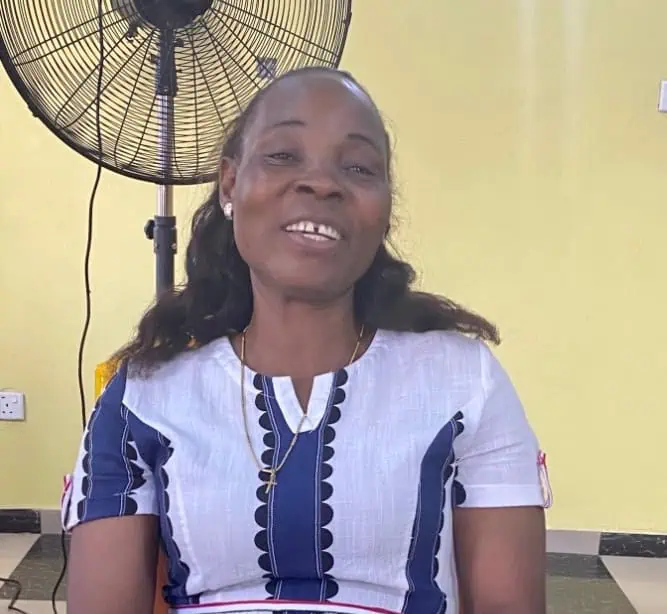
An example of a woman who faced such difficulty is Shakirat, a single mother who runs a grocery store in Lagos. It took 3 years of persistent efforts to finally secure access to credit. And with this, she was able to scale her business, and fulfil her dream of sending her children to receive formal education. Her story reinforces that empowering women has tremendous benefits.
However, this persistent gap in finance not only limits business opportunities but also reinforced broader social and economic inequalities.
FINANCIAL TECHNOLOGY AS A TOOL FOR INCLUSION
Financial technology companies around the globe have risen to solve this problem of exclusion and bridge the gap for good. Particularly in regions like Africa, where FinTech is gaining increasing significance, innovative platforms are proving instrumental in bridging the gender gap in financial inclusion.
By offering user-friendly interfaces, mobile accessibility, and targeted financial products and aids, these platforms are empowering women to take control of their finances and pursue entrepreneurial endeavours.
Some of these platforms are;
Cherehani Africa — This company leverages mobile to provide credit and to distribute tailored financial literacy content to women and adolescent girls who own micro-enterprises in Africa.
A brand's vision is sold by the stories it tells. For Cherehani, their story is particularly compelling. What started from a need to help women tailors acquire sewing machines grew into dedicated network of field officers to deliver financial literacy and tailored credit solutions. Today, their financial products now extend to working capital, school fees, dairy, and agricultural tools.
HerVest — HerVest is an inclusive FinTech for women. The platform provides easy access to target savings, impact investments and credit financing for smallholder women farmers and women-owned/led SMEs in Nigeria. This platform is committed to improving women lives through greater access to financial services with programmes like the Invest in A Woman-In-Trade.
Mighty Fin — This platform was created to fill in a very wide gap in Zambia's economic system. The problem which rose from the fact that thousands of Zambian small businesses and civil servants are denied access to credit simply because they lack formal collateral or a credit history.
This FinTech came to the rescue offering digital financial inclusion for women-owned and women-led businesses and empowering them through working capital loans. Using technology, the company has made the traditional loan application process simple, accessible and straightforward.
By simplifying loan applications digitally, Mighty Fin empowers women-owned and women-led businesses to access working capital, expanding opportunities for income generation and community growth.
Shecluded — Shecluded is a female-focused FinTech company that provides financial services such as growth loans and insurance to female entrepreneurs in various sectors of the economy.
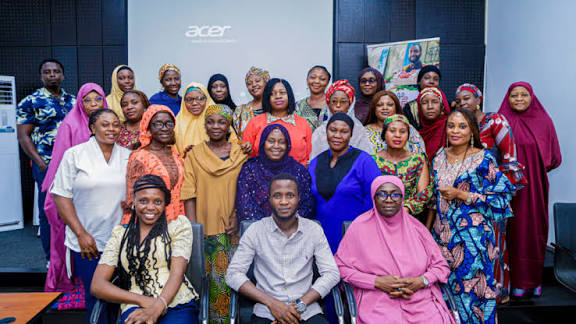
Their vision remains simple — to create a world where every woman has the financial power , knowledge, and community to build wealth, lead businesses, and shape economies.
IMPACT OF FINTECH ON WOMEN ENTREPRENEURS
While these gaps persist, financial technology has proven to be capable of bridging this gap with time. Platforms like Cherehani Africa, HerVest, Mighty Fin and Shecluded are not just offering loans — they are redefining what financial inclusion means for women.
Cherehani, for example, directly impacts over 130,000 women and children annually, providing not only tailored loans but also financial literacy programs designed to help women manage their businesses.
Similarly, enabling women to acquire essential tools, expand operations, and improve their household livelihoods.
The impact of these platforms remains tangible and goes a long way in ensuring that women entrepreneurs gain access to finance, develop essential skills and become more independent in both business and personal decision making.
The impact of these platforms among many others have also benefitted communities, improving economic activity, educational outcomes for children and stronger local economies.
Yet, challenges remain. Digital literacy, intermittent internet access, cultural norms, and regulatory limitations continue to restrict the full potential of these initiatives. Nonetheless, the rise of women-centered FinTech is proving that with innovation, support, and inclusive design, financial technology can be a true catalyst for economic empowerment.
Ultimately, the rise of women-centered Fintech in Nigeria and across Africa demonstrates that financial inclusion isn't just about access to loans — but independence and empowering women to contribute to economic growth and societal development.