Beyond the Gratuity: The Controversial Roots of Tipping Culture Exposed
Explore the complex and often troubling history of tipping in the United States, from its European origins to its problematic role post-Civil War as a means to subsidize wages for formerly enslaved people. Discover how this practice became entrenched in American culture, surviving legal challenges and minimum wage debates, and continues to carry significant racial and economic implications today.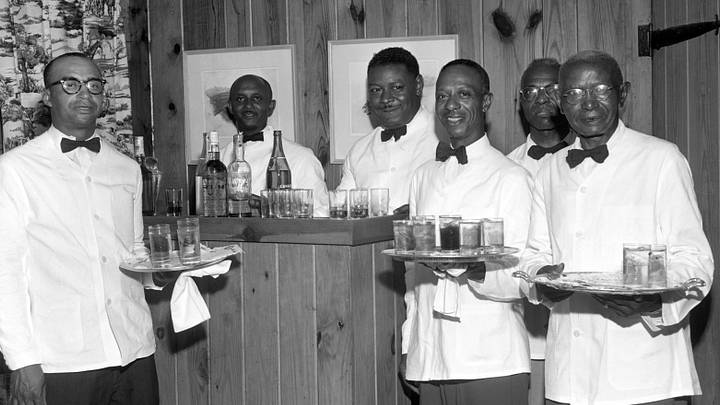
Tipping, a practice so deeply ingrained in the everyday life of the United States, often goes unquestioned, with many Americans automatically adding a gratuity to their restaurant bills. Yet, the origins and evolution of this voluntary gesture into an expected subsidy for workers' pay reveal a complex and often troubling history.
The roots of tipping can be traced back to medieval Europe, where servants would receive small sums for good service. This custom was later adopted by wealthy Americans returning from Europe in the 19th century, who viewed it as a symbol of sophistication. However, upon its arrival in the United States, tipping acquired a distinctly different and more problematic role, particularly in the aftermath of the Civil War. As formerly enslaved people began entering the workforce, especially in burgeoning sectors like railroads, hotels, and restaurants, business owners quickly exploited the practice as a means to drastically reduce labor costs. Rather than paying fair wages, employers shifted the burden of compensation onto customers through tips, effectively perpetuating a system reminiscent of slavery within the service industry pipeline. A prominent example is the Pullman Company, which hired African American men, many of whom were formerly enslaved, paying them meager base wages and expecting them to subsist primarily on passenger tips. What appeared to be a benevolent gesture from white patrons was, in reality, the very foundation of these workers' livelihoods.
By the late 19th and early 20th centuries, tipping had become widespread across American service industries, though not without significant controversy. Critics vehemently argued that it fostered an undemocratic system, forcing workers to subjugate themselves to customers for their basic income, with some even branding it as "un-American." William Scott, in his 1916 anti-tipping study, "The Itching Palm," drew a stark parallel between the dynamic of tipper and tipped to that of a "master and slave" relationship. The pushback was so strong that several states, including Georgia and Iowa, attempted to outlaw tipping in the early 1900s. These legislative efforts, however, were ultimately thwarted by strong opposition from restaurateurs and business owners, who recognized the economic benefits of the system.
The issue of fair compensation for tipped workers was further exacerbated with the establishment of the first federal minimum wage in 1938, set at 25 cents an hour. A significant 80 percent of the workforce, including tipped employees, were initially excluded from this provision. Employers were only obligated to make up the difference if a worker's tips fell short of the minimum wage. For decades, the subminimum wage for tipped workers remained largely overlooked. It wasn't until 1966 that these workers were granted a base wage, which was set at merely half the standard minimum. By 1991, the tipped minimum wage became fixed at $2.13 an hour, a rate that has remained unchanged ever since. While legal stipulations technically require employers to bridge any wage gap, enforcement is often inconsistent, leading to a reality where tips constitute over 58 percent of a full-service server's total paycheck.
Today, while tipping is often romanticized as a reward for exceptional service, its deep-seated racial undertones continue to influence the perceived value of service work. Historically, Black workers have been disproportionately represented in lower-paying positions within the restaurant industry compared to their white counterparts, a disparity that was further highlighted during the COVID-19 pandemic when many saw their tips decline. Eliminating tipping, however, presents its own set of complexities. Such a change would necessitate higher menu prices to cover increased wages, potentially deterring customers. Moreover, many servers themselves, particularly women and people of color who often live near the poverty line, rely heavily on fluctuating tips for their income, fearing the loss of potential earnings that can often be the deciding factor between making rent or facing eviction. The practice, therefore, remains a deeply entrenched and controversial aspect of American culture, with significant historical, economic, and social implications.