Beyond Bride Price: Do African Women Owe Anyone Marriage?
Beyond bride price and societal pressure, this article explores whether African women truly owe anyone marriage—challenging cultural expectations, redefining worth, and amplifying women who choose freedom, fulfillment, and self-agency over conformity.

Marriage as a Debt?
It often starts with a question, harmless on the surface, but heavy with expectation:
“When will you marry?”
In many African cultures, marriage is not just a personal milestone—it’s a communal expectation. Bride price ceremonies, family introductions, and cultural rites reinforce the idea that a woman’s journey to fulfillment ends at the altar. And once the bride price is paid, the weight becomes heavier. She’s now seen not just as a partner, but as a product of exchange, bound by duty, not necessarily love.
But what if she chooses to stay single? Or to marry late? Or never at all?
What happens when a woman rejects the narrative that her destiny is tied to
marriage?
Bride Price And Cultural Entitlement
Bride price—commonly referred to as Bride wealth,Lobola, dowry, or Ime ego across different African regions—is a deeply rooted cultural practice. It involves the groom or his family giving gifts, money, or livestock to the bride’s family, traditionally to show appreciation and honor. In places like Nigeria, Uganda, and Kenya, it is not merely symbolic—it carries social weight.
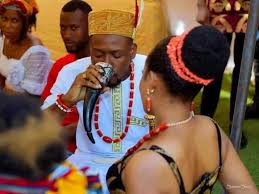
Photo Credit: Google Image
But somewhere between tradition and modernity, bride price has morphed into something transactional. In many communities, once a man pays, even modestly, there's an unspoken entitlement: to the woman’s body, labor, loyalty, and silence. Sources of child marriage data from Niger, Ivory Coast, and Uganda to show how bride price influences girls’ life trajectories
These have been passed down through generations, quietly stripping women of autonomy. Her choices, voice, and even exit from the marriage become matters of negotiation—not freedom. In extreme cases, some women are pressured to remain in abusive marriages because the bride price must be “refunded”—as if her pain has a price tag.
Yet, in this evolving world, a crucial question arises: If bride price makes marriage feel like a debt, who does the woman really belong to—herself or her buyer?
Marriage As A Measure Of Worth
Social Insight
Navigate the Rhythms of African Communities
Bold Conversations. Real Impact. True Narratives.
In many African societies, a woman’s worth is still tethered to her marital status, no matter how successful, educated, or fulfilled she may be. From family gatherings to church sermons, the pressure is persistent and deeply embedded. An unmarried woman over 30, regardless of her achievements, is often seen as “incomplete” or “unfortunate.”

Photo Credit: Istockphoto
This societal lens reduces the entirety of a woman’s journey to two milestones: “Has she married?” and “When will she have children?” Career milestones, personal growth, or financial independence are celebrated, but with an asterisk—as if they are secondary to her eventual role as a wife.
This imbalance sends a damaging message: that a woman’s purpose is not self-defined but socially approved—and that marriage is her ultimate validation. It begs the question: When will a woman’s life be enough, even if she chooses not to marry at all!
Family Pressure, Patriarchy & Silence

In many African homes, marriage isn’t just personal—it’s political. It’s tied to family honor, cultural pride, and even parental fulfillment. A woman’s singlehood is rarely viewed as a neutral choice. Instead, it’s whispered about during family meetings, questioned at weddings, and spotlighted at every festive gathering.
Often, it’s not strangers but family members who apply the most pressure, cloaking concern in statements like:
“Your mates are already mothers of two.”, “We want to carry grandchildren before we die.”
For many women, the pressure isn’t just about companionship—it’s about relieving their parents’ societal shame, avoiding gossip, and proving that their upbringing was “successful.” In some cases, this fear leads to rushed marriages, toxic unions, or emotional exhaustion from the performance of being “marketable.”
What Bride Price Doesn’t Mean
At its origin, bride price (or bride wealth) was a symbolic gesture—a cultural expression of gratitude and alliance between two families. It honored the woman, acknowledged her upbringing, and signified unity. In its ideal form, it wasn’t meant to commodify or transfer ownership. But somewhere along the way, the meaning blurred.
Today, in many African societies, bride price is too often interpreted as a transaction. Some men speak of it as a receipt “I paid, so she must obey.” This mentality fuels entitlement, reinforces gender inequality, and silences women in marriages where they’re viewed as property rather than partners.
Bride price should never be wielded as leverage. Consent, love, and freedom of choice must rise above tradition—no matter how longstanding. A woman is not a debt to be repaid, nor a reward to be earned. She is not “given away,” she is not “bought”—she is her own person.
To honor culture is to question it when it causes harm, and to reimagine it in ways that protect dignity, not just preserve
customs.
Social Insight
Navigate the Rhythms of African Communities
Bold Conversations. Real Impact. True Narratives.
Women Who Choose Differently
Across the continent, a quiet revolution is unfolding, led by women who are unapologetically rewriting the rules of womanhood. They are choosing themselves, not out of bitterness or rebellion, but from clarity and intention.
For some, it’s a conscious decision to marry later in life, when personal growth, financial independence, or healing has taken root. For others, it’s a bold rejection of marriage altogether, not out of contempt, but as a declaration that being unmarried is not being unfulfilled.
These women are redefining fulfillment, pursuing careers, exploring the world, starting businesses, prioritizing therapy, and embracing emotional wellness. They are reclaiming time, identity, and joy in ways that previous generations rarely had the freedom to do.
Their choices challenge the narrow definitions of success and womanhood still upheld in many African societies. And while they may face scrutiny or whispers, their lives tell a deeper story—one where a woman’s worth is not up for debate, and her future is hers to define.
Rewriting The Expectation
If African women are to truly thrive, then the expectation around marriage must evolve. It’s not enough to celebrate women after they’ve said “I do.” The conversation must shift starting in the family, the media, and society at large.
Photo Credit: Unsplash
Families must begin to ask different questions: “Are you happy?”, “Are you fulfilled?”, “What do you want for yourself?” instead of constantly asking “When is the wedding?” True support means seeing a woman’s wholeness beyond a ring.
In pop culture, we need more representation of diverse womanhood, single, married, childfree, divorced, widowed, all valid, all worthy. Films, novels, and digital content must normalize women choosing different life paths without being villainized or pitied.
Respect must not be tied to marital status. A woman shouldn’t have to be someone’s wife to be seen as responsible, mature, or respectable. Her accomplishments, character, and contribution to society should speak loud enough.
It’s time to rewrite the expectation to free women from the invisible clock. It is to say: You are enough, even if you never walk down the aisle.
Marriage Is a Choice, Not a Currency.
At the heart of it, marriage should be a personal decision, rooted in love, respect, and mutual choice—not societal pressure or cultural debt. A woman’s life path should not be reduced to a timeline that ends with bride price negotiations or altar vows.
Social Insight
Navigate the Rhythms of African Communities
Bold Conversations. Real Impact. True Narratives.
Across Africa, more women are learning to choose themselves first to question traditions that rob them of autonomy, and to honor the kind of life that brings them true fulfillment, not just family applause. This isn’t rebellion. It’s reclamation.
Because women don’t owe marriage to their families, their communities, or even their ancestors. They owe themselves joy, freedom, peace—and the agency to live fully, even if that life doesn’t come with a wedding ring.
“A bride price may be paid—but no one can afford a woman’s worth if her will isn’t part of the deal.”