Atiku Unleashes Firestorm: Alleges Tinubu's Subsidy Policy Enriches Cronies and Oil Giants!
Atiku Abubakar has accused President Bola Tinubu of devastating Nigerians' purchasing power and businesses through his economic policies, leading to soaring costs for essentials like fuel and food. Atiku advocates for a 'Production Subsidy' to support domestic refining and lower the cost of living, contrasting it with the current administration's approach. He calls for a shift towards policies that empower Nigerians financially and create jobs.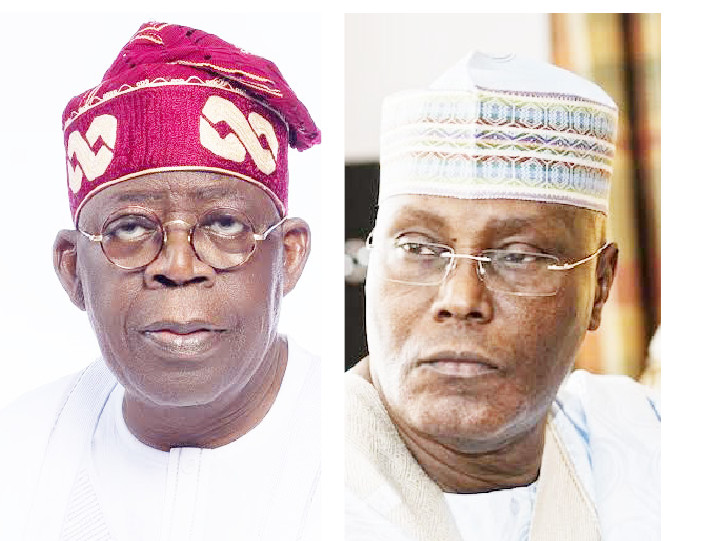
Former Vice President and African Democratic Congress (ADC) Presidential Candidate, Atiku Abubakar, has leveled accusations against President Bola Tinubu, asserting that his economic policies have severely eroded the purchasing power of Nigerians, depleted household finances, and pushed businesses to the brink. Atiku, through his Senior Special Assistant on Public Communication, Phrank Shaibu, stated that President Tinubu can no longer conceal the dire consequences of his decisions behind favorable economic statistics emanating from Abuja, as ordinary citizens grapple with the painful realities.
Atiku specifically criticized Tinubu's removal of the fuel subsidy, which he claims has directly led to escalating costs for fuel, transportation, and food. He further highlighted that Tinubu is now opposing a proposed "Production Subsidy," which Atiku suggests is designed to alleviate these burdens and inject money back into Nigerians' pockets. Atiku underscored that the stance of the Crude Oil Refinery Owners Association of Nigeria (CORAN) advocating for domestic refining, coupled with former President Donald Trump’s efforts to bolster petroleum production and refining in the United States, exposes the flaws in Tinubu's arguments against targeted support for Nigerian production.
According to Atiku, the current cost-of-living crisis was not inherited by Tinubu but rather created and exacerbated by his administration's policies. He argued that Tinubu stripped citizens of economic relief, making essential goods and services – including fuel, food, and transport – prohibitively expensive. This situation, Atiku contended, leaves Nigerians to contend with empty pockets while being urged to applaud economic figures.
Recent reports indicating that a substantial portion of the short-term assets of major Nigerian companies are now tied up in unpaid customer bills further illustrate the problem. While businesses may record sales, customers increasingly lack the financial capacity to pay, a direct consequence of the drained purchasing power under Tinubu's economic management. An illustrative example provided was that of a frozen food vendor in Kubwa, who faces increased costs for transportation, freezer power, and restocking, while her customers, being poorer, purchase less or seek credit. This chain reaction ultimately leads to her inability to restock, indebtedness to suppliers, and the widespread propagation of economic hardship.
Atiku cited specific examples of drastic price increases: fertilizer from approximately ₦9,000 to ₦50,000; petrol from about ₦199 to ₦1,400 per liter; cement from roughly ₦4,000 to ₦13,500; and the dollar exchange rate from around ₦450 to ₦1,400. Despite these hardships, Atiku questioned what tangible benefits ordinary Nigerians have received, pointing to the absence of reliable electricity, educational loans, security, N-Power schemes, and affordable food and transport, concluding that life itself has become expensive.
In contrast, Atiku presented his "Production Subsidy" proposal as a mechanism to empower citizens financially. This plan advocates for supporting domestic production and refining, increasing supply, monitoring prices, and ensuring that Nigerians experience the benefits at the pump. He reiterated that CORAN advocates for domestic production, and even America recognizes the strategic importance of supporting energy production. Atiku criticized Tinubu's government for attacking relief measures for ordinary Nigerians, while simultaneously granting waivers, incentives, and concessions to multinational oil companies and businesses aligned with his administration. He questioned why intervention becomes