Are Some Careers Respected Only Because Society Says So?
Who decided which professions deserve admiration? Are some careers admired only because society says so? Social perception often shapes respect and real impact is sometimes ignored.
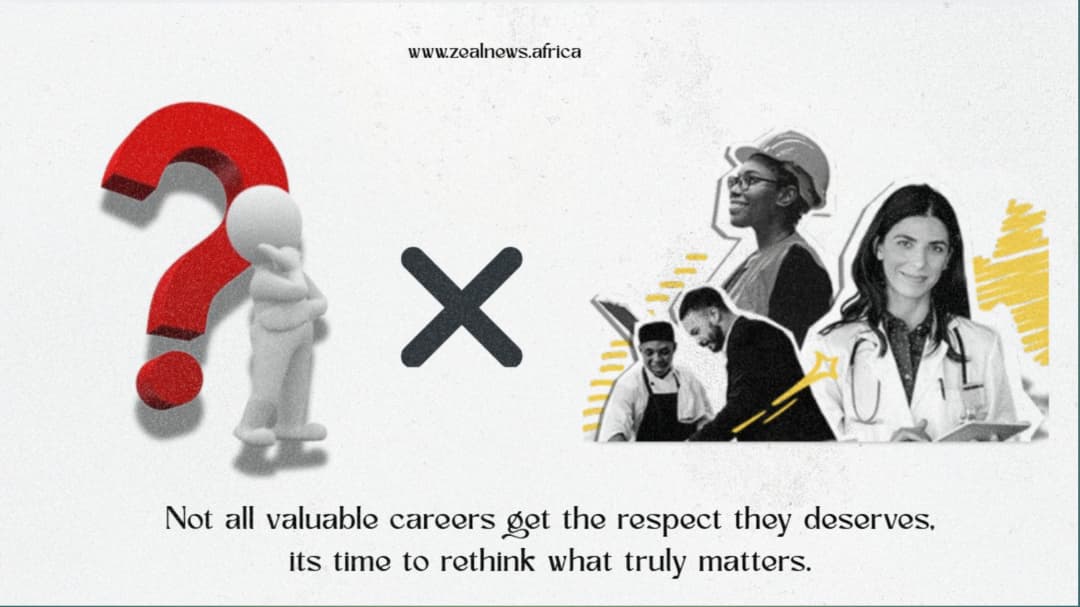
You tell someone you’re a lawyer, and there is this visual cue of respect or recognition.
You tell someone you’re a photographer, and suddenly your work needs explaining.
Somewhere along the way, society decided which careers deserve admiration and which don’t.
Yet, who decided this, and why does it matter?
Some professions carry respect almost by default, while others, often equally important, are quietly overlooked.
This isn’t just about jobs… it’s about how we measure value, how we choose paths, and how we justify the work we do every day.
The Invisible Hierarchy of Professions

Walk into any social gathering, and you’ll notice it quickly: certain careers automatically command respect.
Doctors, engineers, and lawyers are mentioned with pride.
Creative professions, trades, or public service roles rarely get the same instant admiration.
This invisible ranking isn’t new, it’s woven into the stories parents tell, the media we consume, and the cultural markers we unconsciously follow.
Yet, the irony is striking: some of the most “respected” jobs might not even touch lives as directly as we think, while some quietly undervalued careers are keeping society running every single day.
When Respect Becomes Social Currency
In many communities, a person’s career isn’t just about personal achievement, it’s about family reputation and social standing.
Parents often push children toward professions that “look good” on paper.
A medical degree or a law license isn’t just a ticket to income; it’s a status symbol.
Families gain social validation when their children pursue high-prestige careers, while those choosing creative paths or unconventional trades are sometimes met with polite skepticism—or worse, disappointment.
Over time, the career itself becomes a social currency, sometimes more important than the actual impact of the work.
Respect vs. Real Impact

Consider this: farmers feed nations, teachers shape the next generation, and technicians maintain the infrastructure that powers modern life.

Yet these roles rarely spark the same admiration as careers in finance or law.
The question arises: does society respect a career for its real-world impact, or simply because tradition has labeled it “prestigious”?
In many cases, respect is a construct, a label handed down through generations, rather than a reflection of true contribution.
This realization challenges the idea that a career’s worth is defined externally, it may matter far more what the work does than what others think of it.
Living Inside the Label
The invisible hierarchy of careers affects how people feel about themselves.
Someone in a traditionally respected profession might feel validation even if they’re unhappy, while someone in a less celebrated role might constantly feel the need to justify their choices.
This tension between external recognition and personal fulfillment can shape decisions, drive anxiety, and even push people toward careers that aren’t aligned with their passions.
When society decides what is respectable, we all end up performing roles, sometimes at the expense of our own satisfaction and growth.
Rethinking Career Respect

The good news is that career prestige is not permanent.
Fields once dismissed like tech entrepreneurship, digital content creation, or certain creative industries are gaining admiration as their influence grows.
This shift shows that societal respect is fluid, not absolute, and that individuals have room to define their own measures of success.
Choosing a career shouldn’t just be about what society applauds, it should consider meaning, skill, contribution, and personal growth.
By questioning why we value certain professions, we open space for careers that are respected for what they actually achieve, not just what they appear to be.
In the end, respect is a lens society applies, not a truth inherent in a profession. The challenge lies in seeing beyond labels, recognizing the value in all forms of work, and making choices that balance personal fulfillment with social perception.
After all, if prestige is constructed, maybe it’s time we reconstruct it and this is starting with how we see the careers around us.