Another Middle East Conflict, Another African Price Hike
Fresh tensions between Iran, Israel, and the United States are pushing oil prices upward. Here’s why another Middle East conflict could quickly translate into higher fuel, food, and living costs across Africa.

The latest escalation in the Middle East involving fresh confrontations between the US, Israel, and Iran is already sending tremors through the global economy. And as always, the people who had the least to do with starting it are being asked to pay the highest price.
That would be us, Africans.
Here is the problem in plain language: Africa runs almost entirely on imported energy and imported food.
When the Middle East catches fire, global oil prices spike. When oil prices spike, everything that moves becomes more expensive to run.
And when movement becomes expensive, the cost of every single thing you buy at the market goes up. All of it.
This is not a theory. It is a pattern that has played out repeatedly, most recently during the Russia-Ukraine war.
Between 2020 and 2022, food prices across sub-Saharan Africa rose by nearly a quarter, the steepest climb since the 2008 global financial crisis.
Africa's food import bill, which stood at around $15 billion in 2018, ballooned to over $97 billion between 2021 and 2023.
That is money leaving African economies, money that could have built irrigation systems, funded local farmers, or kept factory workers employed.
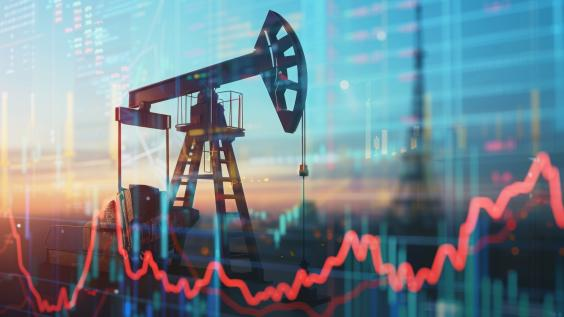
The Oil Trap
You might think that since Africa has oil — Nigeria, Angola, Equatorial Guinea all pump crude — a rise in oil prices would be good news.
And for government treasuries that need revenue, it temporarily is. But there is a catch that hits ordinary people hard.
Nigeria and Angola have both scrapped their fuel subsidy programmes in recent years. That decision, painful but arguably necessary, means consumers are now directly exposed to every jolt in global oil markets.
When crude hits $100 a barrel, as analysts have warned it could do if the current Middle East conflict deepens, Nigerians at the pump will feel every cent of that in real time.
Countries with limited refining capacity face an even sharper squeeze. Most African nations import refined petroleum products rather than crude oil.
So even when African crude is being exported and earning dollars, the same countries are spending those dollars right back importing petrol, diesel, and jet fuel.
The net benefit for the average person on the street is close to zero and during a price spike, it turns negative fast.
The Bread Problem
Now let us talk about bread, because bread is where this gets very personal for very many people.
Africa imports an enormous amount of wheat from Russia, Ukraine, the United States, Canada. Nigeria alone imports 97 percent of the wheat it consumes.
What makes this maddening is that even when global wheat prices fall, African consumers rarely see relief.

International wheat prices dropped significantly in 2024-2025 compared to their 2022-2023 peaks, yet the retail price of a standard loaf across much of the continent remains stubbornly high.
Why? Because currency depreciation, high shipping costs, poor local infrastructure, and the removal of subsidies all absorb any savings before they reach the person buying bread for dinner.
So when a new Middle East crisis adds fresh uncertainty to global shipping, particularly through the Red Sea, a critical corridor for goods moving between Asia, Europe, and Africa, those bread prices are not going down.
They are going up and the average African households, where food spending already accounts for more than half of total income for many families, have almost no cushion to absorb that.
Africa is not walking into this crisis from a position of strength. East and Southern Africa alone had over 100 million food-insecure people in 2026.
Nigeria had more than 30 million people facing acute food insecurity. Sudan is in famine. The humanitarian aid partially filling these gaps is itself shrinking, with international funding down significantly in recent years.
The Bigger Question
Every time this happens, the same uncomfortable truth resurfaces: Africa's vulnerability is not just about external shocks. It is about the choices that have made the continent so exposed in the first place.
African governments have historically spent only 3 to 4 percent of their budgets on agriculture far below the 10 percent commitment many signed under the Maputo Declaration.
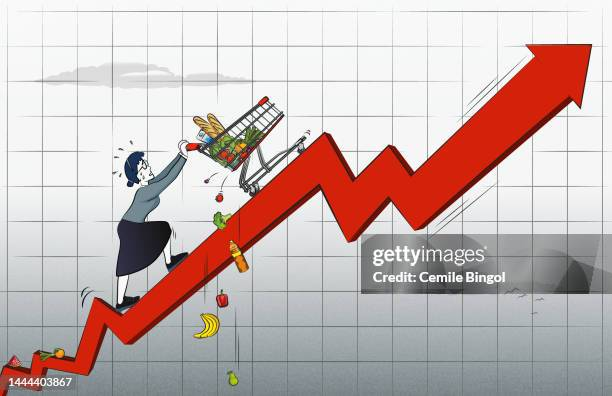
The continent exports cocoa, coffee, and cotton to the world while importing the wheat to make its own bread.
The African Continental Free Trade Area holds real promise for changing this by deepening intra-African trade in food and reducing dependence on distant, volatile global markets. But that promise requires political will and sustained investment to become reality.
Until then, every explosion in the Middle East will continue to echo in African markets. The bombs are not falling here. But the bills are landing squarely on our tables.