OpenCode Breach Exposes AI Users to Unexpected Charges
OpenCode, an open source AI coding agent, experienced a security breach affecting its Console platform, leading to exposed API keys and unauthorized charges on user accounts. The incident highlights the growing challenge of defending against AI-driven cyberattacks, particularly when AI models' safety filters hinder defensive analysis. Companies like OpenCode are seeking less restrictive AI models to combat sophisticated threats amidst a rise in AI-enabled cyber incidents.
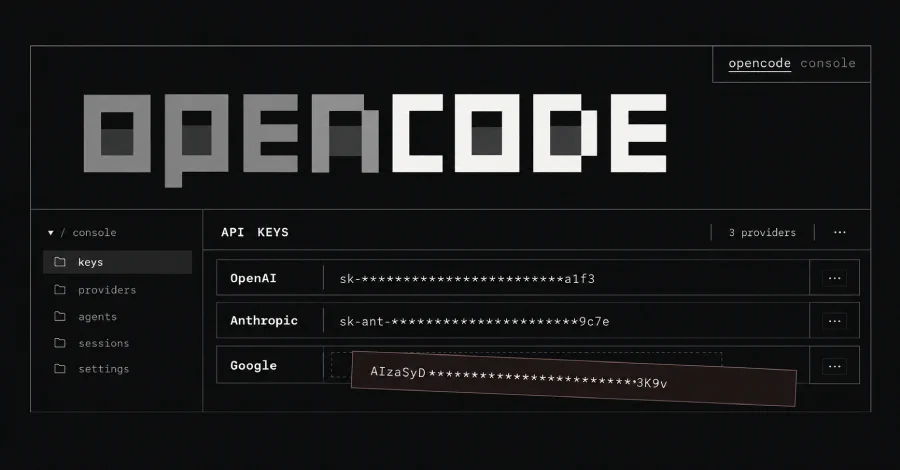
Developers using OpenCode, an open-source AI coding tool, have reported unexpected charges after a security breach exposed API keys linked to OpenAI, Anthropic and Google AI services.
OpenCode disclosed the breach on October 17, saying it affected 1.4% of users of OpenCode Console, its hosted platform. The company said attackers accessed an older system that was being phased out, potentially exposing keys that users had stored in their workspaces.
The incident left some developers facing bills worth hundreds of dollars, with a few reporting charges exceeding $1,000. It also raised concerns about how a breach at one AI platform can leave users exposed to costs across several other services.
How the breach affected developers
API keys allow applications to access AI services and are often linked to accounts that pay for each request. If someone obtains a valid key, they may be able to use the service and charge the account associated with it.
That appears to have happened here. Developers reported unexpected spending alerts from multiple providers, including OpenAI, Anthropic and Google.
OpenCode said the affected users had been notified by email. Co-founder Dax Raad stressed that the breach involved OpenCode Console, rather than the core open-source application or command-line tool. Those products do not send users’ API keys to OpenCode in the same way.
The company has not publicly explained how attackers entered the older system or provided a complete account of how the exposed keys were used.
Providers moved to limit the damage
Anthropic and Google blocked API keys they believed had been exposed. OpenAI worked with OpenCode to restore access for affected users and refund credits consumed during the incident.
OpenCode also said refunds for unauthorised charges were underway.
The company described the incident as a large-scale “distillation attack”. In AI development, distillation involves using the outputs of one model to help train or improve another. Stolen API keys could allow attackers to generate large volumes of responses from commercial models.
However, the exact purpose of the attack has not been established publicly. Some security observers have questioned whether the available evidence proves that model distillation was the attackers’ objective.
For now, the confirmed concern is that unauthorised access may have exposed users’ credentials and led to unexpected spending.
AI tools also complicated the response
The incident revealed another difficulty facing security teams: using AI models to investigate attacks can be challenging when the same models refuse certain requests.
Raad said OpenCode’s defensive AI agents initially helped examine malicious code but later began refusing some tasks after triggering the models’ safety restrictions.
OpenCode subsequently gained access to OpenAI’s Daybreak Blue programme, which provides vetted users with models intended to be more useful for defensive cybersecurity work.
The experience highlights a tension in AI security. Providers need safeguards to prevent their models from helping attackers, but those restrictions can also obstruct legitimate investigations when security teams need to analyse suspicious code or activity.
What affected users should do
OpenCode has advised affected users to revoke and replace their API keys directly with each provider. Anyone who stored keys in the affected Console environment should check their email notifications and review usage and billing records for activity they do not recognise.
Simply removing a key from a workspace may not invalidate it at the provider. Users should revoke compromised credentials through the relevant provider’s account or developer dashboard.
The breach comes amid wider concerns about AI-assisted cyberattacks. Recent incidents have shown how attackers can use AI tools to accelerate technical work, while security teams are increasingly turning to AI agents to investigate intrusions.

OpenCode has not yet disclosed the full extent of the breach or how the attackers gained access. Until those details emerge, the incident serves as a practical warning for developers: an API key stored in a third-party platform can expose the account that pays for it, even when the underlying AI service itself has not been breached.