African Workers to Britain: You Ended Slavery, Now Pay the Bill
Why African workers say Britain’s abolition of slavery does not close the chapter on colonial exploitation, economic inequality and calls for reparative justice.
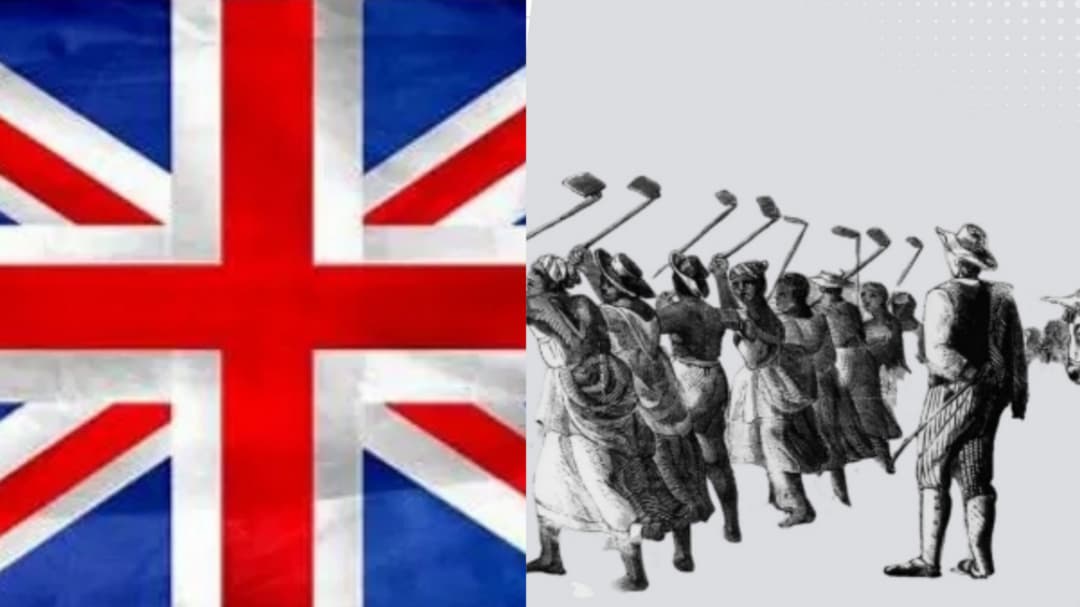
Britain has a story it loves to tell about itself.
In that story, Britain is the hero, the nation that led the charge to abolish the transatlantic slave trade, the moral conscience of a barbaric era.
It is a clean, flattering story. And like most flattering stories, it leaves out the most important parts.
Last week, that story ran headlong into reality.
The International Trade Union Confederation – ITUC-Africa, released an open letter condemning the UK's opposition to a United Nations resolution on slavery reparations.
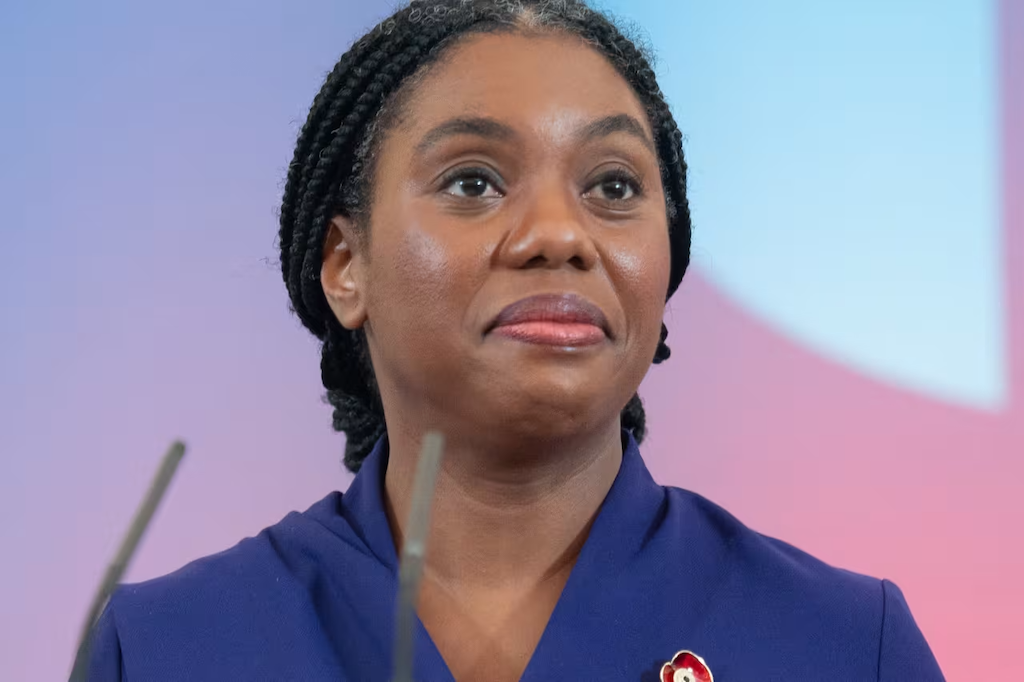
Signed on behalf of 18 million African workers, the letter was addressed to Kemi Badenoch, the UK Conservative MP who argued, with a straight face, that Britain should have voted against the resolution precisely because it led the fight to end slavery.
Read that again.
Britain should not support a resolution addressing the crimes of slavery because Britain helped stop slavery.
That is the argument, the logic on the table.
Now, this is what the argument conveniently forgets.
Britain abolished the slave trade in 1807.
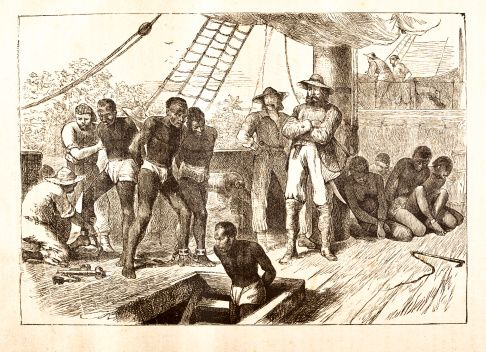
What followed was not justice.
What followed was colonialism — a system in which Britain, and other European powers, did not merely trade in African bodies but claimed African land, African resources, and African sovereignty as their own for over a century.
With guns, courts, borders drawn by men who had never set foot on the continent.
Nigeria was a British colony, Ghana was a British colony, Kenya, Zimbabwe, South Africa, Sierra Leone and many others.
The labour that built those economies was not compensated.
The resources extracted — oil, gold, cocoa, rubber left these countries and built wealth elsewhere. The institutions imposed were designed to serve the coloniser, not the colonised.
When independence finally came, African nations did not inherit prosperity.

They inherited debt, broken infrastructure, and economies structured to export raw materials cheaply and import finished goods at a premium. That structure did not end with independence. In many ways, it never left.
ITUC-Africa calls this neo-colonialism which is unfair trade arrangements, debt dependency, African economies pushed to the margins of global governance.
These are not abstract grievances. They are the reason a Lagos mechanic works twice as hard for a fraction of what his counterpart in Birmingham earns.
They are the reason African governments negotiate from their knees with the IMF.
They are the reason the continent that holds the most natural resources on earth remains, by design, among the poorest.
So when Badenoch says Britain already did its part, it is worth asking: what part, exactly?
Abolishing a trade you profited from for two centuries is not generosity. It is the bare minimum and even then, it came late, reluctantly, and it came with compensation.
Not to the enslaved, but to the slaveholders.
Britain paid £20 million in 1833 to compensate enslavers for the loss of their "property." British taxpayers were still paying off that debt in 2015.
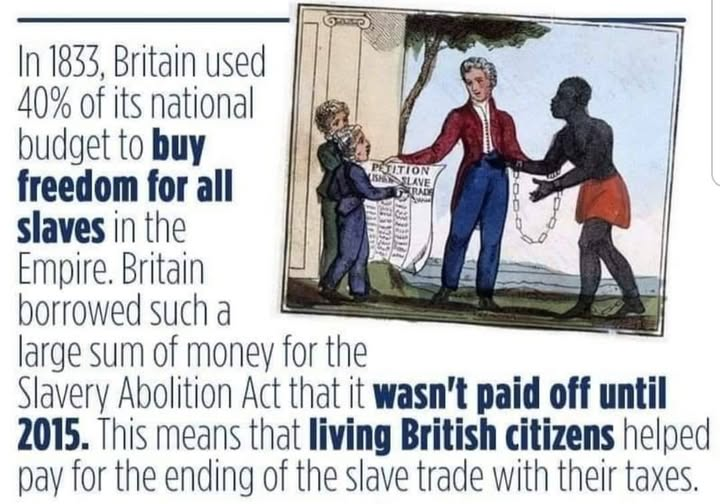
The enslaved received nothing. Their descendants received nothing.
And now, whenthe UN General Assembly votes 123 countries in favour of a resolution calling for acknowledgement and repair, the answer from London is: we've done enough.
ITUC-Africa is right to be outraged. More than that, they are right to name it plainly.
Reparations are not, as Badenoch implied, an unreasonable burden on British taxpayers who had nothing to do with slavery.
They are a moral reckoning — an acknowledgement that the wealth accumulated through centuries of extraction did not disappear when the ships stopped sailing.
It compounded, it became infrastructure, institutions, and industry. It became the foundation of a prosperity that Africa was deliberately excluded from building.
Repair does not have to mean a check in the post. It can mean debt cancellation, fair trade agreements, investment in institutions, a seat at the table in global economic governance.
What it cannot mean is silence, abstention, and a history lesson that stops conveniently at 1807.
Africa does not need Britain's pity. It never did.
What it deserves, what 18 million workers and hundreds of millions of ordinary Africans deserve is honesty.
The kind of honesty that says: we were here, we took, and what we took helped build everything you see.
The kind of honesty that does not hide behind a heroic story about abolition while the consequences of everything that came after still show up in the daily lives of people across this continent.
Britain ended the slave trade.
The bill for everything else is still outstanding.