African Mobile Giants Forging Ahead with AI Language Models for Local Dialects
African mobile network operators, in partnership with the GSMA, are spearheading an initiative to develop AI language models for African languages. This collaboration addresses critical barriers in data, compute, talent, and policy, aiming to unlock digital services for millions and significantly boost Africa's economy. Key projects include a Swahili reasoning model and investments in AI infrastructure across the continent.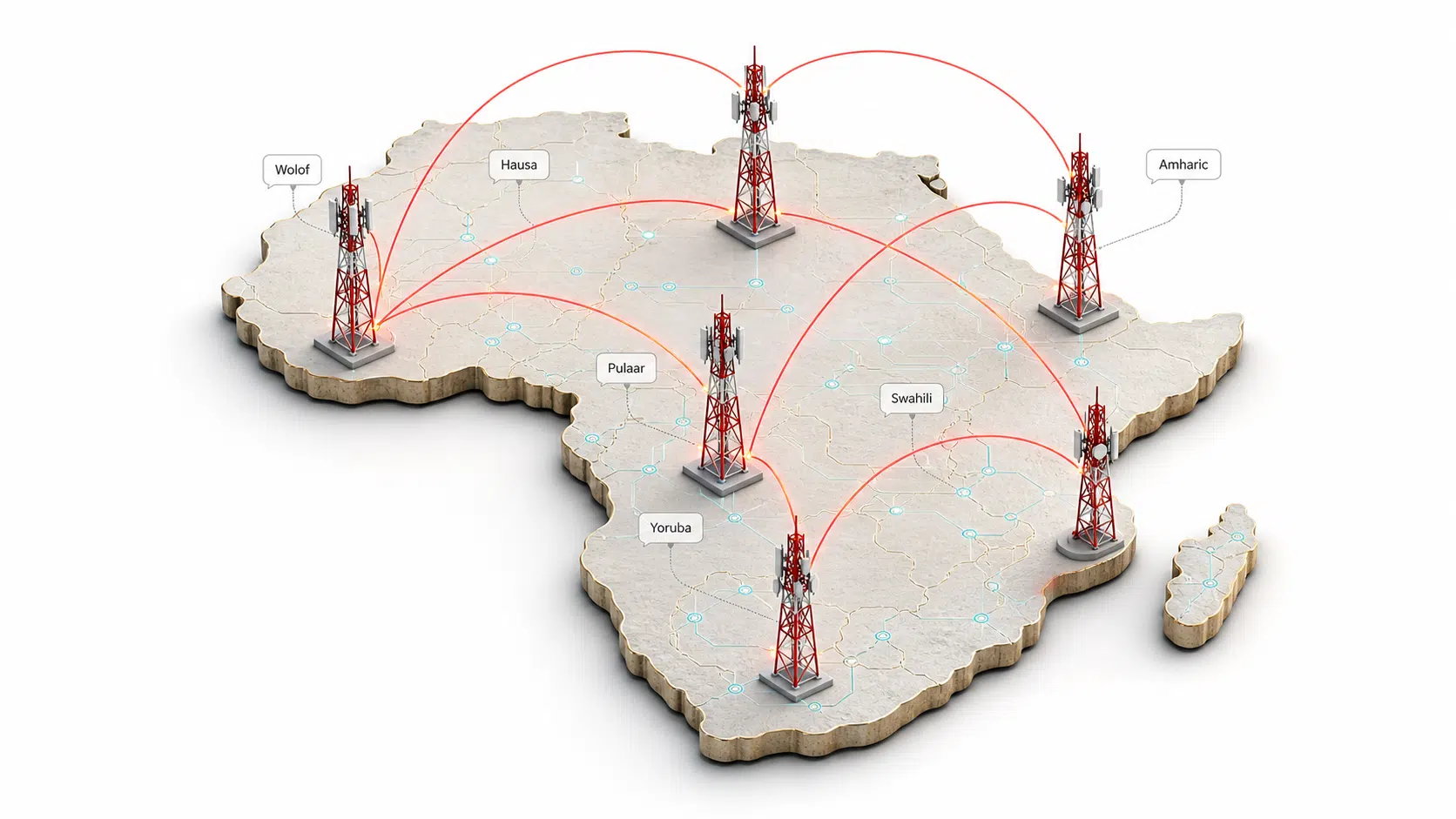
The GSMA's Mobile Economy Africa 2026 report, published recently, highlights a significant collaborative effort by six of Africa’s largest mobile network operators, known as the G6, to address a critical gap in artificial intelligence (AI) accessibility across the continent. These operators—Airtel, Axian Telecom, Ethio Telecom, MTN, Orange, and Vodacom—have partnered with the GSMA to develop AI language models specifically trained on African languages. This initiative, first announced at Mobile World Congress (MWC) Kigali in October 2025 under the banner “AI language models in Africa, by Africa, for Africa,” aims to enable the vast majority of Africans to utilize mainstream AI tools in their native tongues.
The collaboration unites operators, researchers, startups, and civil society groups to systematically overcome four primary challenges hindering African-led AI development: data scarcity, limited computing power, talent shortages, and inadequate policy frameworks. The stakes are profoundly high, given that Africa is home to over 2,000 languages, representing more than 30% of the world’s total. Despite this linguistic diversity, most large language models (LLMs) are predominantly trained on English and other high-resource languages, effectively excluding hundreds of millions of people from interacting with AI tools via voice or text in their own languages.
A notable early achievement of this initiative was demonstrated at MWC Barcelona 2026: the first open Swahili reasoning model. Developed in partnership with MeetKai Zambia, this model can effectively browse and translate online content in Swahili, establishing a replicable template for other African languages. The report emphasizes that closing this linguistic divide is not merely a social imperative but also carries substantial economic implications. By deploying AI tools that overcome language barriers, operators can expand the addressable market for digital services to hundreds of millions of previously excluded Africans, potentially boosting mobile’s contribution to Africa’s economy from $240 billion in 2025 to a projected $290 billion by 2030.
Beyond the development of the language models themselves, the report details the concurrent build-out of crucial supporting infrastructure. Cassava Technologies, for instance, has established an AI factory in South Africa, providing GPU computing power and AI services to African developers, businesses, and mobile operators. This facility also operates a network-management system, built on Nvidia’s Blueprints framework, to automate performance tuning across Africa’s diverse network equipment landscape. In the realm of talent development, the MTN Skills Academy, a zero-rated platform available across 16 African markets, is actively training the workforce necessary for widespread AI rollouts.
Data, a foundational component of AI, is being addressed through initiatives like Google’s WAXAL project. Launched in February 2026 after three years of collaboration with African universities such as Makerere University, the University of Ghana, and Addis Ababa University, this open dataset captures speech across 27 Sub-Saharan African languages spoken by over 100 million people. It is specifically designed to facilitate the training of voice AI and speech-recognition tools. Additionally, the GSMA partnered with Zindi, an African data science platform, to launch the African Trust & Safety LLM Challenge in March 2026, which has resulted in a reusable safety benchmark for testing AI model performance across more than 2,000 African languages.
The push also extends to investments in hard infrastructure. In April 2026, MTN participated in a $45 million funding round for ODC, an AI telecoms startup that is developing network technology optimized for Africa’s unique mix of equipment vendors and often unreliable power supply. This investment signifies a strategic shift by operators, moving beyond merely renting capacity from global cloud providers to directly investing in the technological layers that will define network performance and costs over the coming decade.
It is important to note that the G6 initiative is not an isolated effort. Orange, a G6 member, had previously partnered with OpenAI and Meta in 2024 to create AI models for African languages, starting with Wolof and Pulaar before expanding to Swahili and others. In July 2025, Google also invested in AI tools supporting over 40 African languages, and the Gates Foundation provided a $5 million grant to Masakhane, a research collective, to develop African language models. These diverse collaborations underscore a growing and collective commitment to bridging Africa's AI language gap.