Africa's Heritage Reclamation: Mahama, Ghana Lead Global Push for Reparatory Justice and Artefact Return
Ghana, led by President John Dramani Mahama, is championing a global movement for reparatory justice, securing a UN resolution recognizing transatlantic slavery as a crime against humanity. This initiative primarily seeks the restitution of African cultural heritage and human remains, with international partners increasingly collaborating on the monumental task of healing and reconciliation. It also emphasizes investing in Africa's cultural infrastructure to empower future generations with their true history and identity.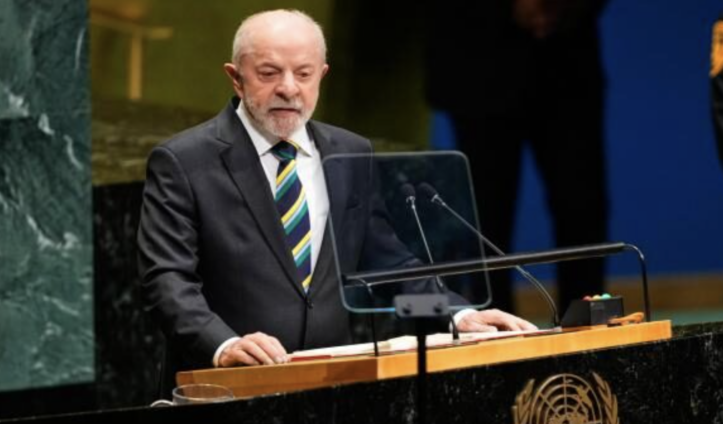
Ghana, under the leadership of President John Dramani Mahama, has been at the forefront of a global movement for reparatory justice, particularly regarding the transatlantic trade in enslaved Africans and racialized chattel slavery. This historic initiative gained significant international recognition on March 25, when the 81st United Nations General Assembly adopted Resolution A/RES/80/250. Spearheaded by President Mahama, alongside the African Union and CARICOM, the resolution declared the transatlantic trade in enslaved Africans and racialized chattel slavery as the “gravest crime against humanity.” This landmark decision, passed with 123 votes in favor, was lauded by leaders such as Brazilian President Luiz Inácio Lula da Silva, who commended President Mahama for leading the effort to correct a historical distortion and recognize the profound injustices of the past.
A central tenet of Ghana’s reparatory justice agenda is the urgent call for the restitution of African cultural heritage and human remains currently held in museums and private collections globally. President Mahama emphasized that the continued possession of these artifacts and ancestral remains is not merely a matter of ownership, but fundamentally one of dignity, identity, and justice. He highlighted how generations of Africans have been separated from crucial elements of their history, memory, and heritage. "Human remains are not collectibles. They are not specimens. They are our ancestors. They are our fathers, mothers, kings, and elders," President Mahama passionately stated, underscoring that restoring them is a fundamental test of shared human dignity, not just legal ownership.
Historical injustices such as the 1874 destruction and looting of the Asante Royal Palace in Kumasi by British forces serve as poignant examples. While a portion of that heritage, including the Mpomponsuo sword, was returned in 2024, such incidents underscore the systemic removal of cultural treasures through conquest, punitive expeditions, and colonial violence. Another harrowing case involves King Badu Bonsu II of Ahanta, executed by Dutch authorities in 1838, whose decapitated head was taken to the Netherlands for phrenological studies and only returned to Ghana in 2009 after 170 years. These events demonstrate the profound impact of colonial actions on African communities and the symbolic importance of restitution for healing and reconciliation.
To move beyond mere acknowledgment, Ghana has outlined three key pillars for advancing the global reparatory justice agenda, as presented by President Mahama on the sidelines of the 81st UN General Assembly. The first pillar calls for the creation of a permanent, institutionalized global system for restitution. This involves establishing clear, standardized legal and diplomatic mechanisms to streamline provenance research, ensure transparent archives, and lower legal barriers to unconditional restitution, with an immediate priority on the return of all human remains.
The second pillar addresses the narrative that restitution must wait until African nations build modern facilities to secure their heritage. President Mahama firmly rejected this, stating, "Capacity constraints must never be used as a justification for continued possession. Capacity must serve as a bridge to return, not a barrier to justice." Africa is actively developing its cultural infrastructure through initiatives such as the African Union’s flagship Agenda 2063 project, which includes the Great African Museum, and the AU-EU Museum Partnership. In Ghana, state-of-the-art national and traditional institutions are being constructed to preserve, research, and exhibit returning treasures, demonstrating a commitment to preparing for this heritage.
The third pillar emphasizes cultural heritage not as a luxury, but as an engine of economic and social development. President Mahama made a direct call to multilateral development banks, international financial institutions, global foundations, and private sector partners to invest deliberately in Africa’s cultural infrastructure. This includes channeling development finance into regional archives, conservation laboratories, digitisation initiatives, and professional training for a new generation of African curators and historians. Properly preserved and showcased, cultural heritage can fuel education, strengthen national identity, boost international tourism, and contribute to the booming creative economy.
In line with these efforts, Ghana's Foreign Affairs Minister, Samuel Okudzeto Ablakwa, disclosed that the government is making provisions in the 2027 Budget for the establishment of a modern museum to receive and preserve cultural artifacts being returned. This facility is envisioned as a significant tourism and economic asset, creating opportunities and promoting Ghana’s history. Additionally, plans are underway for a special museum dedicated to the preserved head of King Badu Bonsu II, which will serve as an eternal memorial to African resistance against colonial domination and the transatlantic slave trade, countering narratives that suggest a lack of resistance.
Despite some initial votes against the UN resolution (such as by the United States, Israel, and Argentina), the international community has shown a growing willingness to engage. Minister Ablakwa noted that the United States has formally indicated its readiness to work with Ghana on the reparatory justice agenda. Furthermore, several European countries, including the United Kingdom, the Netherlands, Denmark, Portugal, France, and Germany, have expressed their willingness to collaborate, demonstrating that Ghana’s initiative is aimed at healing and reconciliation rather than division. This broad engagement highlights a collective desire to forge a new path free from racism and discrimination, ensuring that the story of Africa’s cultural heritage continues with its return, and that future generations connect with the achievements and identity of their ancestors, rather than solely with what was lost.