Africa's Health Future in Crisis: Leaders Urged to Fund Own Systems Amid Declining Aid
African leaders meeting in Ghana called for greater domestic health funding, warning that reliance on foreign aid threatens healthcare progress and long-term health security across the continent.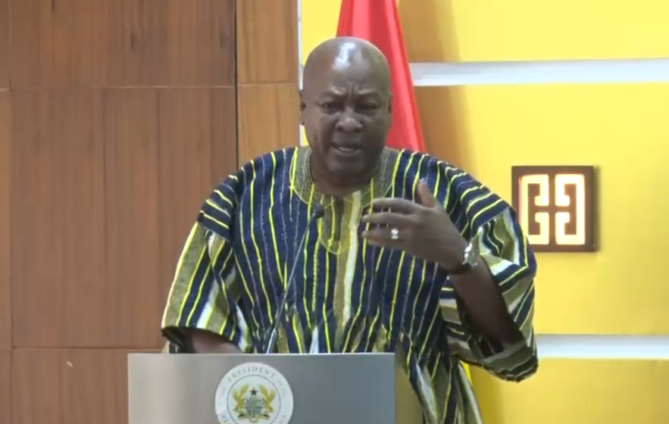
African leaders convened in Accra, Ghana, for the African Union's first Extraordinary Summitdedicated to health, alongside a High-Level Interactive Policy Dialogue.
The central theme across these significant gatherings was the urgent need for African nations to strengthen their healthcare systems, achieve health sovereignty, and drastically reduce reliance on external donor support by prioritizing domestic investment and robust accountability mechanisms.
President John Dramani Mahama of Ghana underscored that achieving health sovereignty demands more than mere political commitments; it requires deliberate, tangible investments in infrastructure, local manufacturing, and sustainable financing.
He argued that a stronger health value chain would stimulate economic growth, create factories and laboratories, and generate decent jobs for Africa's burgeoning youth, especially when bolstered by the African Continental Free Trade Area (AfCFTA).
President Mahama eloquently stated, "Health sovereignty, it turns out, is also an industrial policy, a structural transformation agenda, and a liberation strategy." He critically reminded leaders of the Abuja Declaration, made 25 years prior, which pledged 15% of national budgets to health, urging that new commitments must be "physical, not lyrical."
He advocated for stronger collaboration between health and finance authorities, proposing mechanisms like debt-for-health arrangements, solidarity financing instruments, and protected budget lines to secure long-term investments.
Emphasizing the economic benefits, he noted, "Prevention repays us ninefold. Show me a better bond in the economic markets than prevention."
Echoing these sentiments, Deputy Minister of Health, Professor Grace Ayensu-Danquah, stressed the increasing uncertainty of external donor support, asserting that Africa's future health security hinges on sustained local investment.
Speaking on behalf of Vice President Prof. Naana Jane Opoku-Agyemang at the High-Level Interactive Policy Dialogue, she emphasized that "Official development assistance is less certain. Long-standing funding models are changing. Programmes that many health systems have relied on can no longer be taken for granted."
She framed health investment not as an expense but as a "foundation for economic growth and human development."
Ambassador Amma Twum-Amoah, AU Commissioner for Health, Humanitarian Affairs and Social Development, reiterated this warning at the same dialogue, highlighting that Africa's health security cannot be outsourced.
She described the current moment as defining for Africa's pursuit of universal health coverage, urging member states to increase health allocations, mobilize domestic resources, and improve public financial management.
Ambassador Twum-Amoah asserted that "Expenditure on health is not merely a social cost. It is a strategic investment in human capital, economic growth, productivity, national security as well as resilience."
Dr. Tedros Adhanom Ghebreyesus, Director-General of the World Health Organization (WHO), also issued a stark warning: Africa risks reversing decades of progress against diseases like HIV, tuberculosis, and malaria if governments do not increase domestic financing. He noted that despite significant gains, declining external funding threatens to erode these achievements.
Dr. Tedros highlighted that challenges extend beyond single diseases, encompassing maternal health, neglected tropical diseases, and the growing burden of non-communicable diseases, asserting, "These are not separate crises. They are one crisis, and systems are not yet strong enough to protect every person on this continent."
He also stressed the need to address underlying social and economic factors like poverty, poor education, unsafe water, and gender inequality.
The leaders identified persistent health challenges, including over 90 million Africans living undiagnosed with hepatitis B or C, the heavy burden of malaria, and over two million annual deaths from non-communicable diseases among Africans below 70.
President Mahama called for a shift from conventional approaches, advocating for bold, transformative solutions to address these crises, noting the unique and often depressing African perspective on the global infectious diseases burden.
He stressed that Africa must not remain dependent on external support for healthcare solutions, advocating for the continent to design, produce, and scale its own health technologies.

Beyond financing, discussions focused on comprehensive investments. The summit aimed to bolster local pharmaceutical and medical manufacturing, governance, and leadership.
Professor Ayensu-Danquah highlighted Ghana's proactive steps towards universal health coverage, including the Ghana Medical Trust Fund (MahamaCares), which supports chronic non-communicable diseases, and the Free Primary Healthcare Initiative, emphasizing disease prevention and accessible essential services.
Ghana's government has also made a $50 million seed investment in the National Vaccine Institute to strengthen local vaccine production and pharmaceutical manufacturing, building on its growing regulatory capacity, including the Food and Drugs Authority's WHO Maturity Level 3 status.
A critical component emphasized by all leaders was accountability. President Mahama called for the adoption of a continental declaration supported by a monitoring, reporting, and accountability framework, alongside an annual health scorecard for peer review.
Professor Ayensu-Danquah welcomed the African Renaissance Health Financing Insights Dashboard as an important tool for tracking commitments.
Ambassador Twum-Amoah cautioned that "Financing without accountability risks inefficiency" and called for transparent systems in planning, budgeting, procurement, implementation, monitoring, and evaluation to ensure public spending translates into measurable health outcomes.
President Mahama, using the Ghanaian proverb "one head does not hold counsel with itself," underlined the importance of collective action and unity among African nations to address shared health challenges, affirming that the success of the summit should be reflected in better-equipped facilities, improved access to medicines, and better care for citizens across the continent.