91, Outspoken, and Banned: Wole Soyinka’s Visa Revocation Sparks Global Debate
Nigeria’s Nobel Laureate Wole Soyinka has had his U.S. visa revoked by the Trump administration, sparking global debate about freedom of speech and political intolerance.
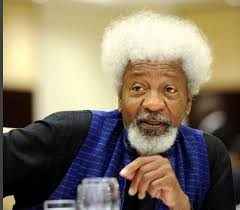
On October 28, 2025, the U.S. Consulate in Lagos officially revoked the visa of Professor Wole Soyinka, Nigeria’s celebrated Nobel Laureate and globally respected playwright. The decision was announced in a letter citing “U.S. State Department regulations” and has stirred intense conversations across the world about freedom of speech, political tolerance, and intellectual independence.
At a press conference in Lagos, the 91-year-old calmly confirmed the revocation, calling it “a rather curious love letter from an embassy.” Soyinka went on to say, “I want to assure the consulate that I’m very content with the revocation of my visa. I have no visa. I am banned.”
While the U.S. Embassy in Abuja declined to comment, citing confidentiality rules, the move has sparked renewed attention to how outspoken figures are being treated by governments worldwide.
Who Is Wole Soyinka?
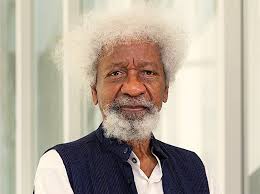
Born July 13, 1934, in Abeokuta, Ogun State, Nigeria, Wole Soyinka rose from humble beginnings to become the first African to win the Nobel Prize in Literature in 1986, an achievement that placed him at the forefront of African intellectual history.
His body of work: including “Death and the King’s Horseman,” “The Man Died,” “Kongi’s Harvest,” and “A Dance of the Forests” weaves themes of power, morality, and justice, reflecting both his Yoruba heritage and global humanist vision.
Soyinka’s life, however, has never been separate from activism. According to the Post-Colonial Web, in 1967, he was imprisoned for 22 months by Nigeria’s military regime for attempting to mediate peace during the civil war. He later went into exile and became an outspoken critic of corruption, dictatorship, and abuse of power, not just in Nigeria but globally.
“Justice is the first condition of humanity,” he once said, a quote that encapsulates his life’s work.
How His Relationship with the U.S. Soured
Soyinka has enjoyed long academic ties with theUnited States, teaching at Harvard, Cornell, Emory, and Yale. However, his relationship with American politics shifted sharply in 2016, as reported by BBC News, he vowed to tear up his U.S. green card if Donald Trump won the presidency, and he kept this promise.
“The moment Trump wins, I’ll destroy my green card and leave the U.S.,”
— Wole Soyinka, 2016 (BBC Interview)
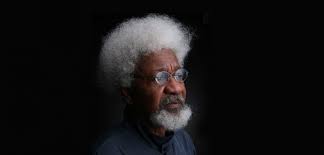
He later became an outspoken critic of Trump’s leadership, comparing him to former Ugandan dictator Idi Amin(a leader widely recognized as a dictator), a statement that, by Soyinka’s own admission, may have “struck a nerve.” According toAl Jazeera, he also quipped about his past experiences writing about the Ugandan military leader Idi Amin. “Maybe it’s about time also to write a play about Donald Trump,” he said.
Despite his wit and irony, Soyinka’s criticism reflects deep concern about what he calls “the global drift toward authoritarianism.”
The Visa Revocation: Symbolism and Impact
The U.S. Consulate’s letter cites the State Department’s authority to revoke non-immigrant visas “at any time, at their discretion.” For Soyinka, this revocation is less a personal inconvenience and more a political statement, one that signals the shrinking space for global dissent.
He remarked:
“This is not about me. When we see people being picked off the street, old women and children being separated… that’s what concerns me.”
This comment ties his case to a broader debate over immigration, dissent, and democratic values in the U.S., where the Trump administration has faced criticism for its handling of immigration, student visas, and political expression.
Wole Soyinka’s case is symbolic. It raises urgent questions such as:
Should political criticism lead to visa restrictions?
Are we witnessing a pattern of silencing critical thinkers under the guise of security or policy?
What does this mean for democracy and free speech in the modern world?
For many observers, the revocation represents a deeper erosion of the respect once given to intellectual dissent. Soyinka, however, remains unfazed, a poet-philosopher who has lived through imprisonment, exile, and censorship.
In his calm defiance, he reminds us that truth-telling carries a cost, and that cost, increasingly, is being paid by writers, journalists, and academics worldwide.
As Soyinka said,
“I wouldn’t take the initiative to return to the U.S. because there’s nothing I’m looking for there. Nothing.”
The world’s first Black Nobel Literature laureate may no longer have a U.S. visa, but his influence remains far beyond any border. His story is a reminder that freedom of thought must be defended, not merely celebrated.