4 Nigerian Traditions That Have Colonial Origins Nobody Talks About
Before the British arrived, Nigerian brides did not wear white, neither was English was not our official language. The courts, borders, and even the name “Nigeria” were colonial inventions. Yet somehow, many of the things Nigerians fiercely protect today as “tradition” did not begin here at all.
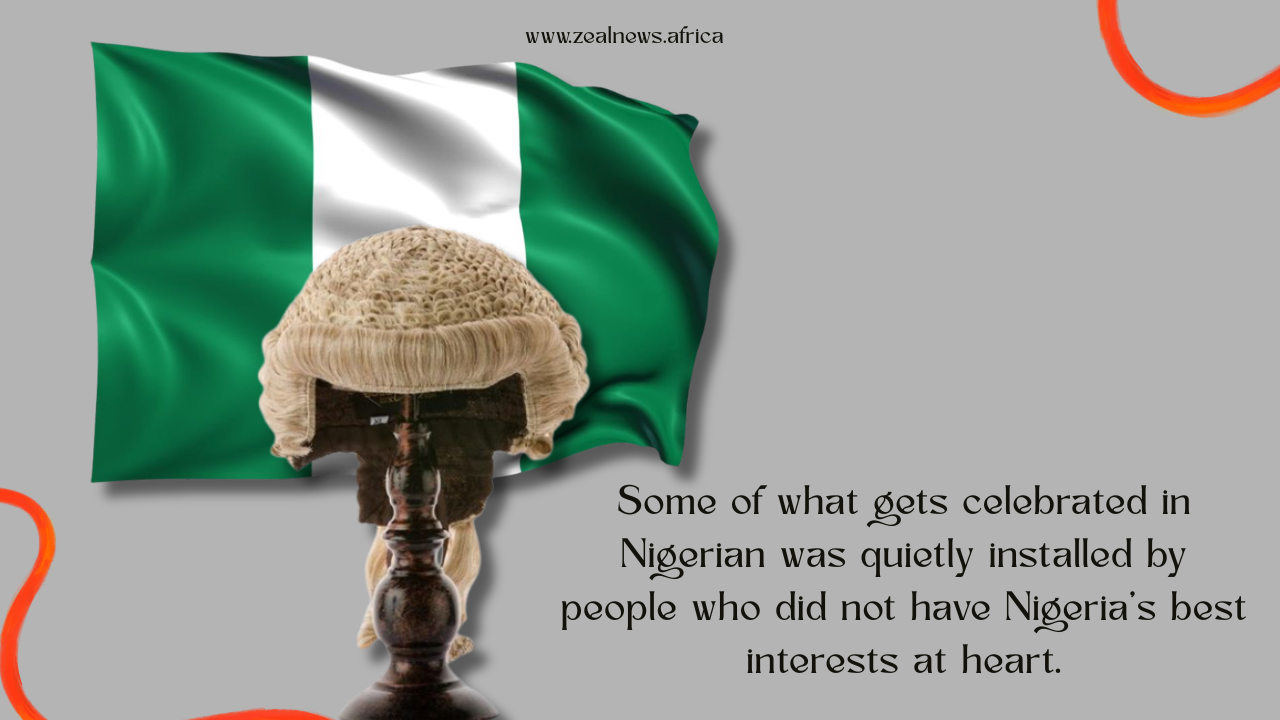
Before the British arrived, no Nigerian woman was getting married in a white dress. That tradition came on the same ships as the colonial administration, the English language, and the legal system that still governs the country today.
Nigerians celebrate their culture loudly and proudly, and rightfully so. But some of what gets celebrated as authentically Nigerian was quietly installed by people who did not have Nigeria's best interests at heart.
These are four of the most embedded ones.
1. The White Wedding and the Church Ceremony
Before missionaries arrived in Nigeria in the 19th century, marriage was a communal, layered affair. It involved the two families, the community, the payment of bride price, the pouring of libations, the blessing of elders, and ceremonies that could last days.
All these methods were commonly accepted and recognised by the society prior to the colonial inception of the white wedding phenomenon. African marriages entered into through the commonly accepted methods were recognised as complete and legitimate.
The British and their missionaries changed that framing entirely.
The white dress itself traces back to Queen Victoria, who wore one at her wedding in 1840, setting a trend that spread through the British Empire and eventually landed in colonial Nigeria as the standard for respectable marriage.
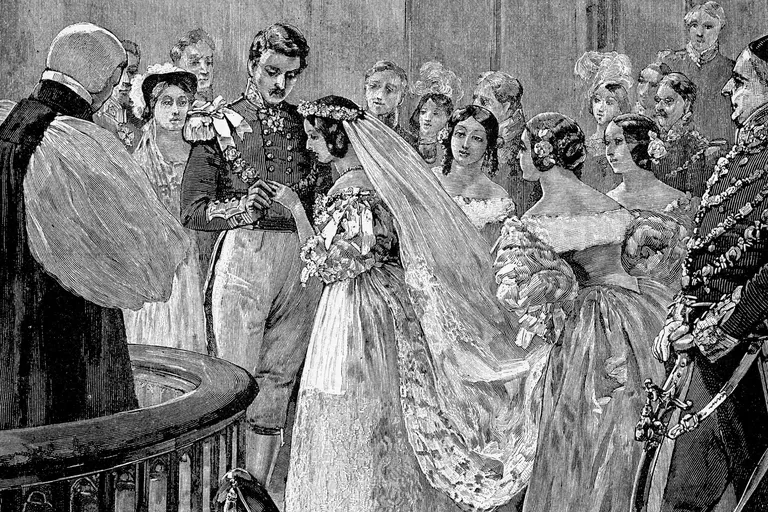
Today, many Nigerian couples spend money they do not have on three separate events: the traditional introduction, the court marriage, and the white wedding.
The traditional ceremony, which was the complete marriage for centuries, has been reduced to a precursor. The imported ceremony is the main event. Most people have never questioned why.
2. English as the Official Language of a Country With Over 500 Indigenous Languages
Nigeria has over 500 languages. Yoruba, Igbo, Hausa, Efik, Ijaw, Tiv, Kanuri and hundreds more. These languages carry centuries of history, philosophy, literature, legal systems, and ways of understanding the world that exist nowhere else on earth.
The official language of Nigeria, English, was chosen to facilitate the cultural and linguistic unity of the country, owing to the influence of British colonisation which ended in 1960.
The British needed a single administrative language to govern a territory they had artificially assembled from hundreds of distinct peoples. English served that purpose.
When Nigeria gained independence in 1960, it had an opportunity to choose a different path. Other postcolonial nations made difficult but meaningful decisions about language.
Nigerians chose to keep English, partly for pragmatic reasons and partly because the colonial education system had already done its work so thoroughly that English had become the language of aspiration, of intelligence, of success.
History
Rewind the Stories that Made Africa, Africa
A Journey Through Time, Narrated with Insight.
The consequence is a country where a child can grow up unable to read or write in their mother tongue, where indigenous languages are dying at an alarming rate, and where speaking English with a foreign accent is still treated as a mark of sophistication in 2026.
3. The Entire Legal System
Before the British arrived, Nigeria was not a lawless land. Every community had functioning systems of justice. In the north, Islamic law under the Maliki school had governed communities for centuries, administered through Alkali courts by trained Islamic scholars.
In the south, customary law rooted in community norms, elder councils, and traditional dispute resolution mechanisms had maintained order across hundreds of distinct societies.
It would be erroneous to assume that there existed no legal system in Nigeria before the coming of the British. Each of the territories that constitute Nigeria had a legal system long before colonisation.
The British government introduced English laws in Lagos in 1862. There was a Court of Civil and Criminal Justice and the West African Court of Appeal. A Supreme Court was established in 1876. English common law, equity law and British law applied.
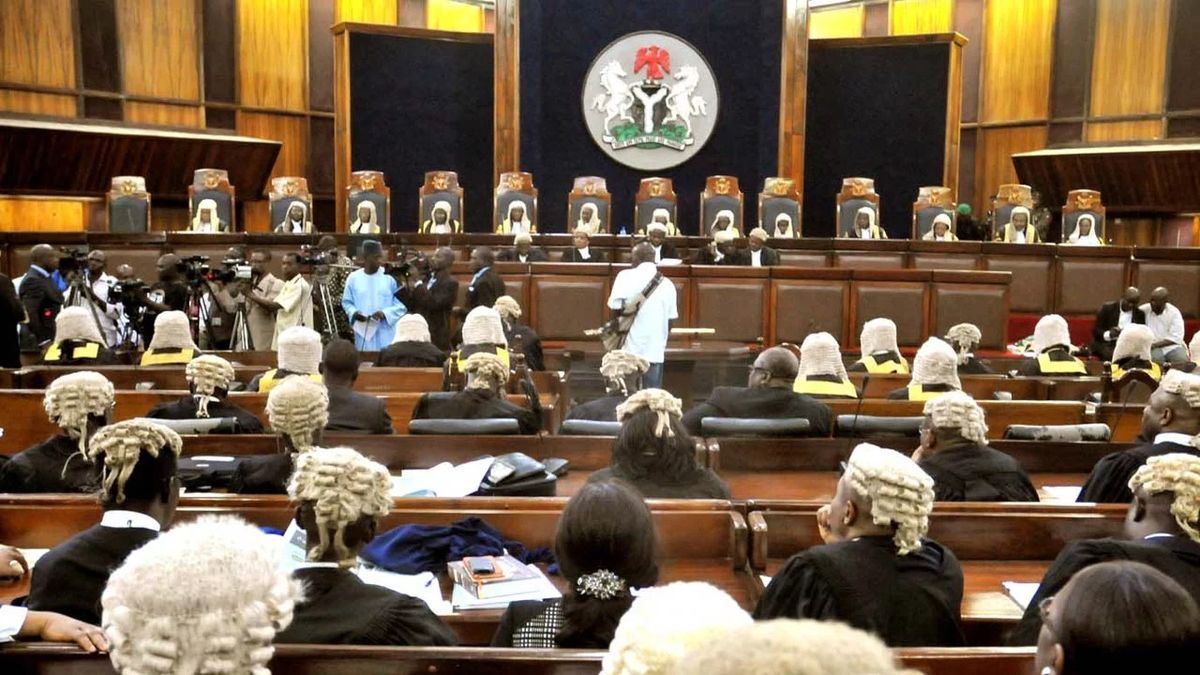

These systems were not introduced because Nigerian legal traditions were inadequate. The native court system they created was widely criticised even during the colonial period for being poorly understood and badly administered.
Today, Nigerian lawyers wear wigs and gowns in court. The wigs are a direct inheritance from 18th century British legal fashion, worn in Nigerian heat, in Nigerian courts, adjudicating Nigerian disputes, under a legal framework that was designed by people who viewed Nigerians as subjects rather than citizens. The wigs have never been seriously debated. They are simply tradition now.
4. The Concept of "Nigeria" Itself
This one sits underneath all the others and is the most important to understand.
Before 1914, there was no Nigeria. There were hundreds of distinct kingdoms, empires, city-states, and communities. The Oyo Empire, the Benin Kingdom. the Sokoto Caliphate, the Igbo communities of the southeast with their council-based governance, the Ijaw communities of the Niger Delta e.t.c.
These were not fragments of a single nation waiting to be assembled. They were complete, independent civilisations with their own histories, governments, economies, and identities.
Their grouping together into a single entity known as Nigeria was a construct of their British colonisers. These various ethnic groups never considered themselves part of the same culture.
In 1914, Frederick Lugard amalgamated the Northern and Southern Protectorates into a single administrative unit called Nigeria. The name itself was coined by Flora Shaw, a British journalist who later married Lugard.
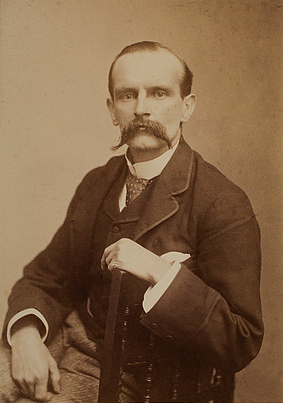
The boundaries were drawn based on what was convenient for British administration and which territories had already been claimed, not on any cultural, ethnic, linguistic, or historical logic.
To prevent any united opposition to its authority, the British adopted a divide-and-rule policy, keeping Nigerian groups separate from one another as much as possible.
The ethnic tensions, the north-south divide, the religious fault lines, the civil war of 1967; all of these have their roots in the arbitrary assembly of incompatible peoples under a single flag drawn by people in London who had never set foot in most of the territory they were governing. Nigerians now fight and die over a national identity that was created by their colonisers as an administrative convenience.