10 Things That Happened in Africa in May That You Need to Know
Lots of things happened in the month of May. From US airstrikes in Nigeria to 16 students killed in a Kenya school fire, the AFCON controversy, Mali's largest militant offensive since 2012, South Africa's xenophobia crisis, and sweeping US immigration changes. What are the 10 biggest Africa stories of May 2026?
1. US and Nigeria Launch Coordinated Airstrikes Against ISIS in the Northeast
The United States Africa Command, in coordination with the Nigerian government, conducted a series of airstrikes targeting ISIS militants in northeastern Nigeria across May 16, 17, and 18. AFRICOM confirmed the strikes were intelligence-driven, that the targets were confirmed ISIS fighters, and that no US or Nigerian forces were harmed.
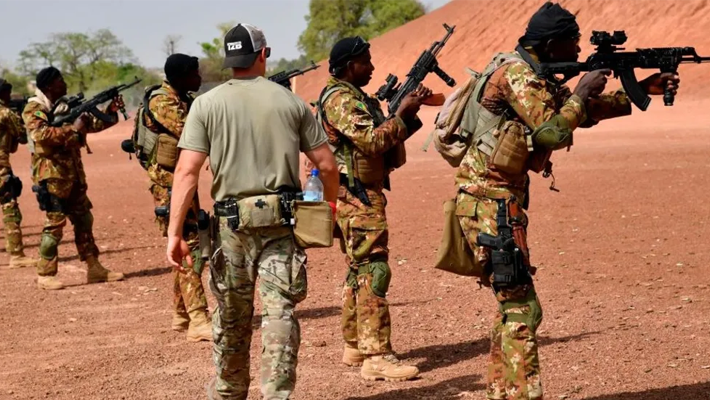
President Tinubu confirmed that the operation killed Abu-Bilal al-Minuki, whom the Trump administration described as the second in command of ISIS globally.
The strikes marked one of the most significant direct US military engagements in Nigeria in recent memory and raised questions about the terms of Nigeria's security cooperation with Washington. The Nigerian military had no official comment beyond confirmation of the partnership.
2. JNIM Launches Its Largest Offensive in Mali Since 2012
Jama'at Nusrat al-Islam wal-Muslimin, the al-Qaeda-linked militant group operating across the Sahel, launched what analysts described as the largest coordinated offensive in Mali since the 2012 rebellion.
Simultaneous attacks hit Bamako, Kati, Kidal, Gao, Sévaré, and Mopti, striking at the heart of the Malian government's military and administrative infrastructure.
Mali's Defence Minister Sadio Camara was killed in the offensive. The country's intelligence chief Modibo Koné was injured. Russian Wagner mercenaries, who have been embedded with Malian forces since the military junta expelled French troops, were forced to retreat from several positions.
The scale and coordination of the attack exposed the limits of the Mali-Russia security partnership that the junta has staked its political survival on.
3. 16 Students Killed in Fire at Utumishi Girls School in Kenya
A fire broke out shortly before 1am at Utumishi Girls Academy in Gilgil, Nakuru County, killing at least 16 students and injuring 79 others. The school, which has more than 800 students and is linked to the National Police Service, with most pupils being children of officers, lost its main dormitory to the blaze, which burned for more than two hours before being brought under control.
Education Minister Julius Ogamba and Interior Minister Kipchumba Murkomen both arrived at the scene. Eight female students were subsequently arrested on suspicion of arson.
Kenya declared a period of mourning. The fire is the latest in a long and tragic pattern of school dormitory fires in Kenya, following a blaze in 2024 that killed 21 students at Hillside Endarasha Academy and a 2001 fire in Machakos that killed 67.
4. Kenya's High Court Blocked a US Ebola Quarantine Facility. The Government Opened It Anyway.
The United States built a 50-bed Ebola quarantine facility at Kenya's Laikipia Air Base, approximately 200 kilometres from Nairobi, designed to hold American nationals exposed to Ebola in the Democratic Republic of Congo before transferring them to treatment centres in Europe. Kenya had zero confirmed Ebola cases.
The Katiba Institute filed an emergency petition arguing the arrangement was unconstitutional and had been negotiated without public disclosure or parliamentary oversight. High Court Judge Patricia Nyaundi issued a conservatory order blocking the facility's opening.
The Kenyan government pushed ahead with the arrangement regardless. Kenyan doctors condemned the deal, calling it trading the lives of Kenyan citizens for foreign aid. A follow-up hearing was set for June 2.
5. South Africa's Xenophobia Crisis Drew a Diplomatic Boycott on Africa Day
A citizen-led movement called March and March organised anti-immigration demonstrations across Pretoria, Johannesburg, and Durban in April and May 2026, with protests turning violent against foreign nationals from across sub-Saharan Africa and Asia. Human Rights Watch documented vigilante attacks with little apparent police response.
Kenya, Malawi, Lesotho, Zimbabwe, and Ghana all issued warnings to their citizens in South Africa.
The crisis escalated to diplomatic levels when African ambassadors and diplomats in South Africa boycotted the 63rd Africa Day celebrations in Moruleng, North West Province, in a coordinated protest over the government's failure to protect foreign nationals.
Ghana called on the African Union to intervene. South Africa's government acknowledged the tension but did not address the substance of the diplomatic protest directly.
6. Congo Announced Visa-Free Access for All Africans on Africa Day
On the sidelines of the African Development Bank Group's 2026 Annual Meetings in Brazzaville, Republic of Congo President Denis Sassou-Nguesso announced that his country would waive visa requirements for all African nationals from the following year.
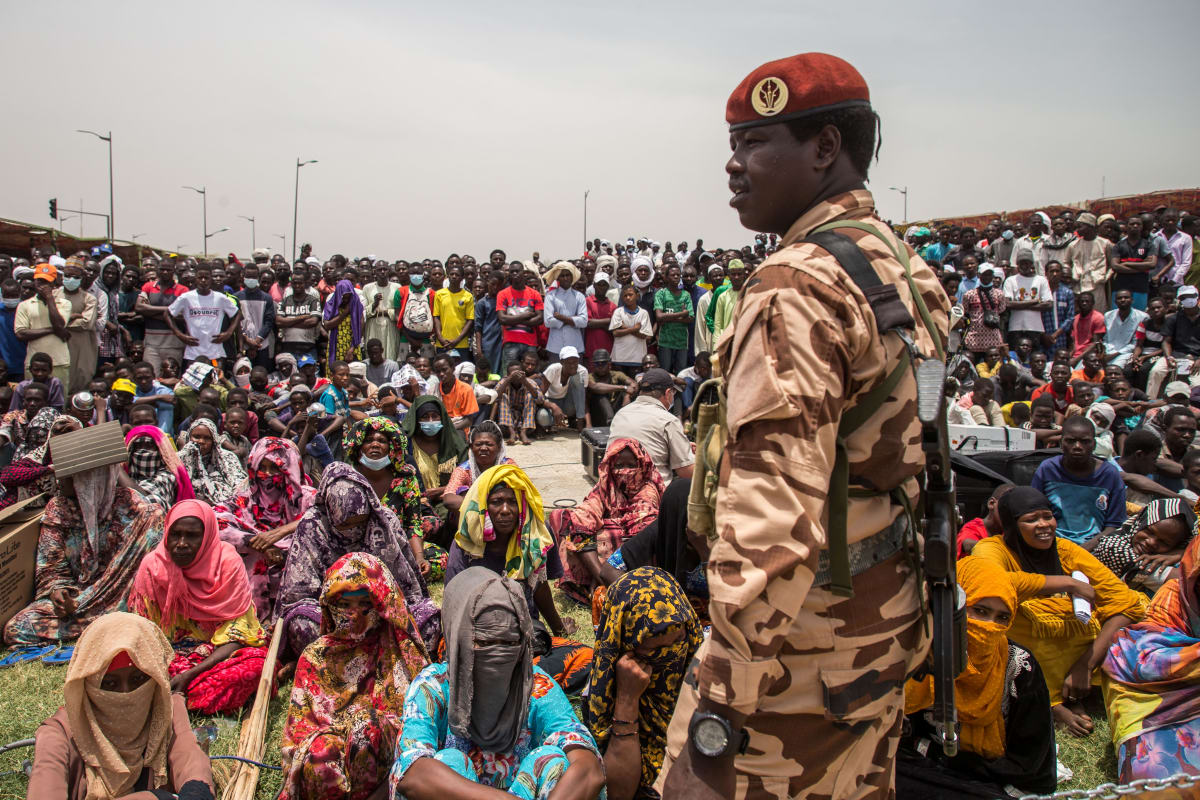
The announcement, delivered on Africa Day to thousands of delegates gathered at the Kintele Conference Centre, drew sustained applause.

The announcement came under the Africa Day theme 'Assuring Sustainable Water Availability and Safe Sanitation Systems to Achieve Agenda 2063' and represented another incremental step toward the African Union's long-stated goal of continental free movement.
The AfDB's Annual Meetings also saw Morocco named Africa's industrialisation leader in a new continental index published by the Bank.
7. The Ebola Outbreak in DRC and Uganda Reached $500 Million in International Pledges
The Ebola outbreak in the Democratic Republic of Congo and Uganda, which has killed nearly 250 people and infected more than 1,000, became the subject of a $498.8 million international funding pledge by African nations and global partners.
The World Health Organisation declared the outbreak a Public Health Emergency of International Concern. Twelve countries imposed travel restrictions to limit cross-border spread.
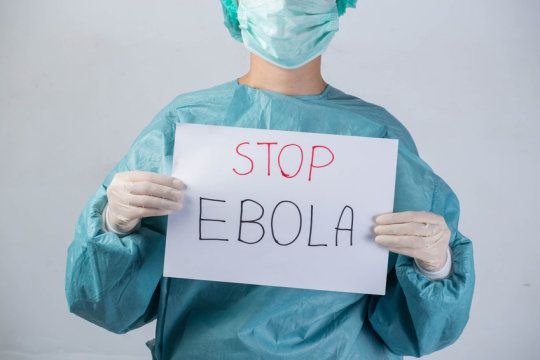
Jean Kaseya, Director General of the Africa CDC, described the risk as very high and warned that failure to contain the outbreak now would have catastrophic consequences. The WHO Director-General visited the DRC in May to urge increased international support.
The outbreak's concentration in eastern DRC, a region of persistent conflict and limited healthcare access, has made containment significantly harder than in a stable environment.
8. CAF Officially Stripped Senegal of the AFCON Title and Gave It to Morocco
The Confederation of African Football's appeal board ruled in March 2026 that Senegal had forfeited the AFCON 2025 final after Senegalese players walked off the pitch in protest over a contentious stoppage-time penalty awarded to host nation Morocco.
Senegal had returned to the pitch and won the game 1-0 in extra time. CAF subsequently ruled the result as a 3-0 forfeit win for Morocco.
The ruling triggered continental outrage that ran through May. Senegal's FA described it as the most grossly unfair administrative robbery in football history.
The country's prime minister condemned the sentencing of Senegalese fans who had invaded the pitch. Senegalese players mocked the ruling publicly. The Court of Arbitration for Sport confirmed Senegal's appeal was underway.
Senegal paraded the trophy in Paris regardless, while adding a second star to their kit. The controversy continued to dominate African football discourse through the end of the month.
9. US Announced Visa Bonds of Up to $15,000 for Nationals of 30 African Countries
The United States expanded its visa bond programme in April 2026 to cover nationals of 50 countries, 30 of them African, requiring applicants for B1 and B2 visitor visas to deposit between $5,000 and $15,000 with the US government before their visa could be approved.
The bond is refundable only if the traveller exits the US within their authorised period. Entry and exit are restricted to three airports: JFK, Boston Logan, and Washington Dulles.
Nigeria is among the affected countries. At the minimum bond of $5,000, Africans from the 30 affected countries would collectively need to lock up $871 million annually just to enter the United States. At the highest tier of $15,000, that figure rises to $2.6 billion.
Tech founders, executives, and professionals travelling for business have been among the most immediately affected, given the importance of the US market for African startups and investment activity.
10. The US Changed Green Card Rules, Requiring Most Applicants to Apply From Outside America
The US Citizenship and Immigration Services announced on May 22 that most foreign nationals seeking permanent residence in the United States would now be required to leave the country and complete their applications through US embassies and consulates abroad.
The policy, which took immediate effect, ends decades of standard practice under which visa holders could apply for a green card from inside the US through a process called adjustment of status.
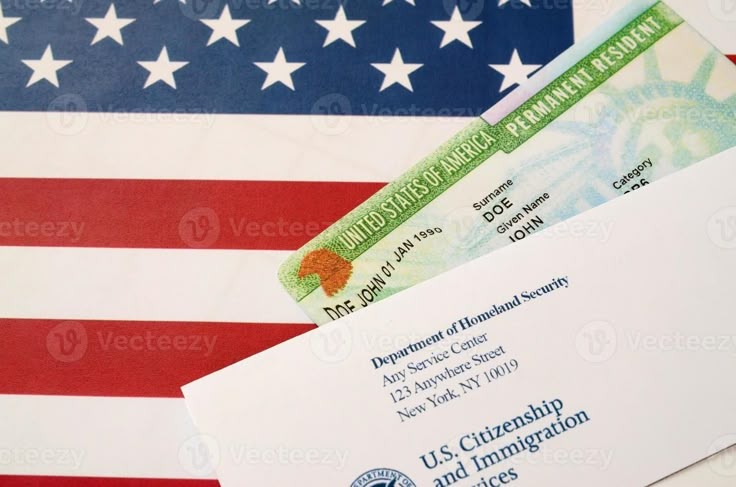
The change directly affects Nigerians and other Africans in the US on student visas, temporary work permits, and tourist visas who had been planning their green card processes on the old timeline.
For Nigerian applicants, the policy intersects with one of the most backlogged US embassy processing environments in the world, making the instruction to apply from home a significantly more complicated proposition than for nationals of countries with faster processing. A class-action legal challenge was anticipated within weeks of the announcement.