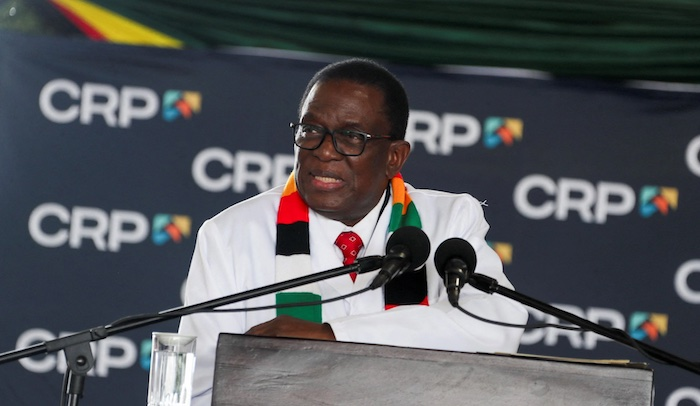
Zimbabwe's Mnangagwa Sparks Fury: AU Challenges Controversial Bid to Extend Presidency to 2030!

Zimbabwe is at a critical juncture, facing widespread debate and controversy over Constitutional Amendment Bill No. 3 (CAB3). This proposed legislation seeks to extend President Emmerson Mnangagwa’s presidency by two years beyond the current 2028 constitutional limit, potentially allowing him to claim eligibility for a third term and, according to critics, remain president for life. Alongside this, the bill proposes to extend the terms of Members of Parliament and local councillors to 2030, and includes far-reaching constitutional reforms.
A central and highly contentious aspect of CAB3 is the proposed abolition of direct presidential elections. If adopted, Zimbabwe’s long-standing “one-man, one-vote” system could be replaced by a parliamentary vote to elect the president. Critics, including investigative journalist Hopewell Chin’ono, argue that these changes are driven purely by Mnangagwa’s desire to consolidate power, asserting that “This whole thing is driven by his desire to die in power.” Opposition politician Tendai Biti has starkly compared the situation to “just repression,” drawing parallels with the 37-year rule of former president Robert Mugabe.
Public consultations on the amendments have been fraught with chaos, violence, and intimidation. Reports indicate disruptions at outreach meetings, leading opposition figures like Jameson Timba, Lovemore Madhuku, Tendai Biti, and Munyaradzi Gwisai to instruct their supporters to withdraw from the process due to alleged exclusion of dissenting voices. Incidents during these proceedings include the assault and cellphone theft of human rights lawyer Doug Coltart, and journalists reportedly being forced to delete footage at events like the chaotic City Sports Centre meeting in Harare.
The African Commission on Human and Peoples’ Rights (ACHPR), following a fact-finding mission, has raised significant concerns over the transparency and inclusivity of the constitutional review. While acknowledging Zimbabwe’s sovereign right to constitutional reform, the ACHPR urged greater inclusivity to restore public confidence, recommending broader participation from civil society and other stakeholders. The commission also warned of potential “rollback” risks, specifically mentioning the possible dissolution of the Zimbabwe Gender Commission, which could undermine gender equality protections. Furthermore, the ACHPR highlighted existing gaps between Zimbabwe’s 2013 Constitution and its implementation, citing issues such as child labour, ongoing child marriages, a low age of criminal responsibility, and prison overcrowding.
Internally, the ruling Zanu-PF party is also grappling with the implications of these changes. Party insiders reveal that provincial chairpersons have approached Zanu-PF benefactor Kudakwashe Tagwirei, requesting his intervention to persuade Mnangagwa to suspend an upcoming party restructuring exercise. The chairpersons seek to extend their own terms to 2030 or even 2032, aligning with the proposed extensions for the executive and legislature, which would allow them to play a key role in future leadership succession battles. These internal tensions and factional disputes, linked to succession battles involving Vice President Constantino Chiwenga, reflect a complex power dynamic within Zanu-PF, whose current structures largely trace back to the 2014 congress under Robert Mugabe.
Mnangagwa, often nicknamed “the Crocodile” for his perceived guile and ruthlessness, came to power following the 2017 military-assisted transition that ousted Mugabe. While he initially pledged to open Zimbabwe for business and repair international relations, his honeymoon period was short-lived. His administration has since been surrounded by allegations of corruption and human rights abuses, leading to sanctions from the US Treasury in 2024. Despite an improving macroeconomic outlook, fueled by remittances and high gold prices, ordinary Zimbabweans continue to struggle economically.
The constitutional court is now tasked with deciding whether a national referendum on the proposed changes is necessary. Political observers suggest that Zanu-PF may find it easier to elect the president through a “pliant parliament” rather than through a “fractious electorate.” These proposed constitutional and party-level changes have sparked intense debate, signaling a potential significant reshaping of Zimbabwe’s electoral system and overall governance framework.
You may also like...
Wembanyama's Rib Injury Shakes Up Spurs' Victory Over 76ers

San Antonio Spurs star Victor Wembanyama exited Monday's game against the Philadelphia 76ers early due to a left rib con...
Grizzlies Make History with Record-Tying 29 Threes, Still Fall to Cavaliers

The Memphis Grizzlies matched an NBA single-game record by making 29 three-pointers against the Cleveland Cavaliers. Des...
Hunger Games Hype: Elizabeth Banks Praises Elle Fanning's Effie Casting

Elizabeth Banks offers her enthusiastic approval for Elle Fanning as young Effie Trinket in the "Hunger Games" prequel, ...
Slam Dunk! Shaq and Warner Bros. Unleash New Pro Dunk League

Shaquille O’Neal, alongside Warner Bros. Discovery and Authentic Brands Group, is set to launch “Dunkman” in summer 2026...
Lady Gaga Devastated by Montreal Concert Cancellation

Lady Gaga canceled her Monday night Mayhem Ball concert at Montreal's Bell Centre due to a worsening respiratory infecti...
Rapper Offset Hospitalized After Florida Shooting

Rapper Offset was shot outside the Seminole Hard Rock Hotel & Casino in Hollywood, Florida, on Monday evening. He is cur...
Sacked for an Easter Egg? Waitrose Worker Fights Back After Confronting Shoplifter!

A 54-year-old Waitrose employee of 17 years was sacked for tackling an Easter egg thief, sparking significant public and...
UK Health Crisis Deepens: Resident Doctors' Strike Halts Pay Rises, New Training Posts!

Resident doctors in England have begun their longest strike yet, as the government withdraws crucial training posts amid...