Zambia's 2026 Election Heats Up: Campaigns, Endorsements, and Political Debates Dominate
Zambia's 2026 general elections are characterized by a dynamic political discourse, with President Hichilema campaigning on his administration's achievements and the opposition, led by Brian Mundubile, presenting an alternative vision. The campaign is also marked by a call for peaceful elections, concerns over AI-manipulated imagery impacting voter perceptions, and ongoing debate surrounding the Cyber Security and Cyber Crimes law.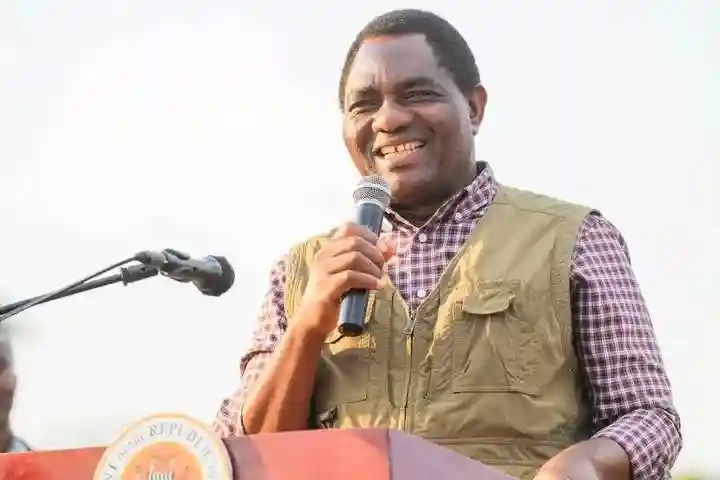
Zambia is keenly focused on the upcoming 2026 General Election, where both the incumbent President Hakainde Hichilema and the opposition, led by figures like Brian Mundubile, are presenting their visions for the nation. The political landscape is shaped by discussions on economic development, democratic freedoms, electoral integrity, and social policies.
President Hakainde Hichilema has made direct appeals to voters in Eastern, Northern, Luapula, and Muchinga provinces, urging them to elect more members of parliament from his party. This, he explained, would provide a wider pool from which to appoint ministers after the 2026 elections, drawing lessons from the challenges faced in forming his cabinet after the 2021 polls due to a limited number of elected representatives. President Hichilema also clarified his stance on constitutional amendments, dismissing "opposition lies" that he would remove presidential term limits if re-elected. He affirmed his commitment to respecting the five-year, two-term limit, stating that his re-election would mark his final term in office. Furthermore, he announced plans for a phased approach to extend the free education policy to tertiary institutions.
Highlighting his administration's achievements, President Hichilema showcased significant progress across various sectors. He pointed to the free education policy that has brought over 2.5 million children back into school and an expanded school feeding program now reaching more than 4.5 million learners. Economic indicators, he noted, have shifted from a shrinking economy at -2.8% before 2021 to a growth rate of nearly 5.6%. His government has also worked to stabilize the Kwacha and reduce inflation to single digits. The mining sector is experiencing a revival, with new greenfield mines opening and previously closed mines returning to production. Efforts are also underway to address the historic energy deficit, with a target of 10,000 megawatts. Additionally, President Hichilema emphasized the restoration of law and order, marking an end to what he described as the impunity and lawlessness of previous years. He challenged the opposition to present a more credible alternative, echoing the sentiment that "if it ain't broke, don't fix it."
In contrast, the opposition, particularly around the Tonse Pamodzi Alliance presidential candidate Brian Mundubile, has mounted a robust campaign. Muhabi, a spokesperson for the alliance, urged Zambians to reject divisive politics and support leaders who connect with ordinary people. He dismissed claims of the alliance's "failure" to field candidates, asserting that such decisions were strategic. Muhabi also criticized the ruling UPND for allegedly stifling opposition voices, referencing concerns raised by international bodies like the African Union, the United Nations, and the U.S. State Department regarding shrinking democratic space. He highlighted attempts to remove Brian Mundubile from the ballot as evidence of fear within the incumbent camp, while commending Mundubile's distinguished background as a chartered accountant, former Chief Whip in Parliament, and Provincial Minister, praising his humility and commitment to professionalizing the civil service rather than threatening it.
Muhabi further clarified Mundubile's economic position, rejecting distortions that he "rubbished reserves." Instead, he argued that Mundubile emphasized that economic figures mean little if citizens face hardship, echoing President Hichilema's past sentiment that "bantu don't eat figures" if suppliers are unpaid and families starve. The alliance has also addressed sensitive issues, including the delayed burial of former President Edgar Lungu, with Muhabi arguing that the state, not the family, was responsible for the delay, drawing parallels to historical instances. He condemned the intimidation of opposition leaders, citing the incident involving Gary Nkombo, and warned against the "arrogance of incumbency," reminding that it has historically led to the downfall of politicians in Africa.
Supporting the alliance, Kambwili, addressing a rally in Luapula Province, acknowledged the significant infrastructure and development projects delivered by the previous PF government but conceded that political caderism had tarnished the party's image. He assured supporters that Brian Mundubile, as the Tonse-Pamodzi Alliance presidential candidate, is committed to preventing the return of caderism, emphasizing the alliance's focus on development without the excesses associated with political cadres. Andyford Mayele Banda, President of the People’s Alliance for Change (PAC), also formally endorsed Brian Mundubile, praising his resilience and offering his candidature as an opportunity for Zambia to "restart with renewed purpose, fresh ideas, and a commitment to doing things differently." Banda stressed that the sovereign will of the people ultimately determines the nation's future, urging all Zambians to unite behind Mundubile on August 13, 2026, for a principled, people-centred leadership.
Amidst the intense campaigning, a notable positive development for the 2026 General Election has been the general avoidance of widespread political bloodshed, a stark contrast to the tensions and violence that marred parts of the 2021 campaign. While isolated incidents have occurred, the overall atmosphere has been more peaceful, with parties holding rallies and supporters displaying party colors. This peace is hailed as a victory for all Zambians who believe in elections as contests of ideas and policies, not fear or violence. All stakeholders, from political leaders to citizens and security agencies, are urged to maintain this peace throughout the remaining campaign period, recognizing that a peaceful election strengthens Zambia's democracy.
However, new challenges to electoral integrity have emerged, particularly concerning the use of artificial intelligence in campaign imagery. "The People's Brief" highlighted how AI can easily enlarge crowds, duplicate people, or create fabricated scenes, potentially influencing voter perceptions by creating a false sense of momentum or discouraging participation. In response, the publication has committed to rejecting campaign images suspected of AI manipulation or crowd amplification, emphasizing that democracy should not be influenced by digitally manufactured realities. This initiative also welcomed active reader feedback, stressing that verification is now a shared responsibility between journalists and an informed public. The editor underscored that while campaign photographs might shape perceptions, they do not determine election results, as only Zambians will cast ballots on polling day, making it the only truly significant "crowd."
Another significant public debate revolves around the Cyber Security and Cyber Crimes law. Many Zambian citizens reportedly fear expressing themselves on social media, often using the phrase "I don't have a lawyer" to signify their apprehension about potential prosecution. Mulenga, commenting on the matter, accused opposition figure Makebi Zulu of misleading the public by solely attributing the law to the UPND government. Mulenga maintained that the foundational legislation was established during the PF administration, with the current government introducing "a few additional provisions." Critics argue the law could be used to prosecute individuals for online activities, while the government asserts its purpose is to combat cybercrime and enhance national security.