Zambia Erupts! Hichilema Secures Second Term Amidst Celebrations, Court Challenges, and Calls for Unity
President Hakainde Hichilema has secured a second term in Zambia's August 2026 elections, winning by over a million votes against Brian Mundubile. The victory, despite the opposition's challenge to the results, underscores Hichilema's commitment to national unity, peace, and economic development for all Zambians. The election analysis also highlights key missteps by the opposition and critical lessons on voter mobilization in urban versus rural areas.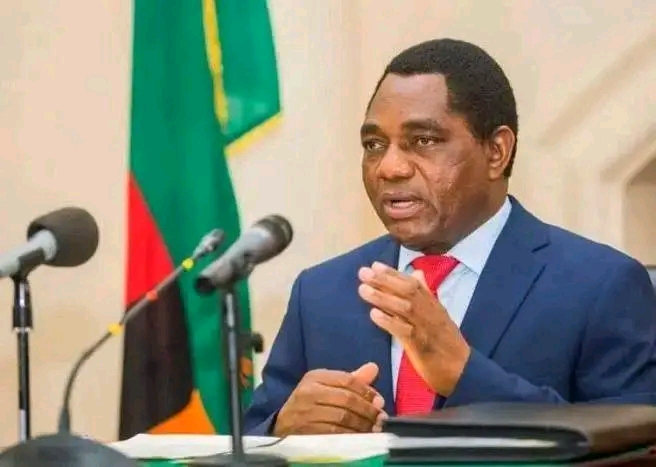
President Hakainde Hichilema secured re-election in the August 2026 general elections, polling 2,965,326 votes (60.7 percent) against his main challenger Brian Mundubile, who obtained 1,856,217 votes (38 percent), resulting in a winning margin of 1,111,109 votes. This victory, described as a mandate to deliver development, has been affirmed by the Electoral Commission of Zambia (ECZ) after the completion of results from all 226 constituencies, although the Tonse-Pamodzi Alliance has announced plans to challenge the results in the Constitutional Court, citing perceived irregularities and a lack of free and fair competition.
In his acceptance speech, President Hichilema emphasized Zambia’s commitment to peace, democracy, and the rule of law, stating that citizens settled their differences through the ballot box. He pledged to work for all Zambians, including those who supported the opposition, ensuring everyone benefits from national development. The President highlighted his administration's focus on development, progress, peace, and prosperity, committing to building a better Zambia for future generations. He called for unity and cooperation, underscoring that public office demands subordination of personal interests to national needs, and issued a stern warning against lawlessness and militia tactics.
Analysis of the election results points to several political miscalculations by the opposition, particularly by Brian Mundubile's campaign. Critics noted the problematic choice of Makebi Zulu as running mate due to his close association with late President Edgar Lungu and controversies surrounding the former President’s burial, which created a perception challenge for neutral voters. The promise to release jailed PF officials was deemed a significant miscalculation, as many Zambians viewed these as consequences of alleged wrongdoing rather than political persecution. The opposition's economic messaging also largely focused on criticism without offering convincing alternatives, financing plans, or outlining consequences of their proposals. Campaign anomalies, such as the debate over excavators for marketeers, attempts to discredit free education, and ill-argued positions on the Constituency Development Fund (CDF), further eroded credibility among a more sophisticated electorate. Mundubile's defense of Binwell Mpundu's controversial remarks and, critically, the promise to govern Zambia as Edgar Lungu did, were identified as major errors, as the 2021 election was seen as a clear rejection of that governance model. The opposition also underestimated the 'center' voters, failing to build a compelling bridge between their traditional support base and undecided segments of the electorate.
A deeper examination of provincial numbers reveals the true nature of Hichilema’s victory. Mundubile won six of Zambia’s ten provinces but lost the presidency by a significant margin. This was largely due to President Hichilema's extraordinary vote accumulation in his strongholds. Southern Province delivered a staggering 718,569 votes for Hichilema against Mundubile's 26,260, an advantage of 692,309 votes. Similarly, Western and North-Western provinces contributed substantial margins. Combined, these three provinces alone gave Hichilema a surplus of approximately 1.49 million votes, which was larger than his eventual national winning margin. While Mundubile secured significant votes in Eastern, Luapula, Muchinga, and Northern provinces, his combined advantage across these areas was less than one-third of Hichilema's surplus from his three strongest provinces. Even in Zambia’s major urban centers, Lusaka and the Copperbelt, where economic frustration and cost-of-living concerns were visible, Mundubile's advantage was narrow (18,768 in Lusaka) or virtually tied (1,639 in Copperbelt), indicating that urban dissatisfaction did not translate into the scale of electoral rejection needed to unseat the incumbent. The analysis suggests a striking contrast in voter engagement, with rural Southern, Western, and North-Western provinces exhibiting higher participation rates in the presidential contest than the country’s major urban and industrial centers, raising questions about voter apathy and urban mobilization strategies.
Post-election reactions have been diverse. Kenyan President William Ruto and Tanzanian President Samia Suluhu Hassan were among international leaders who congratulated President Hichilema, highlighting bilateral relations. Domestically, state institutions, universities, and various organizations extended their felicitations. Key figures like Mr. Nkandu, Mr. Chanda, and Mr. Kayumba have urged humility in victory and emphasized the need for unity, inclusivity, and focus on delivering tangible development benefits to ordinary Zambians. Mr. Chanda outlined priorities for the second term, including economic stabilization through debt restructuring, attracting investment, expanding free education, and crucially, ensuring these gains translate into better-paying jobs, affordable food, and profitable markets for farmers. He stressed value addition in copper mining and agriculture, along with accelerated investment in reliable electricity and youth development initiatives. Some opposition candidates, such as Moses Sikazwe in Lusaka Central and Lufuma in Kabompo East, gracefully conceded defeat and called for unity. However, the Tonse-Pamodzi Alliance leadership, including Munir Zulu, confirmed their intent to petition the results in the Constitutional Court, while urging supporters to remain calm and peaceful. Dr. Chris Zumani Zimba, a Tonse Alliance architect, acknowledged Hichilema's legal victory despite highlighting what he perceived as an uneven playing field involving financial sabotage and blocked rallies, calling for Hichilema to act as a unifying leader and for Mundubile to concede for national reconciliation.
In other news, Zambia is set to host the 47th Southern African Development Community (SADC) Summit of Heads of State and Government next year, with President Hakainde Hichilema elected as the Incoming Chairperson, signifying Zambia's growing regional influence. Meanwhile, a moment of levity during the tense vote tallying process came from ECZ Commissioner McDonald Chipenzi, who humorously used the phrase “Noto Noto” instead of “number zero,” becoming a social media sensation. Amidst the celebrations, an unfortunate incident occurred in Mapalo area, Chifubu Constituency, where a youth, Chakwa Telala, reportedly fell off a moving truck during a re-election procession, underscoring the need for safety and order. As President Hichilema embarks on his second term, the dual responsibility rests on the government to deliver on promises and for the opposition to rebuild and provide effective checks and balances, with the indelible lesson that “The voter is watching.”