You’ve Been Singing “Steal Am Like Anini” in Ayra Starr’s Tornado, But Who Really Is Anini?
You’ve probably screamed the Anini line in Ayra Starr’s Tornado without knowing the wild history behind it. Meet Lawrence Anini, the 1980s outlaw who terrified Benin, embarrassed the police and became a Nigerian pop-culture legend nearly 40 years later.
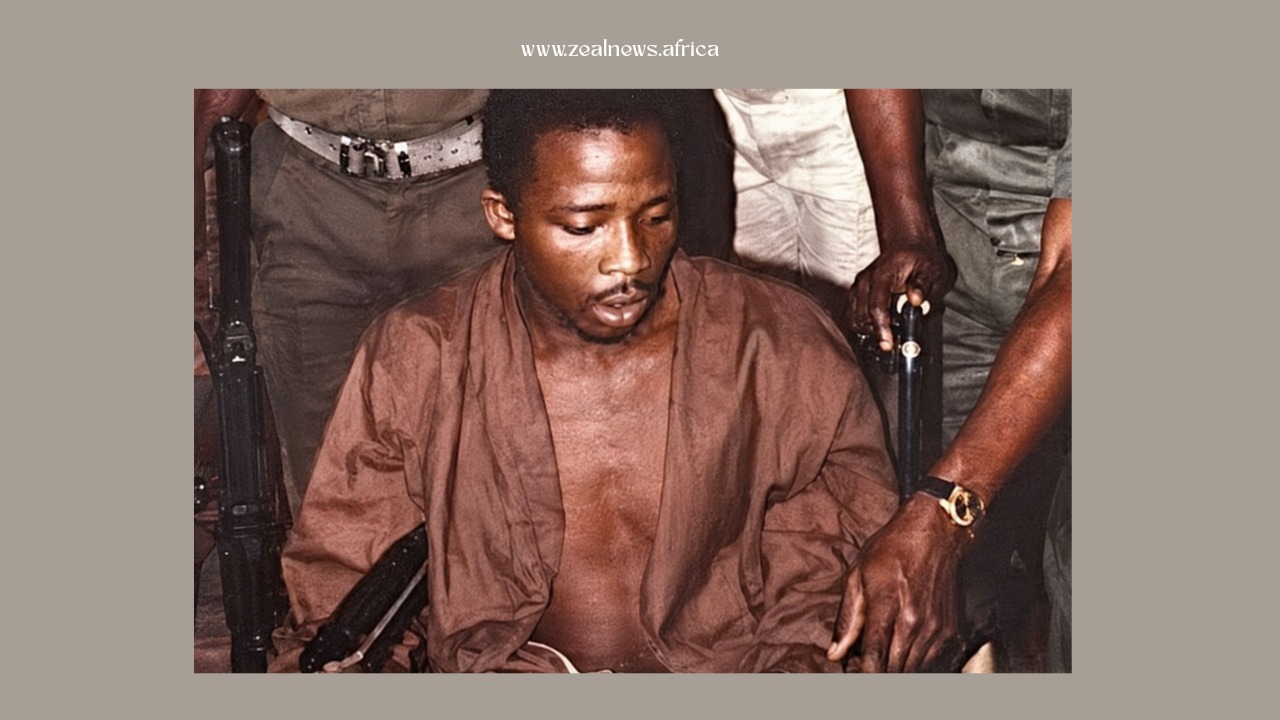
“And if he belong to Caesar, steal am like anini”
We all scream this line from Ayra Starr’s Tornado song.
But who then is Anini?
No, seriously.
Because there is a very good chance you have sung that line with your full chest, vibed to it, posted the lyrics on your WhatsApp status, and moved on with your life without knowing that Ayra Starr was casually name-dropping one of Nigeria’s most notorious armed robbers.
So, who exactly was Anini?
Before Nigeria Asked “Where Is Anini?”, He Was Just a Young Man Behind a Steering Wheel
His full name was Lawrence Nomayagbon Anini, and according to an archive-based reconstruction of his life, he was born in 1960 and came from Orogho village in what is now Orhionmwon Local Government Area of Edo State.
When he moved to Benin City, what he apparently wanted was not national notoriety but a life as a driver.
He learnt to drive and began working as a taxi driver, developing a reputation for being exceptionally good behind the wheel. Contemporary accounts later turned that driving ability into part of the Anini mythology, with police officers themselves reportedly acknowledging how difficult he was to beat during car chases.
The problem was where those skills eventually took him.
Anini became associated with criminals operating around Benin and moved from driving for bandits into organising his own gang. The group included Monday Osunbor, who became his best-known associate, alongside several other men involved in carjacking and armed robbery.
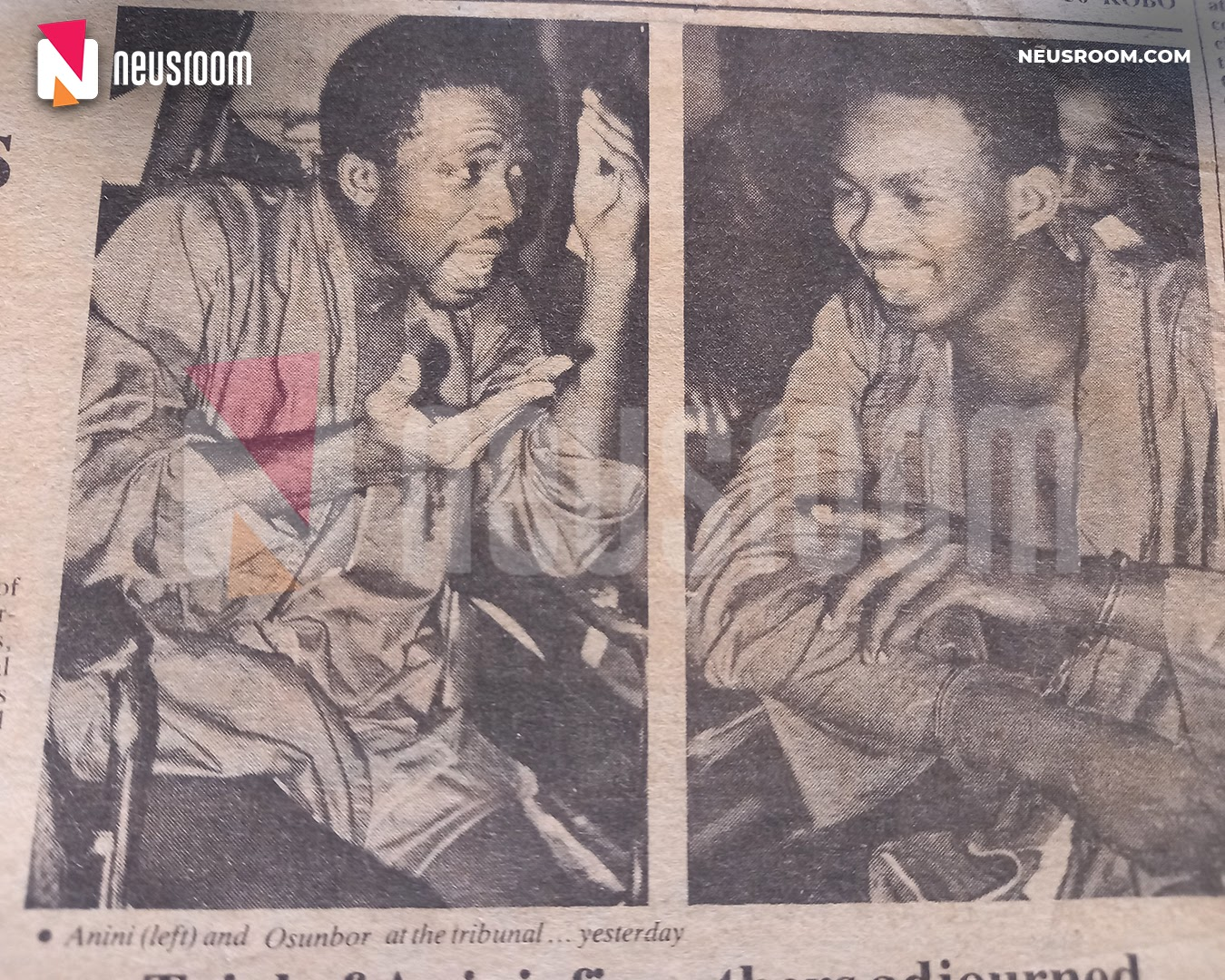
By 1986, however, Anini was no longer simply another robber operating in Bendel State, which then covered territory that today makes up Edo and Delta states. His gang had become associated with a violent crime wave that frightened residents, embarrassed the police and eventually forced the military government to pay attention.
The details emerging from that period explain why his reputation grew so quickly.
In August 1986, for instance, Anini’s gang reportedly raided a First Bank branch in Sabongida-Ora. Two months later, after robbing an African Continental Bank branch in Agbor of ₦46,000, Anini was reported to have driven into a nearby market and thrown some of the stolen money to people as his getaway car moved through the area.
History
Rewind the Stories that Made Africa, Africa
A Journey Through Time, Narrated with Insight.
That sort of spectacle helped create the image that would later follow him: the fearless outlaw who robbed institutions and occasionally shared some of the proceeds with ordinary people.
It also helped build the deeply misleading comparison between Anini and Robin Hood.
The reality was far more violent. The archive-based account reports that Anini and his gang were blamed for the deaths of police officers and civilians during their reign of terror, while contemporary academic analysis shows that killings, robbery and revenge were central to the story rather than some coherent campaign for the poor.
Yet Anini seemed to grow more brazen as the fear around him increased.
One particularly extraordinary account says that in August 1986 he sent a letter to the manager of New Nigeria Bank’s Ring Road branch in Benin City, warning that he intended to visit and demanding that ₦10,000 be kept aside for him.
The address reportedly written on the letter was effectively a taunt: “Number 1,000,000 Anywhere Street Within the City, Benin, Bendel State.”

What happened next says almost as much about Nigeria at the time as it does about Anini.
According to the account, the bank did not immediately run to the police. Instead, officials went to the Oba of Benin.
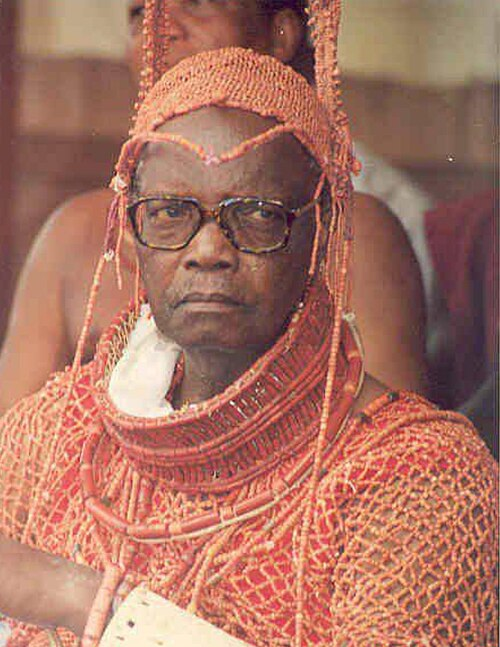
There was a reason for that hesitation. Residents were increasingly suspicious that information passed to the police might somehow get back to the criminals. Some feared that giving information about Anini could lead to them being accused of involvement or, worse, identified to the gang and attacked.
Contemporary academic research on the saga records the same atmosphere of fear and distrust.
This was the environment in which the legend of “Anini the Law” grew. Every failed attempt to catch him strengthened the impression that he could go anywhere, rob anyone and somehow know what the police were planning.
By October 1986, the question of finding him had reached the highest levels of Nigeria’s government.
Following a meeting of the Armed Forces Ruling Council, military president Ibrahim Babangida turned to Inspector-General of Police Etim Inyang and asked the sentence that would become permanently attached to the story:
“My friend, where is Anini?”
The exchange is documented in Otwin Marenin’s contemporary study of the Anini saga in The Journal of Modern African Studies. Newspapers at the time were already running stories about “The Anini Challenge,” “The Anini Factor” and “Lawrence Anini – the Man, the Myth,” showing how thoroughly one criminal had entered the national imagination.
The question was no longer simply what Anini had done. Nigerians also wanted to understand how he had managed to keep doing it.
The answer would make the story even more disturbing.
Then Nigerians Began to Wonder Whether Anini Was Really Outsmarting the Police
History
Rewind the Stories that Made Africa, Africa
A Journey Through Time, Narrated with Insight.
One of the defining elements of the Anini saga was the suspicion that his gang was benefiting from help within the police force.
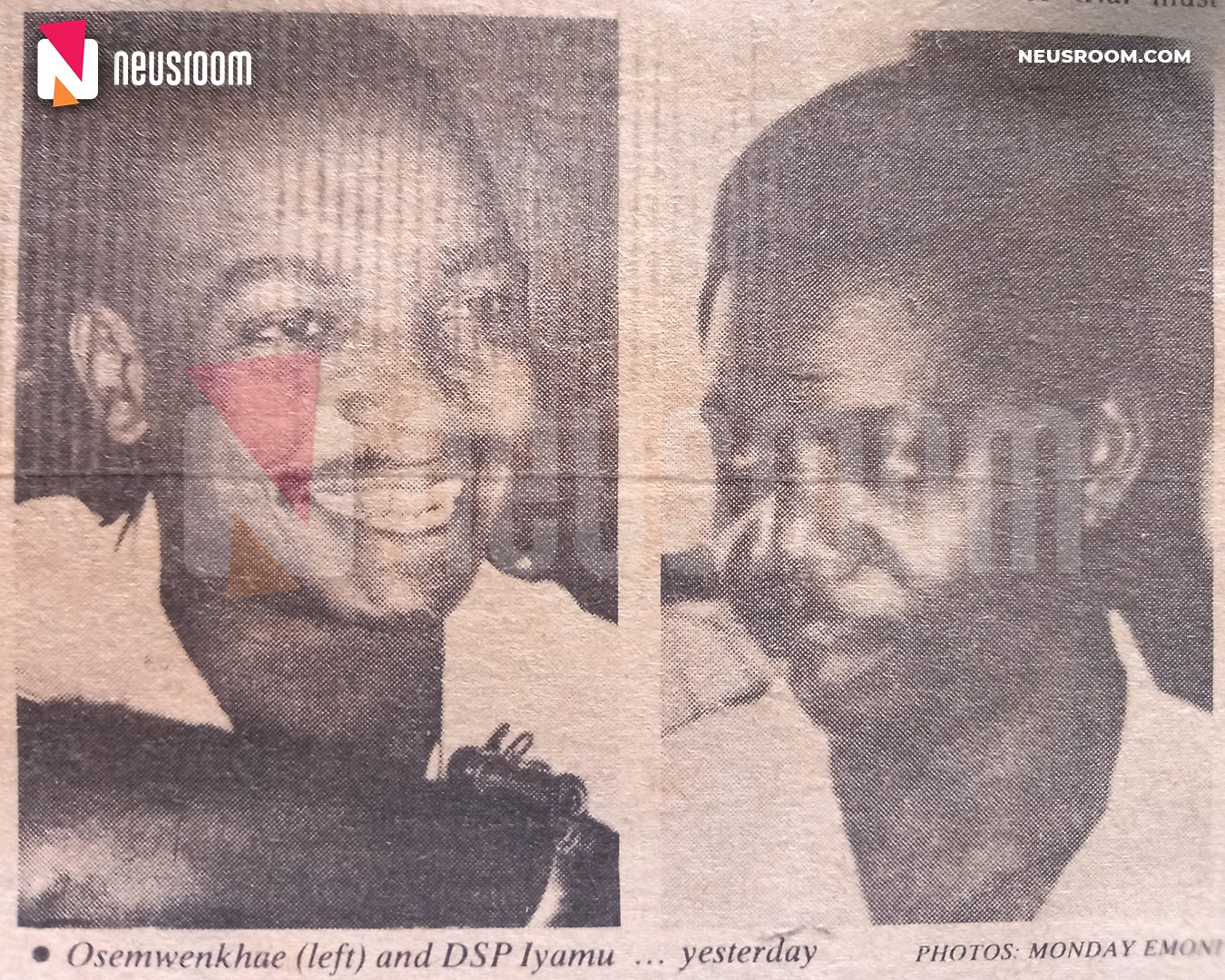
The name at the centre of that scandal was DSP George Iyamu.
Accounts of the case accused Iyamu of supplying the gang with security information and helping its members operate with knowledge that ordinary criminals should not have possessed. He was eventually prosecuted alongside members of Anini’s network, convicted and executed.
People could condemn his violence while simultaneously watching him embarrass institutions they already distrusted. Throwing money to marketgoers made it easier to construct the Robin Hood image, and stories about his supposed concern for drivers and market women helped deepen that mythology.
Anini himself reportedly tried to occupy that role. One account says he wrote to Babangida complaining about conditions in Bendel State and claiming that he shared money with ordinary people. Another reported a list of demands attributed to him, touching on police harassment, treatment of drivers and the behaviour of highway patrol officers.
There is an obvious temptation to turn all this into the story of an anti-establishment rebel.
That would be a mistake.
Marenin’s analysis made the distinction clearly: romanticising criminals because they challenge an unpopular or corrupt system can hide the fact that robbery, killing and personal revenge remain robbery, killing and personal revenge.
Anini’s story is more interesting when both realities are allowed to exist at once. Nigeria had serious problems with public trust and police corruption, and Anini was also a violent criminal whose gang caused genuine fear.
Eventually, the myth of the man who could not be caught met a much less glamorous reality.
On December 3, 1986, a police team acting on a tip-off located him at a house on Oyemwosa Street in Benin City. According to the archive-based reconstruction, police knocked at the room and Anini himself opened the door, initially trying to suggest that the man they wanted was somewhere else inside the house.
When he attempted to move past the officers, police shot him in the leg. The injury was so severe that the leg was later amputated.
The man newspapers had transformed into something approaching a supernatural outlaw was suddenly wounded, captured and lying in a hospital bed.
Anini was subsequently tried before a robbery and firearms tribunal. In February 1987, Justice James Omo-Agege sentenced him to death, and on March 29, 1987, Anini and Monday Osunbor were publicly executed by firing squad in Benin City. Thousands reportedly turned out to witness it.
He was about 26 years old.

History
Rewind the Stories that Made Africa, Africa
A Journey Through Time, Narrated with Insight.
His life had lasted barely more than two and a half decades, yet his name had already become one of the most recognisable in Nigeria’s crime history.
What nobody standing at that execution could have known was that nearly 40 years later, young Nigerians would still be saying it.
How Does a Man Executed in 1987 End Up Inside a Gen Z Afrobeats Song?
This is where Anini stops being only a crime story and becomes a story about how Nigerians remember.
Most young people probably do not know the name of George Iyamu. They may never have heard about the letter to New Nigeria Bank, the money reportedly thrown into the Agbor market or the terrified residents who worried that speaking to police could put them in danger.
They may not even know that a Nigerian military president once publicly demanded to know where Anini was.
Yet they recognise that the name carries weight.
Over time, the complicated history was compressed. The robberies, killings, corruption scandal, tribunal and firing squad became less visible in popular memory, while the image of Anini as a dangerously audacious man who behaved as though nobody could stop him survived.
That is what gives the Tornado reference its force.
For people who understand the cultural reference, Anini’s name now evokes a particular kind of reckless audacity: the willingness to take what you want, ignore the rules and behave as though no one has the power to stop you. The lyric can borrow that reputation in a few seconds without explaining the violent history that created it.
There is something fascinating, and slightly unsettling, about that transformation.

Pop culture can keep a name alive while slowly removing the consequences attached to it. The longer Anini survives primarily as shorthand for confidence, fearlessness or taking what you want, the easier it becomes to forget the people who experienced the period when that reputation was being created.
That does not mean an Afrobeats song has to become a Nigerian history lecture.
It simply means that once you know who Lawrence Anini actually was, the reference sounds different.
He died in March 1987, in a Nigeria without smartphones, Spotify, TikTok, Instagram or WhatsApp statuses. Nearly four decades later, his name has travelled through newspaper archives, family stories, crime folklore and popular culture until it has arrived inside the music of another generation.
History does not always come back through textbooks or museums.
History
Rewind the Stories that Made Africa, Africa
A Journey Through Time, Narrated with Insight.
Sometimes it comes through a song you have already played twenty times.
And sometimes the line you have been screaming with your full chest turns out to have nearly 40 years of Nigerian history hiding inside it.