WNBPA Strikes Back! Counterproposal Offers Concessions on Revenue, Housing!
The Women's National Basketball Players' Association has submitted a new counterproposal to the WNBA, including concessions on revenue sharing and player housing after 16 months of negotiations. While both sides agree on a revenue growth system, significant disagreements persist over financial terms and the basis for revenue calculation, leading the league to deem the latest offer unrealistic. The proposals address player compensation, benefits, and working conditions, with both parties attempting to bridge substantial financial gaps.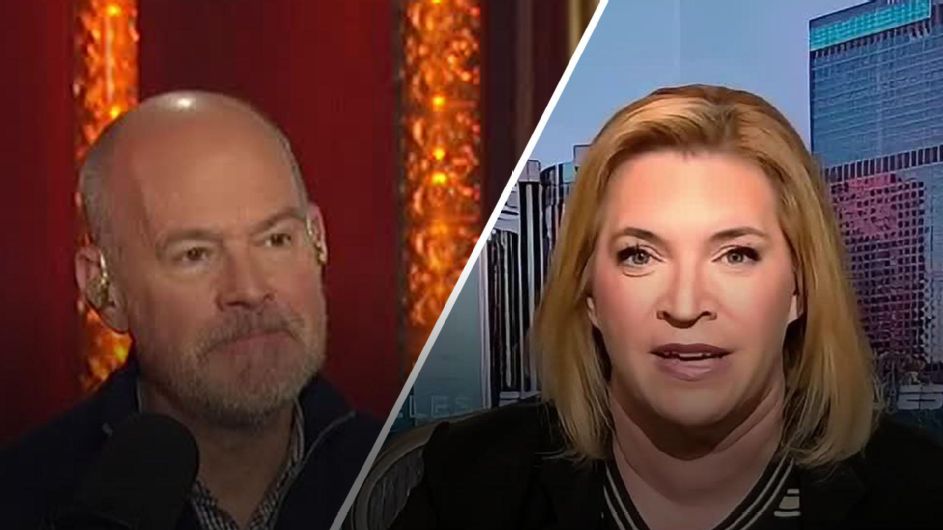
The Women's National Basketball Players' Association (WNBPA) has submitted a counterproposal to the WNBA, marking a significant development in the ongoing 16-month collective bargaining negotiations. This latest proposal, presented on Tuesday, includes strategic concessions from the players' union regarding both revenue sharing and player housing, key areas of contention throughout the discussions.
On the crucial issue of revenue sharing, the WNBPA is now advocating for an average of 27.5% of gross revenue, defined as revenue before deducting expenses, over the lifetime of the proposed agreement. This figure includes a starting point of 25% in Year 1, alongside a salary cap of less than $9.5 million for that initial year. This represents a notable adjustment from their previous proposal in December, which sought an average of 31% of gross revenue, commencing at 28% in Year 1 with an approximate $10.5 million salary cap. While both the league and the union are aligned on the principle of a revenue sharing system that allows player salaries to grow in tandem with league and team revenues, they fundamentally disagree on the precise mechanism and definition of that revenue. The WNBPA insists on gross revenue, while the WNBA continues to propose a system based on net revenue (revenue after expenses).
The WNBA's response to the union's latest offer was swift and critical. A spokesperson for the league indicated that the proposal "remains unrealistic and would cause hundreds of millions of dollars of losses for our teams." The league projects that the WNBPA's new plan would lead to $460 million in losses over the agreement's term, an improvement from the $700 million projected under the union's previous plan but still deemed unsustainable. The WNBA has consistently emphasized the imperative of business health and sustainability, particularly with upcoming expansion and college drafts, as well as free agency needing to be completed before training camp begins.
Conversely, the WNBPA maintains that its proposed revenue sharing model would still position the league for profitability. A source close to the negotiations refuted the league's projected loss figures as "absolutely false," attributing the discrepancy to whether expansion fees are factored into the calculations. The WNBA's own proposal, from earlier this month, offered players an average of over 70% of net revenue, which the league estimates would amount to less than 15% of gross revenue. This proposal included a projected salary cap of $5.65 million in 2026 (a significant increase from roughly $1.5 million in 2025), designed to grow with revenue. Under the WNBA's terms, maximum salaries, inclusive of revenue sharing payouts, were projected to reach nearly $1.3 million in 2026 and approach $2 million by 2031. Average player salaries, also including revenue sharing, were projected to reach $540,000 in 2026 and $780,000 by 2031, a substantial rise from $120,000 in 2025, with the supermax in 2025 having been $249,000.
Player housing has been another critical point in negotiations. The WNBPA's latest proposal suggests that teams continue to provide housing for players during the initial years of the new agreement. However, in later years, teams would no longer be obligated to provide housing for players earning close to the maximum salary on multiyear deals and receiving full salary protection. Since the first CBA ratification in 1999, WNBA teams have been required to provide housing, typically a one-bedroom apartment or a stipend. The WNBPA had previously explored options such as having housing costs deducted from the players' portion of revenue sharing and eliminating housing stipends altogether.
The league has also made its own concessions regarding housing and facility standards in its recent proposal. The WNBA offered to provide a one-bedroom apartment for the first three years of the new deal to players on their applicable minimum salary and those with zero years of service, while developmental players would receive studio apartments. Beyond these core financial and housing provisions, the WNBA has also compromised in other significant areas. These include the addition of two new developmental roster spots, implementing pregnant player trade consent, eliminating marijuana testing, increasing team contributions to players' 401(k) retirement accounts, establishing new team staffing and facility requirements, debuting a recognition payment for current retirees, and codifying charter flight travel within the new agreement.
The WNBPA's counterproposal follows 11 days after the league's response to a WNBPA proposal from around Christmas. A six-week gap between these proposals caused considerable frustration on the players' side, though league officials felt the earlier player proposal did not warrant a prompt response as it was deemed insufficiently different from previous submissions. Despite the shared goal of a growing league and increasing player compensation, the fundamental differences in how revenue is defined and calculated continue to pose significant hurdles in reaching a mutually agreeable collective bargaining agreement.