Why Nigeria Changed the Side of the Road It Drives On in 1972
Nigeria’s decision to switch from driving on the left to driving on the right in 1972 was influenced by its colonial history and the need to align its road system with neighbouring West African countries.
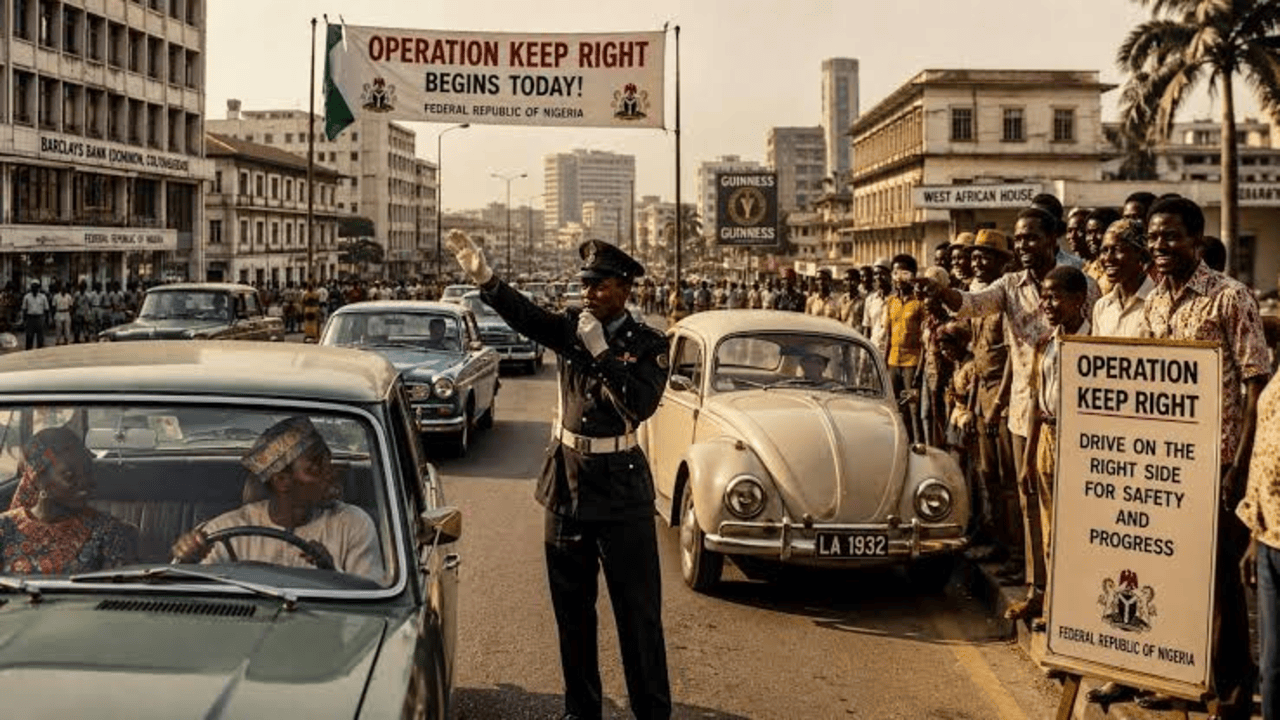
Before April 1972, Nigerian motorists drove on the left side of the road, following a system inherited from British colonial rule. Nigeria eventually abandoned the arrangement under the military government ofGeneral Yakubu Gowon.
The decision was intended to make road travel between Nigeria and its West African neighbours easier, but changing the traffic system across an entire country required years of preparation.
So, why did Nigeria make the switch, and how did the country carry it out?
Nigeria's roads differed from those of its neighbours
After gaining independence in 1960, Nigeria retained the British system of left-hand traffic, under which vehicles kept to the left and typically had their steering wheels on the right.
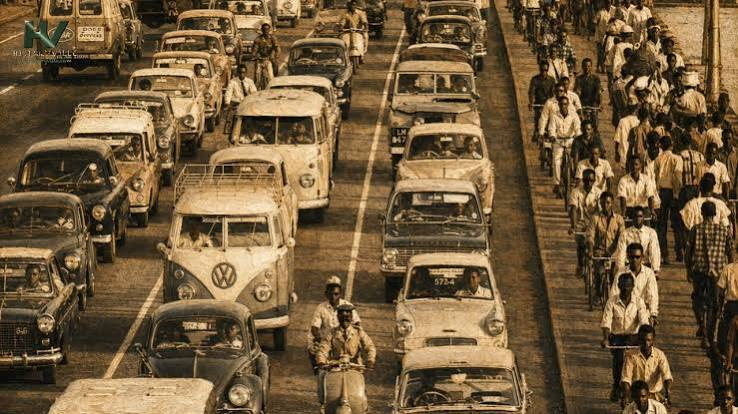
However, several neighbouring countries, including the Republic of Benin, Niger and Cameroon, operated right-hand traffic systems. Motorists crossing these borders therefore had to adjust to a different arrangement, a challenge for commercial drivers transporting passengers and goods across West Africa.
Why Nigeria decided to switch
At the West African Transport Conference held in Monrovia in October 1961, participants discussed standardising traffic arrangements across the region. In 1964, the United Nations Economic Commission for Africa also addressed the need for stronger transport connections between African nations.
Nigeria's left-hand traffic system differed from the one used by many of its neighbours. Switching to right-hand traffic was expected to make cross-border journeys more straightforward and support the movement of people and goods.
The federal governmentbegan serious preparations for the change in 1969. The National Commission for Right-Hand Traffic was established in January 1970 to coordinate the process, organise public education and oversee the administrative work involved.
The legal framework followed through theRight-Hand Traffic (Change-Over) Decree of 1971, which provided for the change to take effect on April 2, 1972.
How Nigeria prepared for the change
History
Rewind the Stories that Made Africa, Africa
A Journey Through Time, Narrated with Insight.
The government had toprepare motorists, pedestrians and traffic officials for a system that would reverse familiar road habits.
Newspapers, radio and television were used to publicise the change. Posters, handbills, booklets and car stickers helped spread information, while mobile film vans were also used to educate the public.
Road infrastructure needed attention as well. New traffic signs had to be installed, and some highways required adjustments. Owners of public passenger vehicles were directed to move their doors from the left side to the right to suit the new traffic arrangement.
Traffic police and specially trained road wardens were prepared to guide motorists, while a new Highway Code explained the rules and signs associated with right-hand traffic. The national commission coordinated the preparations, with state-level committees assisting with the transition.
What happened on April 2, 1972?
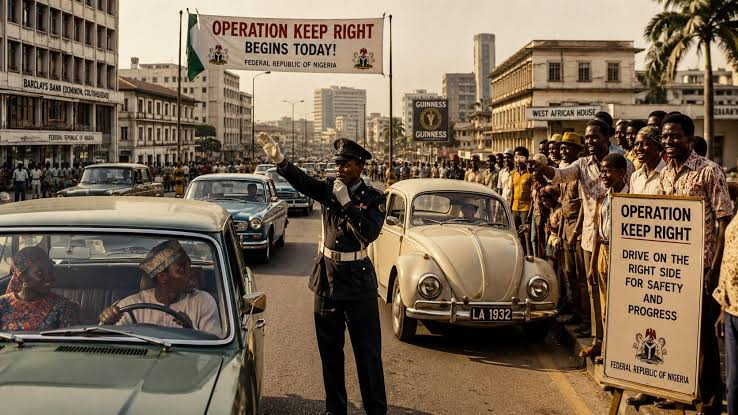

The switch took effect at 6 a.m. on Sunday, April 2, 1972. The timing gave road users a chance to adjust on a Sunday, followed by a public holiday, when traffic was expected to be lighter.
Authorities imposed a speed limit of 20 miles per hour within towns and deployed police officers and traffic wardens at strategic locations to direct motorists.
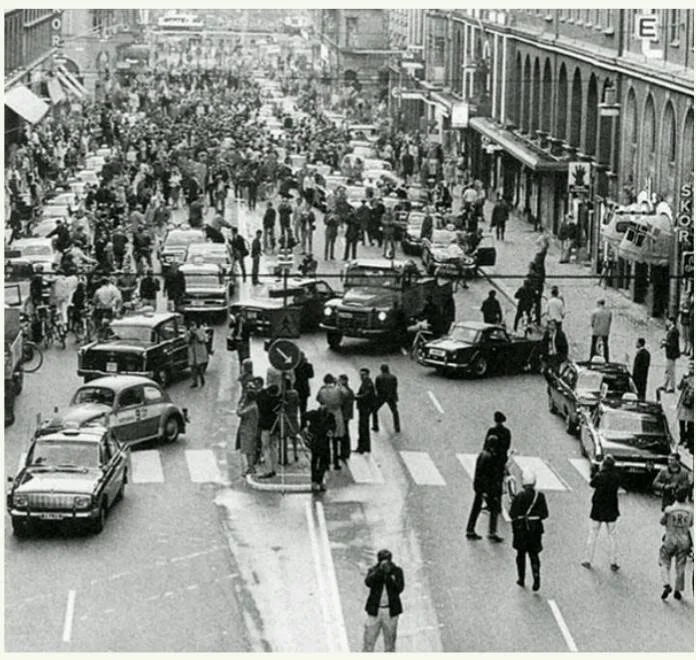
In Lagos, people gathered at major intersections to witness the change. Traffic had been brought to a standstill at midnight before the new arrangement took effect, allowing the transition to be managed before motorists resumed their journeys on the opposite side of the road.
The first two days passed relatively smoothly, partly because fewer motorists were on the roads. Tuesday brought a different experience when normal activity resumed. A contemporary account published inAwake! magazine in 1972 reported severe congestion in Lagos.
Federal Commissioner for Works Femi Okunnu reportedly spent more than two hours on a journey that normally took 20 minutes. The temporary speed limit was among the reasons given for the delays.
The account also described motorists who had stayed home on the first day rather than risk driving under unfamiliar conditions. Once traffic increased, the difficulties of adjusting to the new arrangement became more apparent.
Why Nigerian cars have their steering wheels on the left

Changing the side of the road motorists use also helps explain why Nigerian cars typically have their steering wheels on the left.
In a right-hand traffic system, vehicles keep to the right side of the road and typically have their steering wheels on the left. This allows drivers to sit closer to the centre of the road and better judge the position of oncoming traffic.
History
Rewind the Stories that Made Africa, Africa
A Journey Through Time, Narrated with Insight.
Before 1972, Nigeria used left-hand traffic, so vehicles kept to the left and typically had their steering wheels on the right. The United Kingdom still uses this arrangement today.
The change in Nigeria therefore involved more than adopting a different traffic rule. It required adjustments to road signs, traffic management and some vehicles to make them suitable for the new system.