West African Stability Threatened: Benin's Coup Foiled, African Union Condemns Attempted Power Grab
Benin's government has announced it foiled a coup attempt on December 7, 2025, led by rebel soldiers citing grievances over President Patrice Talon's governance, particularly concerning security in the north and welfare of armed forces. The incident in the historically stable West African nation highlights regional instability amidst a wave of recent coups. International bodies and foreign embassies condemned the attempt, emphasizing the importance of constitutional rule.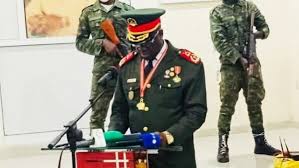
The government of Benin Republic, a West African nation, announced that it had successfully foiled a coup attempt by a small group within its armed forces on Sunday, December 7, 2025. Interior Minister Alassane Seidou confirmed in a televised address that the Beninese armed forces, loyal to their oath, maintained control and thwarted the destabilization effort. The incident quickly drew international attention as helicopters were seen hovering over Cotonou, the country’s largest city and administrative capital, while major roads were blocked amid a heavy military presence.
Earlier on the day of the attempted coup, a group of soldiers had broadcast a statement claiming they had ousted President Patrice Talon and suspended the constitution. Eyewitnesses reported hearing gunshots, and journalists at the state broadcaster were reportedly held hostage. Led by Lt-Col Pascal Tigri, the rebel soldiers justified their actions by criticizing President Talon’s management of the country, particularly the “continuing deterioration of the security situation in northern Benin.”
The rebels pointed to significant losses suffered by Benin’s army near its northern borders with Niger and Burkina Faso, where jihadist militants linked to Islamic State and al-Qaeda have been spreading southwards. One of their central grievances was the perceived “ignorance and neglect of the situation of our brothers in arms who have fallen at the front and, above all, that of their families, abandoned to their sad fate by Patrice Talon’s policies.” The coup plotters also cited cuts in health care, tax increases, and restrictions on political activities as reasons for their actions.
Despite the initial chaos, a presidential adviser assured the public that President Talon was in a safe location. French diplomats, however, denied earlier reports that he had taken refuge at France’s Embassy in Cotonou. Following the quashing of the coup, Interior Minister Seidou urged citizens to resume their normal activities, emphasizing that loyalist forces had regained full control of the situation.
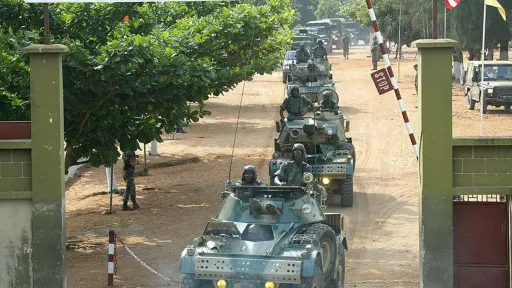
Benin, a former French colony, has long been regarded as one of Africa’s more stable democracies. Yet it remains among the world’s poorest nations, even though it is one of the continent’s largest cotton producers. The attempted coup adds to a troubling pattern of political instability in West Africa, coming just a week after a similar incident in Guinea-Bissau and following recent coups in Burkina Faso, Guinea, Mali, and Niger. This regional trend has intensified fears of worsening security, especially as Burkina Faso, Mali, and Niger have withdrawn from the West African regional bloc ECOWAS to form the Alliance of Sahel States, with Russia tightening its ties to these countries.
International bodies swiftly condemned the attempted overthrow. The French and Russian embassies in Benin advised their citizens to stay indoors, while the US embassy warned its nationals to avoid Cotonou, especially the area surrounding the presidential compound. ECOWAS and the African Union (AU) issued strong condemnations, with AU Commission Chair Mahmoud Ali Yousouf reaffirming the organization’s “zero tolerance stance toward any unconstitutional change of government, regardless of context or justification.”
President Patrice Talon, 67, a businessman widely known as the “king of cotton” and considered a close ally of the West, first came to power in 2016. He is expected to step down next year after completing his second term of five years, with elections scheduled for April. Talon has endorsed Finance Minister Romuald Wadagni as his preferred successor. While he has been praised for driving economic development, his administration has also faced criticism for suppressing dissent, including barring a major opposition candidate and introducing controversial constitutional amendments that extended terms for elected officials, though the presidential two-term limit remained unchanged.