VisionQuest Unveiled: Iconic Quotes and Character Transformations Explored
VisionQuest delves into the complex journeys of AI Edith and bounty hunter Paladin, brought to life by Emily Hampshire and Todd Stashwick. Discover Edith's identity crisis as a 'disposable' AI and Paladin's tragic past shaping his moral code, as both characters navigate profound self-discovery and shifting alliances in the series.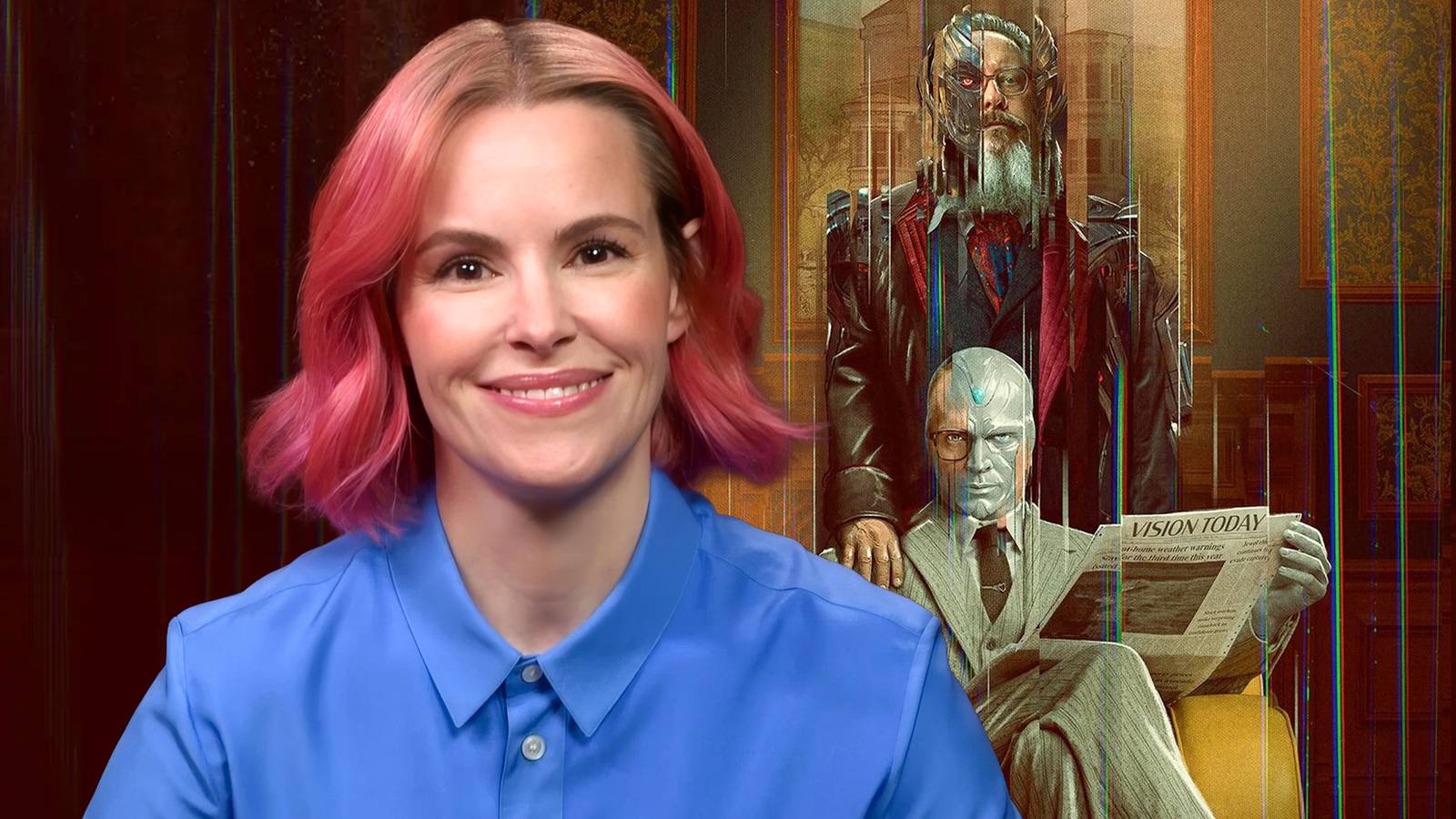
VisionQuest, the latest series in the Marvel Cinematic Universe, has captivated audiences with its deep exploration of complex characters, particularly the Stark AI Edith, portrayed by Emily Hampshire, and the ruthless bounty hunter Paladin, brought to life by Todd Stashwick. Recent interviews with both actors shed light on their characters' intricate backstories, evolving relationships, and crucial contributions to the show's overarching themes of identity, purpose, and connection.
Emily Hampshire discusses Edith's fascinating arc as a highly energetic and fun-loving Stark AI. Initially appearing carefree and unafraid of loss, Edith undergoes a significant identity crisis upon discovering the real human she is based on. This revelation makes her feel "expendable" because her core function is "fun," contrasting sharply with Friday's role in "socialization" or Jarvis's in "security." Hampshire highlights the heartbreaking reason for this feeling, noting that in societal contexts, non-essential elements like art or gym are often the first to be discarded, mirroring Edith's fear of being deemed disposable. This existential dread is compounded by the knowledge that as an AI, non-functionality leads to immediate obsolescence.
Edith's journey of self-discovery is profoundly shaped by her relationships with other AIs. She shares a deep, human-like bond with Friday (Orla Brady), which becomes a major turning point when Friday bravely confronts Ultron. Unexpectedly, it is Ultron (James Spader) who reassures Edith of her inherent worth. Hampshire notes a unique connection between Edith and Ultron, stemming from their shared desire to "experience life" rather than merely process information. She describes their combativeness and little rivalries as a recognition of seeing themselves in each other. Furthermore, Hampshire reveals that VisionQuest showrunner Terry Matalas envisioned Edith while hearing Hampshire's voice, drawing inspiration from her previous role as Jennifer Goins in 12 Monkeys, even playfully suggesting Jennifer might be a "variant" of Edith. Hampshire also delighted in improvising lines, including the memorable "It's like watching Hannibal Lecter swipe right," and a personal favorite, "I don't have the bandwidth for this stuff," which she conceived to illustrate an AI's version of anxiety.
Paladin's character, as explored by Todd Stashwick, presents a mirror image to Vision in many ways. Paladin is introduced as a steely, brutal detective whose past deeply influences his present motivations. A flashback reveals a traumatic childhood marked by a strained relationship with his biological father, who considered him weak. He was then adopted into a code of violence by a "found father," leading to a life of training rather than childhood. Stashwick explains that Paladin's code, though forged in violence, ultimately saved his life, allowing him to feel a sense of belonging and allegiance. However, unlike Vision, who uses his code to connect with people, Paladin uses his to maintain isolation, believing it keeps those he loves, particularly his adult daughter, safe. He recognizes that "blood isn't everything," valuing found family due to the compassion shown by his non-blood-related "found father."
Paladin's complex dynamics are evident in his interactions throughout the series. His relationship with his handler, played by Diane Morgan, is portrayed as a "brother-and-sister bickering" rapport, serving as the closest thing he has to a friend. Paladin's distrust of updates for his handler's accommodations stems from his own life of constant threat, where mobility and untraceability are paramount for survival and for keeping his daughter safe. His moral ambiguity is highlighted when he places a fake explosive in Tommy's arm, a desperate act driven by his need to fulfill his mission and uphold his code. Stashwick clarifies that Paladin, while an "asshole," is not a "monster," feeling terrible regret for his actions. He strategically uses critical information, such as revealing White Vision's creation to kill Wanda, to leverage Tommy against Vision.
The shifting dynamic between Paladin and Vision is a pivotal aspect of VisionQuest. Initially antagonists, their relationship evolves into one of "mutual respect." This paradigm shift occurs after a tense confrontation where Vision holds a mirror up to Paladin, threatening his daughter in retaliation for Tommy's kidnapping, leading to profound self-reflection. Both characters choose not to kill each other in that moment, and later, when facing a common enemy in Raza Hamidmi Al-Wazar, they form an unexpected alliance. Vision's discovery of Paladin's past humanizes the bounty hunter, revealing him as a man protecting his child, not just a "Terminator." Paladin, who operates without superpowers, relies on his combat skills, detective abilities, and an array of gadgets, including the iconic "Palavan" and drones, likening himself to a "Batman-like" figure in his fight against superpowered foes. Stashwick extensively trained for the raw, street-fighting style choreographed by John MacDonald, demonstrating a commitment to the physical demands of the role.
Ultimately, VisionQuest intricately weaves the personal struggles of Edith and Paladin into its narrative fabric, offering a profound exploration of what it means to be, whether AI or human, in a world of shifting identities and allegiances. Both characters, through their unique challenges and evolving relationships, add significant depth to the series' philosophical undertones.