Unpacking the Enduring Influence of Music Legend Fela Kuti
Decades after his death, Fela Anikulapo-Kuti's legacy of courage and resistance continues to inspire, with his Afrobeat music serving as a weapon against injustice. A recent posthumous Grammy Award affirms his global impact, prompting reflection on his complex role as a world-shaping musical and political force.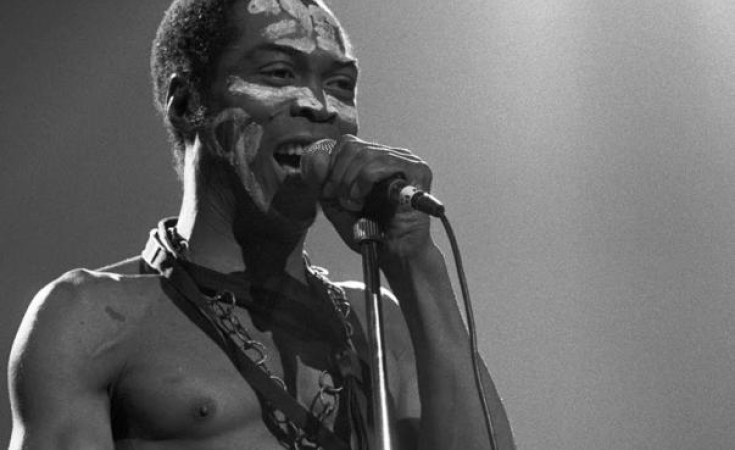
Few cultural figures have left as indelible a mark on Africa's political and artistic landscape as Fela Anikulapo-Kuti. Decades after his passing, Fela remains a potent presence, echoing in protest chants, sampled in global music, and inspiring every courageous stand against power. His profound legacy transcends mere sound, embodying a spirit of unwavering courage, fierce resistance, and an uncompromising conviction that art must serve as a direct conduit for truth to authority.
Fela did not merely create Afrobeat; he transformed it into a formidable weapon. Through his signature long, hypnotic compositions, characterized by intricate polyrhythms and searing horn arrangements, he converted music into an unyielding courtroom where the Nigerian state found itself perpetually on trial. Songs such as "Zombie," "Coffin for Head of State," and "Sorrow, Tears and Blood" were not subtle metaphors; they were bold, explicit indictments of the ruling regime. At a time when widespread fear silenced many voices, Fela dared to sing names, openly mock uniforms, and provoke soldiers to react. Their response was often brutal, involving violence and repression, yet paradoxically, this only served to amplify his voice and solidify his message.
What truly set Fela apart was his resolute refusal to compartmentalize his personal life from his political convictions. His famous Kalakuta Republic served as both a physical sanctuary and a powerful political declaration, a beacon of autonomy fiercely maintained in the face of authoritarian rule. The numerous arrests, severe beatings, and the devastating destruction of his commune—culminating in the fatal assault on his revered mother, Funmilayo Ransome-Kuti—were experiences that would have shattered lesser individuals. Instead, Fela emerged louder and more determined. He adamantly asserted that the African artist's role was not to be decorative but inherently disruptive, a catalyst for change and confrontation.
History, it appears, is finally catching up with Fela. Twenty-seven years after his death, he has posthumously received a Grammy Award, a recognition that feels both immensely triumphant and long overdue. This honor signifies far more than a mere trophy; it represents a global acknowledgment that the man once dismissed as a local troublemaker was, in fact, a world-shaping musical force of immense magnitude. The fact that it took Fela nearly three decades after his death to receive an accolade that eluded him during his lifetime speaks volumes about both the nature of global gate-keeping in the music industry and his enduring, ahead-of-its-time relevance. The Grammy officially affirmed what Africa had intuitively known all along: Fela's music was timeless, borderless, and profoundly prescient.
Yet, Fela's legacy is inherently complex. His characteristic absolutism and self-mythologizing can sometimes sit uncomfortably with contemporary values and sensibilities. To acknowledge these facets is not an act of dismissal or "canceling" but rather an essential step toward understanding the full scope of his being. Icons, especially those who ignite revolutions, are rarely neat or perfectly palatable. Fela was undeniably a product of his specific time, shaped by his colossal ego and righteous rage. The enduring power of his legacy lies precisely in the vital conversations it continues to provoke about fundamental issues such as freedom, personal responsibility, and the often-steep price of dissent.
Today, the spirit of the African Giant marches on in new and diverse forms. From the fervor of EndSARS protests in Nigeria to the vibrant stages of global Afrobeat concerts, Fela's animating spirit continues to inspire a new generation that, like him, profoundly understands that silence in the face of injustice is tantamount to complicity. His posthumous Grammy is not an ultimate conclusion; it serves as a powerful reminder. As long as power continues to resist scrutiny and truth persistently demands a rhythm, Fela Anikulapo-Kuti will undoubtedly continue to be deeply felt and profoundly influential.