Unmasking Marilyn: Five Myths About the Icon Debunked
Marilyn Monroe's iconic legacy is often clouded by persistent myths and anecdotes. This article delves into popular misconceptions surrounding her life and career, including her childhood, natural hair color, perceived intelligence, and alleged unprofessionalism on set, offering clarifying context and truths.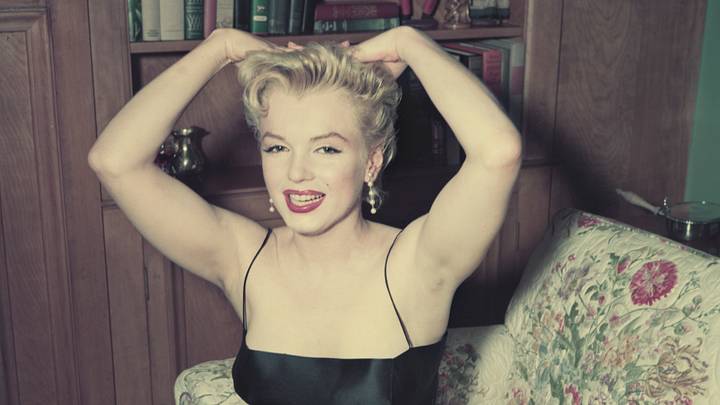
Marilyn Monroe, a Hollywood icon whose star shone brightly yet briefly, left an indelible legacy on the movie industry, soaring to fame in the early 1950s and collaborating with the era's biggest names. Her tragic death in 1962, attributed to an alleged sedative overdose, brought a premature end to her stellar career. Yet, decades later, she remains a timeless symbol of Hollywood's golden age. Despite her legendary life, many true details have become obscured or distorted by frequently repeated anecdotes and misremembered tales. This article aims to clarify some common misconceptions about Monroe that are not rooted in truth.
A widespread misconception is that Marilyn Monroe was abandoned as a child. While her life indeed began with an inauspicious start when her mother, Gladys Baker, placed her in a foster home in Hawthorne, California, at just two weeks old, Gladys was not entirely absent. She remained a presence throughout much of Monroe’s early years, visiting her at the foster home and even taking her for sleepovers at her apartment when Monroe was older. Unfortunately, Gladys's mental health deteriorated, leading to her confinement in institutions for paranoid schizophrenia. Consequently, Monroe spent a significant portion of her childhood with various foster families and relatives, but the notion that her mother had little involvement in her upbringing is inaccurate.
Another common belief is that Marilyn Monroe was a natural blonde. However, this is not true. Monroe, whose natural hair color was brunette, later recalled spending countless hours at local cinemas as a child, sent there by foster families. During this time, she developed a fondness for Jean Harlow, Hollywood's original "Blonde Bombshell." It is believed that Monroe partly modeled her image on Harlow, which prompted her to begin lightening her hair in the 1940s. She eventually settled on her signature bright platinum blonde shade, which she famously called "pillow case white," once her film career took off. Rare early photographs from her 1940s photographic modeling career still depict Monroe with her natural, darker hair, disproving the idea of her being originally blonde or fair-haired.
Monroe also unfairly gained a reputation as the quintessential "dumb blonde." While rumors circulating about her having an IQ of around 168 (reportedly higher than Albert Einstein's) are unfounded, the perception of her as merely a ditzy blonde lacking intellect is equally baseless. Marilyn Monroe was, in fact, an avid reader, possessing a personal library of over 400 books and demonstrating a keen interest in philosophy, politics, and classical literature. Her third and final husband, the acclaimed playwright Arthur Miller, described her as "a very smart woman" with "a terrific sense of humour, irony and generosity," noting that her intelligence was often overshadowed by "a kind of paranoia."
Rumors of Monroe's alleged unprofessionalism frequently shadowed her most successful movies, with stories from co-stars and crew alleging her inability to recall lines and lack of punctuality. For instance, during the filming of Billy Wilder’s Some Like It Hot, for which she won a Golden Globe, Monroe reportedly struggled so severely with her lines that she required over fifty takes to correctly deliver a single three-word line. This led Wilder to discreetly place her lines around the set, either on cue cards behind the camera or taped inside props. Co-stars Tony Curtis and Jack Lemmon allegedly even placed bets on how many takes it would take her to complete a scene. Similarly, while filming The Prince and the Showgirl in 1957, the legendary Sir Laurence Olivier reportedly clashed with Monroe, particularly objecting to her frequent lateness and unpreparedness. However, movie historians and Monroe fans have since offered crucial context to these narratives. Monroe suffered from debilitating anxiety, personal insecurities, and stage fright, which understandably impacted her ability to remember and recite lines. Furthermore, both Wilder and Olivier themselves were known for being difficult to work with. It has also been suggested that Monroe's perceived unprofessionalism was sometimes a form of resistance against mistreatment. By the time she was working on Showgirl, Monroe was studying method acting in New York, a style that inherently conflicted with Olivier’s more classical training. This divergence led Olivier to infamously and dismissively tell her, "All you have to do is be sexy." It was after this comment that Monroe reportedly began arriving late to set each day, an act now re-evaluated by some as a quiet protest against her co-star's patronizing and misogynistic remark. Arthur Miller, her partner at the time, frequently mediated between the two stars, later commenting on the "genuine conflict... between two different styles, not merely of acting, but of life."