Unlocking the Mind: How Knowledge Transforms the Brain in the Age of Information
Discover how learning and reading physically rewire the brain in the age of information. This article explores neuroplasticity, the science behind knowledge-driven brain growth, and why lifelong learning is the ultimate key to cognitive transformation and mental fitness.
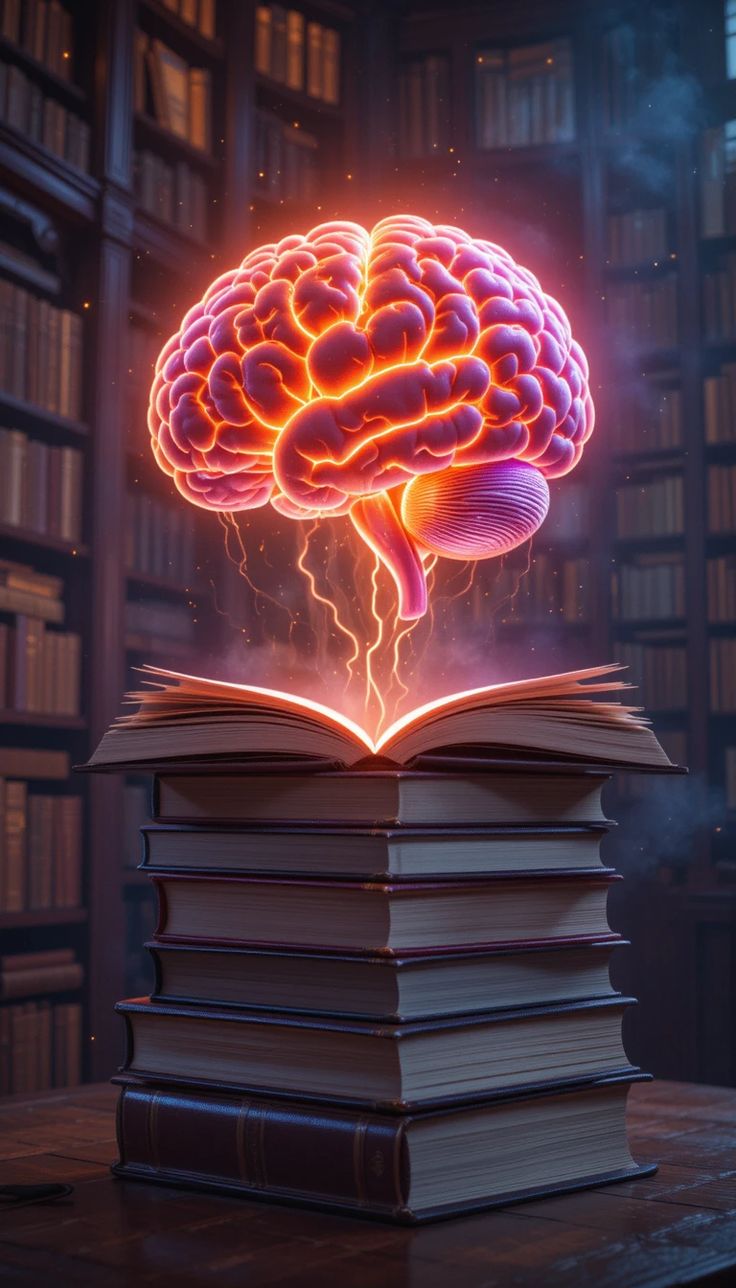
Imagine a glowing human brain levitating above an open book that surreal interplay between intellect and learning vividly captures a profound truth: knowledge doesn’t just fill our minds; it physically reshapes our brains. This is not just poetic language; it’s backed by decades of neuroscience. Learning strengthens neural pathways, reading rewires brain structures, and deliberate mental activity sculpts the mind in ways we are only beginning to fully understand. In an age dominated by technology, endless information streams, and shifting learning patterns, understanding how knowledge transforms the brain has never been more important.
How Learning Literally Changes Your Brain
.jpeg)
Image credit: Jemastock
Your brain is not a rigid organ, it is constantly adapting. Neuroscientists call this ability neuroplasticity, meaning the brain can change, reorganize, and form new connections throughout life. This concept challenges old beliefs that brain development stops in early adulthood. Instead, every new experience, skill, or thought you engage in physically alters the brain’s structure.
One of the key principles of brain change is Hebbian plasticity, famously summarized as “neurons that fire together, wire together.” Repeatedly practicing a skill such as playing an instrument, coding, or learning a new language strengthens the neural circuits involved. Similarly, long-term potentiation ensures that frequent activation of a connection makes it stronger and easier to trigger in the future, which is the foundation of memory.
Reading offers a clear and fascinating demonstration. Children who read regularly show measurable increases in white matter density in brain regions responsible for language and comprehension (PubMed). Neuroimaging studies reveal that reading activates not only the visual and language centers but also areas associated with empathy, imagination, and decision-making. Adults who maintain a reading habit have greater connectivity between brain hemispheres, faster processing speeds, and improved working memory (Bookish Bay).
Studies from Cambridge University show that children who read for pleasure for about 12 hours weekly exhibit stronger brain structures and lower levels of depression and anxiety in adolescence. This positive effect remains significant regardless of socioeconomic background, as confirmed by research from the Greater Good Science Center.
Repeated reading also engages the "visual word form area", a region in the left fusiform gyrus that becomes specialized for recognizing letters and words a process explained by the neuronal recycling hypothesis. This adaptation demonstrates how cultural inventions like writing literally reshape our brains to handle new information systems.
But learning does more than expand knowledge; it reshapes who we are. The connections we strengthen define how we think, feel, and respond to the world. As experiences accumulate, the brain becomes a living map of our intellectual and emotional journeys.
Practical Lessons for Today’s Knowledge-Driven World
The knowledge that the brain is plastic carries powerful lessons for modern living. In a fast-changing world, where the ability to learn quickly is invaluable, understanding how to nurture brain growth is essential.
Firstly, it highlights the importance of consistent intellectual engagement. Every time you read a book, take on a new challenge, or engage in critical thinking, you are reinforcing synaptic pathways and expanding cognitive capacity. Neglecting these activities allows unused pathways to weaken a process called pruning.
Secondly, experience shapes the brain profoundly. The principle of activity-dependent plasticity means the brain changes based on what we repeatedly do. For example, musicians develop larger auditory and motor areas, while bilingual speakers strengthen regions associated with language switching and memory. Regular intellectual stimulation keeps the brain sharp, reducing the risk of cognitive decline.
Furthermore, reading in particular enhances not just intellect but emotional depth. A review in MDPI confirmed that children who read fiction frequently develop superior emotional vocabulary and empathy. Adults experience similar benefits, immersing in complex narratives activates brain networks involved in understanding other people’s perspectives.
The brain remains adaptable even in adulthood. Studies show that learning new skills, such as playing chess, practicing mindfulness, or even taking dance classes, can increase grey matter volume in key areas like the hippocampus and prefrontal cortex. This disproves the myth that only children learn effectively; adults can continuously upgrade their cognitive abilities.
In education, this knowledge is transformative. Interventions can literally rewire struggling learners’ brains. For example, research by NICHD found that struggling readers who received targeted phonics instruction developed brain activity patterns similar to proficient readers. This finding supports the idea that intelligence is not fixed, it’s shaped by experience and effort.
Groundbreaking work by Eleanor Maguire also illustrates this principle. Her studies of London taxi drivers showed their hippocampi, the brain region for spatial memory, expanded as they memorized complex city maps. This discovery proved that even occupational training can remodel the brain structurally.
Social Insight
Navigate the Rhythms of African Communities
Bold Conversations. Real Impact. True Narratives.
Moreover, researchers at Carnegie Mellon have decoded how our brains encode new ideas, showing that every concept forms a unique activation pattern. This reinforces the idea that learning leaves a physical imprint, shaping not just what we know but how we think.
Beyond science, poetry, literature, and the arts also play a crucial role. Studies cited by the Times of India reveal that reading poetry engages memory and emotional circuits, promoting abstract thinking and emotional regulation. In an age dominated by quick social media consumption, such deep reading becomes a form of mental exercise.
Why This Matters More Than Ever
If a glowing brain floats above an open book in your mind, let it symbolize more than an artistic image, it embodies the transformative power of knowledge.
Reading and learning physically rewire your brain, shaping not only how you think but also who you become.
Practice and curiosity strengthen neural pathways, making it easier to acquire new skills and insights.
Plasticity doesn’t vanish with age, it remains as long as you stay mentally active.
Reflective habits like journaling, meditation, or problem-solving enhance cognitive flexibility and emotional intelligence.
Targeted interventions can reverse challenges, proving that growth is always possible.
In our era of constant digital stimulation, focusing on meaningful learning is a way to protect and enhance brain health. Just as exercise strengthens muscles, intellectual effort strengthens the mind. Even small habits, such as daily reading or learning a new word, contribute to long-term brain fitness.
Conclusion: The Brain That Learns, Glows
Image credit: Pinterest
The image of a brain levitating above an open book is no fantasy, it’s a mirror of reality. Every book you read, skill you acquire, or challenge you embrace sparks new growth in the brain’s neural network. Knowledge is not just stored, it’s embodied, woven into the very wiring of your mind.
When we embrace this truth, we see learning not as a task but as a lifelong opportunity. Every page turned, every idea absorbed, every challenge met is a step toward a stronger, wiser brain.
Let your brain remain glowing, levitating not in science fiction, but in the real, extraordinary transformation that happens when curiosity meets learning. In this age of limitless information, the choice to keep learning may be the greatest flex of all.