UN Peacekeepers Under Fire: Ghanaian Soldiers Wounded in Lebanon Missile Attack
Ghanaian peacekeepers in southern Lebanon suffered a missile attack, injuring several soldiers and prompting a strong international outcry. Ghana has lodged a formal protest with the United Nations, demanding a full investigation and accountability, while the incident has also sparked a debate on the mission's continued viability amidst escalating regional tensions.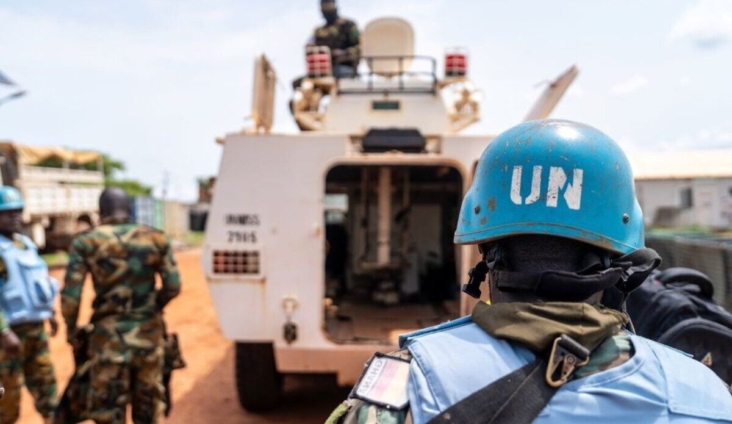
Ghanaian peacekeepers serving under the United Nations Interim Force in Lebanon (UNIFIL) were subjected to a missile attack on their base in southern Lebanon on March 6 and 7, leading to multiple injuries among the troops. The incident prompted strong condemnation from the Ghanaian government, UNIFIL, and international bodies, raising serious concerns about the safety of peacekeepers amidst escalating regional hostilities.
The attack primarily targeted the Ghanaian Battalion Headquarters in Al Qawzah, southwestern Lebanon. Initial reports from the Ghana Armed Forces indicated that two soldiers were critically injured, and another suffered trauma after two missile strikes hit the base between 17:45 and 17:52 local time on Friday, March 6. The Officers' Mess facility was completely destroyed by fire. Later updates from the Ministry of Defence clarified that four soldiers sustained minor injuries and were stable, while one soldier, who suffered serious injuries to both legs and the hip, underwent successful surgery in Beirut and is now recuperating. UNIFIL's own statements confirmed three peacekeepers were injured. Furthermore, 15 officers lost all personal belongings due to a fire that broke out at their accommodation following the attack. The incident occurred amid intense shelling and air strikes in the volatile border region, characterized by ongoing exchanges between the Israel Defense Forces (IDF) and the Iran-backed Lebanese militant group Hezbollah.
In response to the egregious assault, the Government of Ghana swiftly lodged a formal protest with the United Nations. Government spokesperson Felix Kwakye Ofosu condemned the attack as unacceptable and a severe violation of international law, stressing that no country or group should be allowed to attack non-combatants with impunity. He emphasized that Ghanaian troops, engaged in internationally recognized peacekeeping activities for decades, pose no threat to any party in the region. Ghana's Minister for Foreign Affairs, Samuel Okudzeto Ablakwa, wrote to UN Secretary-General António Guterres, demanding a "full, immediate, impartial and transparent investigation" into the incident, accountability for those responsible, and enhanced safety and protection for all peacekeeping personnel. The Ministry of Defence assured the public of the injured soldiers' stable condition and reiterated Ghana's unwavering commitment to UN peacekeeping operations, while assuring that all possible measures are being taken to protect its troops.
Ghanaian officials also dismissed suggestions that its troops were supporting military actions by the United States or Israel in the ongoing regional tensions, with Mr. Kwakye Ofosu stating such arguments were based on unverified reports and underscored the necessity of a thorough investigation to determine the perpetrators and apply appropriate sanctions. He also voiced concern about the weakening of the global rules-based order, where powerful nations often act without regard for international impact, and advocated for dialogue as the most viable solution to the broader Middle East crisis, rather than military confrontation.
The United Nations Interim Force in Lebanon (UNIFIL) strongly condemned the attack, reiterating that peacekeepers operating under an international mandate must never be targeted. UNIFIL warned that such actions constitute a grave violation of international humanitarian law and of Security Council Resolution 1701, potentially amounting to a war crime. Resolution 1701, adopted after the 2006 Lebanon War, established UNIFIL's framework to maintain peace along the Israel-Lebanon border. UNIFIL confirmed it has initiated an investigation to ascertain the exact circumstances and the source of the fire. The mission highlighted the critical role of the Ghanaian contingent in monitoring the 'Blue Line' (the UN-demarcated boundary between Lebanon and Israel), conducting patrols, supporting humanitarian efforts, and maintaining stability in the conflict-affected communities.
International solidarity for Ghana's peacekeepers was also expressed. Israel's Ambassador to Ghana, Liberia, and Sierra Leone, Roey Gilad, conveyed sympathy and wishes for a speedy recovery to the injured soldiers, noting that the IDF was investigating the source of the fire. France's Minister Delegate to the Minister of Armed Forces and Veterans Affairs, Alice Rufo, reached out to Ghanaian authorities to convey support, also indicating that France had raised concerns at the United Nations, as French peacekeepers are likewise deployed in Lebanon.
Despite the widespread condemnation and calls for justice, the incident has reignited questions about the efficacy and future of UNIFIL. Bright Simons, Honorary Vice President of IMANI-Africa, strongly condemned the attack but simultaneously questioned the credibility and continued viability of the mission. He argued that UNIFIL's core objectives—preventing Israeli incursions into Lebanese territory and disarming Hezbollah militants, as outlined in Security Council Resolution 1701—remain largely unfulfilled. Simons pointed out that Israeli military incursions persist, and Hezbollah remains armed and operational, suggesting a failure to effectively implement the resolution's key provisions. Given these persistent challenges and the mission's anticipated winding down by the end of September, IMANI-Africa urged the Ghanaian government to consider expediting its disengagement from the mission, citing the increasing risks and the potential erosion of UNIFIL's credibility as an international peacekeeping force.
The attack underscores the escalating risks faced by UN peacekeepers in a region marked by intensifying hostilities. As Ghana continues to be a major troop-contributing country to UN missions globally, the incident highlights the urgent need for enhanced protection for personnel deployed to maintain peace and stability in increasingly volatile theatres, while demanding thorough investigations and accountability for such violations of international law.