Ukraine's Unstoppable Naval Drones Cripple Russian Fleet, Sparking Kremlin Fury!
Ukraine's naval drones have crippled Russia's shadow fleet, striking 36 vessels in less than a week and forcing a reevaluation of maritime power in the Black Sea. This unprecedented campaign is strategically strangling Crimea's supply lines and inflicting severe uninsured economic losses on the Kremlin. The attacks are also fundamentally reshaping international maritime law by blurring the lines between commercial and military targets.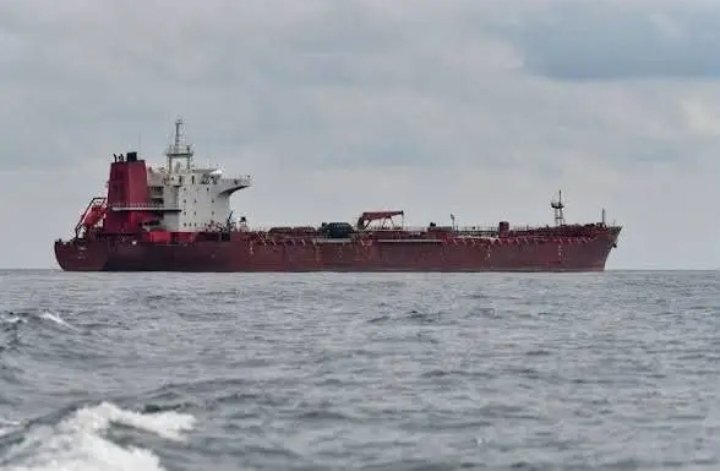
Prominent Russian military bloggers have openly questioned the Russian Navy's failure to escort its own fuel convoys, especially after Ukraine reportedly struck 36 vessels in less than a week across the Sea of Azov and the Black Sea. This extensive targeting included shadow fleet tankers, cargo ships, ferries, and various support vessels. The criticism underscores a significant shift in the balance of power in the Black Sea: despite possessing one of the world's largest navies, Russian warships are increasingly hesitant to operate in areas where Ukraine's long-range naval drones are active. The threat posed by uncrewed surface vessels has forced many Russian naval assets into a defensive posture, compelling them to remain farther from contested waters to avoid becoming targets, rather than escorting vital fuel and commercial traffic.
Ukraine's strategic approach is yielding substantial results. By systematically striking the shadow fleet, fuel tankers, ports, and logistical vessels, Kyiv is not only disrupting crucial Russian supply lines but also forcing Moscow to confront its inability to adequately protect its maritime lifeline. This unprecedented campaign saw Ukraine's Unmanned Systems Forces strike 12 Russian tankers, a tugboat, and a dry cargo ship in a single night on July 9, contributing to a total of 35-36 vessels struck within 96 hours. This marks the largest coordinated assault against Russia's shadow fleet since the conflict began, with operations confirmed by Ukraine's General Staff and even partially acknowledged by Russian authorities.
Strategically, these strikes mean Crimea is being increasingly strangled. With the Kerch Bridge compromised, and the Chongar and Armyansk bridges repeatedly struck, land corridors are under fire, leaving the sea as the primary, yet now burning, lifeline. An occupied peninsula that cannot be adequately fueled cannot be defended. The resulting fuel queues observed in Crimea and southern Russia are not merely an inconvenience; they signal a failing logistics system essential for sustaining military operations in the region.
The economic implications of these strikes are particularly lethal, a factor often overlooked by commentators. The vessels comprising Russia’s shadow fleet operate without proper insurance. To circumvent the G7 price cap, these ships have abandoned the International Group, which represents the world's legitimate merchant fleet insurers. Studies indicate that a vast majority of tankers carrying Russian crude lack International Group cover, relying instead on sanctioned Russian insurers like Ingosstrakh and Sogaz, backstopped by Russia’s state reinsurance company, or even operating with falsified certificates or no insurance at all. Consequently, when a shadow tanker is destroyed, there is no international market to absorb the loss; the burden falls directly on the owner and, ultimately, on the Russian state, which serves as the reinsurer of last resort for its sanctions-busting fleet. With Moscow having invested an estimated $10–14 billion in assembling these vessels, every destroyed hull represents an uninsured, irreplaceable, direct fiscal loss to the Kremlin.
Furthermore, Ukraine's actions are actively reshaping the Law of the Sea. Kyiv has formally argued to the International Maritime Organization that tankers financing a war effort should not be considered innocent merchantmen. Regardless of one's agreement with this assertion, this stance is visibly eroding the century-old distinction between commercial shipping and legitimate military targets, not just in the Black Sea but globally. Russia, having prepared for a war of tanks, finds itself losing a war of tankers, with no external entities to cover its losses.
The critical questions now facing Russia are stark: if its formidable navy cannot protect the ships supplying its war effort, what exactly is it protecting? And if the shadow fleet can no longer reliably deliver vital supplies, how long before Crimea itself becomes strategically unsustainable, forcing difficult decisions upon the Russian leadership?