Uganda's Digital Leap: Tech Revolutionizes Banking Access
Technology is revolutionizing access to banking services, particularly for rural and underserved communities, by overcoming traditional geographical barriers. Mobile banking, USSD services, agency banking, and digital lending are key innovations enabling people to access financial services conveniently and securely. This shift is fostering greater financial inclusion and economic empowerment across all demographics.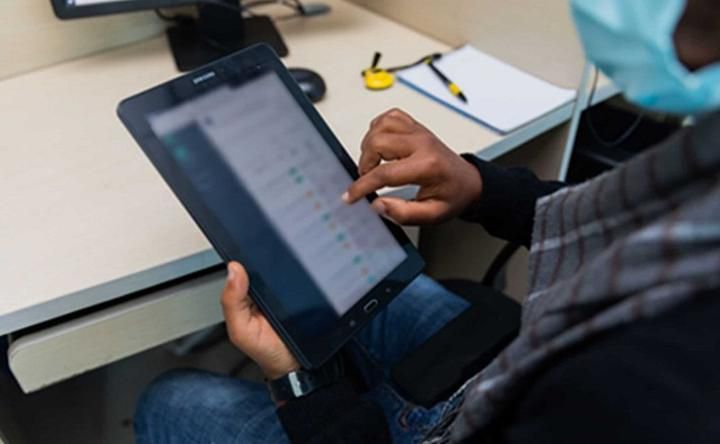
For decades, access to essential banking services was largely determined by geography. Residents of major towns and cities could open and manage bank accounts with relative ease, while millions living in rural and hard-to-reach areas faced significant barriers.
These included long travel distances, high transport costs, and entire days lost to complete even the simplest transactions.
Today, digital innovation is steadily dismantling these obstacles, bringing banking services closer to communities and enabling people to save, transact, borrow, and grow their livelihoods without stepping into a traditional banking hall. This shift is fundamentally redefining what access to banking means.
Technology Reduces the Distance Between Banks and Communities
Traditionally, banks depended heavily on physical branches to serve customers. While branches remain important, their construction and maintenance are expensive—particularly in sparsely populated rural areas. Technology has introduced more efficient alternatives, allowing banks to extend services without establishing a branch in every location.
Channels such as mobile banking, USSD services, agency banking, and card-based payment systems now allow customers to access financial services through their mobile phones or via nearby agents.
These solutions significantly reduce both the physical and financial distance between banks and the people they serve, making everyday banking faster, cheaper, and more accessible.
Mobile phone technology has been especially transformative. Even in areas without smartphones or reliable internet access, basic feature phones are widespread.
Through USSD, customers can check balances, transfer funds, pay bills and school fees, and receive transaction alerts without requiring data or a smart device.
For example, a farmer in a remote area can receive payment for produce directly into a bank account and instantly confirm the balance via USSD, eliminating the need to travel to a distant branch. Smartphone users benefit even further through mobile banking apps offering loan applications, mini-statements, and card management features.
Agency Banking and Mobile Money Expand Financial Inclusion
Agency banking has emerged as another powerful driver of inclusion. Under this model, banks partner with trusted local businesses—such as shop owners or fuel stations—to provide banking services on their behalf.
Customers can deposit and withdraw cash, open basic accounts, and make payments or transfers within their own communities.
This approach delivers mutual benefits: customers enjoy convenience, while agents earn commissions that boost local incomes. In many rural trading centers, a single agent can serve dozens of customers daily, removing the need for anyone to leave their village. Secure, real-time connectivity to bank systems ensures transaction accuracy and safety.
Banks have also recognized the central role mobile money plays in daily life and have integrated their systems with mobile money platforms.
Customers can now move funds seamlessly between mobile wallets and bank accounts, receive salaries and remittances directly into bank accounts, and store money more securely.
For many users, mobile money serves as the first step into formal finance, with technology enabling a smooth transition to a wider range of banking services.
Digital Finance Unlocks Credit, Security, and Economic Growth
Technology has also transformed access to savings and credit. By analysing transaction patterns and account behaviour, banks can assess creditworthiness even for customers without traditional collateral.

A small trader with a consistent transaction history, for instance, may qualify for a short-term digital loan to restock goods. Applications, approvals, and disbursements can be completed quickly and entirely through digital channels.
Trust remains essential to banking adoption. Customers must be confident their money is safe. Banks continue to invest heavily in secure technologies such as encryption, one-time passwords, real-time transaction alerts, and advanced fraud-monitoring systems.
While challenges like limited network coverage, digital literacy gaps, and fraud risks persist, banks are addressing them through simplified user interfaces, local-language support, community education, and partnerships with telecom operators and regulators.
Technology is no longer a luxury in banking—it is a necessity. By embracing digital platforms, banks are extending their reach far beyond urban centres and empowering rural communities to participate fully in the formal financial system.
As technology continues to evolve, the goal remains clear: banking must be accessible, secure, and relevant to everyone, regardless of location. Today, banking is no longer a place people travel to—it is a service that reaches them where they are.
The author of this article is Brian Andresile, Head of Information Technology at United Bank for Africa (UBA) Uganda.