Uber Is Leaving Nigeria and Uganda. But How Did It Take Over Africa in the First Place?
Uber is leaving Nigeria and Uganda after 13 years in Africa. But how did one Johannesburg ride become a billion African trips and transform how millions move across the continent?

In 2013, Uber arrived in Africa with a simple proposition: open an app, press a button and a car comes to you.
The first city was Johannesburg, and a year later, Lagos joined the experiment.
Now, 13 years after that first Johannesburg ride, Uber is shutting down operations in Nigeria and Uganda, effective September 2, 2026.
The company says the decision follows a review of its evolving business priorities and investment focus. It has stressed that the exit is limited to the two countries and does not affect its wider operations in Africa.
For Nigerians who have spent years typing a destination into an app, watching a little car icon move towards them and occasionally wondering why the driver has apparently decided to take a spiritual journey through Ikeja before arriving, the announcement marks the end of something familiar.
But Uber's African story began long before today's exit. Here a few things to note:
1. It Started in Johannesburg
Uber did not begin its African expansion in Lagos, Nairobi or Cairo. It chose Johannesburg.
On August 7, 2013, Uber's secret test cars appeared in Johannesburg, marking the company's entry into its first African city and making Africa its fifth continent.
South African football legend Mark Fish became the first passenger on the continent after requesting a ride from Sandton.

The service officially launched in Johannesburg on September 11.
The choice of Johannesburg made sense. It was one of Africa's biggest commercial centres, with a large professional population, significant traffic problems and an established market for private transportation.
Uber was selling more than a car ride. It was selling convenience.
The company's early South African pitch focused heavily on reliability, safety and the idea that transportation could be summoned from a smartphone. From Johannesburg, Uber expanded into Pretoria, Cape Town, Durban and Port Elizabeth.
By February 2016, the company said it had transported more than half a million people across South Africa and enabled more than 4,000 economic opportunities.
Africa had become more than a test market. It was becoming part of Uber's global expansion strategy.
2. Lagos Was The Next Biggest Market
If Johannesburg was Uber's first African experiment, Lagos was where the company entered one of the continent's most chaotic and commercially aggressive transport markets.
Uber launched in Lagos in July 2014.
The first person to take an Uber ride in Nigeria was Nigerian rapper Ice Prince, who requested a car for a trip to a recording session on the Island.

Uber initially launched with its more premium service. Then, barely five months later, it introduced uberX, a lower-cost option designed to make the service accessible to more people.

That was an important move.
Lagos was never going to be conquered by selling only expensive rides to people who could already afford private transportation. The bigger opportunity was the much larger population looking for a convenient alternative to conventional taxis and public transport.
By July 2016, just two years after launch, Uber said it had facilitated more than one million trips in Lagos. Its one-millionth Lagos journey took place on July 16, from Yaba to Lekki.
3. Uber Quickly Realised Africa Was Not One Market
The interesting part of Uber's African expansion was that it could not simply copy and paste the American model onto African cities.
The company had to adapt.
In Nairobi, for example, cash became an important part of the business model. Uber's then-sub-Saharan Africa general manager Alon Lits described cash as a “big game changer” in Nairobi and said the company had to adapt its business model to local conditions.
Uber launched in Nairobi in January 2015, with Kenyan fashion and lifestyle personality Sharon Mundia taking the first Uber ride in the country.

Elsewhere, the company experimented with different vehicle categories and partnerships with existing transportation operators.
In Ghana, after launching in Accra in 2016, Uber partnered with independent transport operators and existing taxi drivers as it tried to meet growing demand.
Uganda required something different again.
In 2018, Uber introduced uberBODA in Kampala, allowing passengers to request motorcycle rides through the same app. The service included fare estimates, driver information and additional safety measures designed around the city's already-established boda-boda culture.
This was one of Uber's biggest lessons in Africa: the technology could travel, but the business model had to learn the geography.
4. The Competition Was Already Waiting
Uber did not arrive on an empty continent.
African cities already had deeply established transportation systems. Taxis, minibuses, motorcycles and informal transport networks had been moving people around for decades.
Technology simply gave some of those systems a new interface.
Local technology-enabled transport companies were also emerging, while international competitors such as Bolt would go on to challenge Uber directly across several African markets.
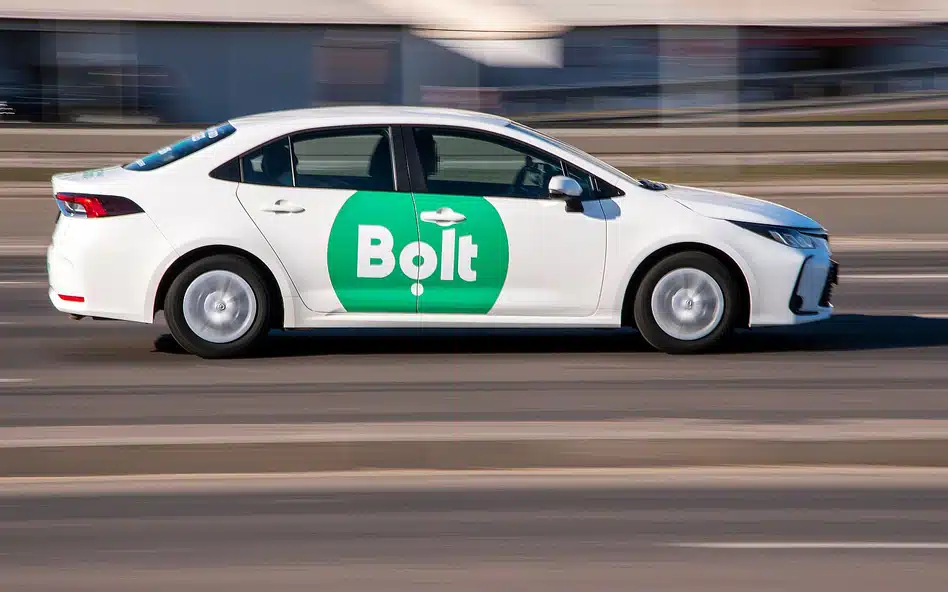
That seemed to change the game. Drivers could move between platforms. Riders could compare prices. Companies had to compete for both sides of the marketplace, often using promotions, incentives and lower fares to attract customers.
Uber's expansion was impressive nonetheless.
By 2022, the company announced that it had completed one billion rides across its African markets. It said its operations had created more than six million economic opportunities in over 50 cities across Sub-Saharan Africa since entering the continent in 2013.
For a company that had started with a few secret cars in Johannesburg, that was a remarkable transformation.
5. The Timing of Uber's African Exit also comes during a Much Bigger Restructuring of the Company
Uber also announced plans to cut about 3,300 jobs globally, equivalent to roughly 10% of its workforce, in its largest round of layoffs since the COVID-19 pandemic.
The company is simplifying its management structure while redirecting resources towards growth and technologies including autonomous vehicles, an area where Uber has been investing heavily as robotaxis become a bigger part of the future of transportation.
The exits from Nigeria and Uganda is however, part of the global restructuring plan.
So Why Is Uber Leaving Nigeria and Uganda?
Today’s announcement was quite shocking.
Uber says the decision followed a review of its “evolving business priorities and investment focus across the continent.”
The company says it is concentrating resources in markets where it believes it can create the greatest value for drivers and riders at scale. It has also stressed that the decision applies specifically to Nigeria and Uganda and should not be interpreted as a withdrawal from Sub-Saharan Africa.
Uber has also clarified that its Nigerian exit is not connected to the recent Federal Airports Authority of Nigeria dispute involving e-hailing operations at Nigerian airports.
Asked directly whether the FAAN issue caused the withdrawal, Uber said no.
FAAN itself had faced criticism in August after restrictions involving Uber and Bolt at airports, although the authority later clarified that it had not imposed a permanent blanket ban and was working with operators on a new framework for airport operations.

Uber is no longer the same company that arrived in Johannesburg in 2013. Its ambitions have expanded beyond simply getting people into cars, while the economics of where it invests its money, staff and technology have also changed.
Nigeria and Uganda are now being removed from that particular calculation.
The End of an Era, or Just a Change of Route?
Uber's departure from Nigeria and Uganda does not erase what happened during its years in either market.
The company helped normalise app-based transportation for millions of people. It introduced new expectations around convenience, driver tracking and digital booking while creating earning opportunities for people who used their cars and motorcycles to make money.
But Uber's exit also raises a question about doing business in Africa.

A company can arrive with global technology, enormous funding and one of the world's most recognisable brands. Eventually, it still has to decide which markets deserve more investment, which ones fit its future and which ones no longer do.
And Uber's departure does not mean ride-hailing is leaving with it.
The market it helped develop now includes other platforms competing for the same riders and drivers. In some ways, the biggest test of Uber's influence may come after it leaves: whether people simply stop using app-based rides or move seamlessly to another platform.
The second outcome seems far more likely.
In 2013, Uber entered Africa through Johannesburg because it believed the continent represented an opportunity.
In 2026, it is leaving two African markets because its priorities have changed.
The distance between those two decisions is 13 years, one billion African rides and a very different technology and transport landscape.
For anyone who remembers when getting an Uber in Lagos felt like a small technological miracle, today is more than a company announcement. It is the end of a chapter in Africa's ride-hailing story.