Trump's Chaotic State of the Union: Explosive Claims, Dramatic Walkouts, and Supreme Court Tensions

Published 1 hour ago6 minute read
Pelumi Ilesanmi
Pelumi Ilesanmi
Trump's Chaotic State of the Union: Explosive Claims, Dramatic Walkouts, and Supreme Court Tensions

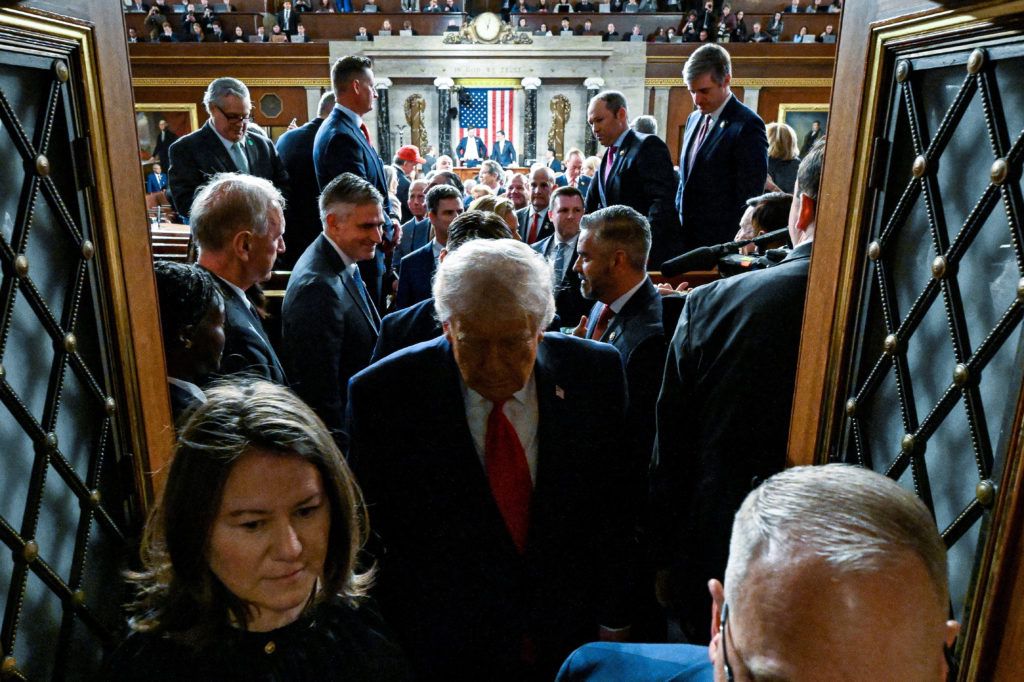
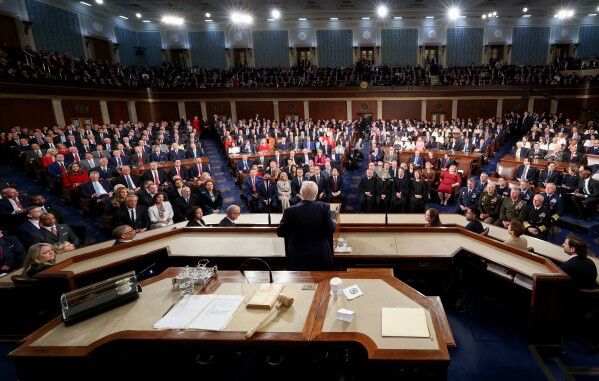
President Donald Trump delivered his longest State of the Union address to date on February 24, 2026, a nearly two-hour speech before a joint session of Congress. The address was marked by Trump's triumphant self-assessment of his administration's first year and strong claims of national transformation, yet it was met with fierce opposition, heckling, and walkouts from Democratic members, underscoring the deep political divisions in the United States.

Ahead of the State of the Union, Democratic senators and their guests, including Washington Secretary of State Steve Hobbs and Senator Maria Cantwell, held a press conference to denounce President Trump’s policies. They specifically targeted the proposed SAVE America Act, a bill poised to enact sweeping changes to voting laws that would severely hobble voter eligibility. Senator Cantwell highlighted the financial burden such a bill would place on citizens, forcing them to pay for documentation like passports or birth certificates to prove citizenship, calling the proposal "unconstitutional" and a threat to nationalize elections. Hobbs dismissed the administration's focus on voter fraud as "tilting at windmills," arguing that genuine election security concerns would necessitate restoring funding for programs that defend against cyberattacks and disinformation campaigns from foreign actors, which Trump’s administration had previously cut. He further cited a U.S. intelligence report indicating Russian interference in the 2020 election, spreading falsehoods about then-President Joe Biden and supporting Trump.

Healthcare policy also drew sharp criticism, particularly the so-called "Big Beautiful Bill" signed by Trump the previous summer. Senator Tammy Duckworth of Illinois argued that this legislation stripped away tax credits, leading to skyrocketing healthcare premiums for millions of Americans. The bill notably gutted Medicaid funding, projected to leave between 10 to 17 million people, including at least 250,000 Washingtonians, without healthcare coverage by 2034, redirecting those funds towards permanent tax cuts for the wealthy. Jeremy Schumacher, Duckworth's guest and a diabetic, shared a tearful account of his family's healthcare costs increasing by over $11,000 annually, forcing him to postpone his own medical needs to care for his disabled wife and manage mortgage payments. He described a pervasive fear of incoming bills and a sense of alienation due to rising costs for essentials like electricity and food.

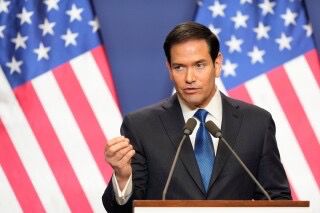
International tensions, particularly concerning Iran, formed a central theme of Trump’s foreign policy remarks. Hours before the address, Secretary of State Marco Rubio delivered a classified briefing to the "gang of eight" lawmakers on Iran. During his speech, Trump proclaimed that Tehran would "never be allowed to develop nuclear weapons" and claimed they were seeking to build ballistic missiles capable of reaching the U.S., without offering specific evidence. This came amid the largest deployment of U.S. aircraft and warships to the Middle East since the 2003 Iraq war buildup, placing the U.S. in a position to launch strikes. Senator Chuck Schumer called the situation "serious," while Representative Jim Himes questioned the rationale for another Middle East war. Trump demanded Iran abandon its nuclear program, halt ballistic missile production, and cease support for proxies like Hezbollah and the Houthis, issuing an ultimatum that "really bad things" would happen to Iran within 10 days if a deal wasn't made, despite Iran stating that upcoming Geneva negotiations would only cover its nuclear program. Reports also indicated that General Dan Caine, Chairman of the Joint Chiefs of Staff, had warned Trump about the potential depletion of U.S. anti-missile stockpiles in a conflict with Iran, a concern Trump publicly dismissed, asserting Caine believed a conflict would be "easily won."

On the domestic front, President Trump used his State of the Union to publicly chastise Supreme Court justices who had recently ruled against his tariff policies. He lamented the "unfortunate ruling" only four days prior, even after sharing cordial handshakes with the four justices present: Chief Justice John Roberts, Justice Elena Kagan, Justice Brett Kavanaugh, and Justice Amy Coney Barrett. Roberts and Barrett, both conservative appointees, had joined all liberal justices in the 6-3 decision, with Kavanaugh penning a dissent in support of Trump. Trump expressed fury over the decision, particularly from his own appointees, and publicly called Justices Gorsuch and Barrett "traitors" and an "embarrassment to their families" during an emergency press briefing. He alleged "foreign influence" and political machinations swayed the court, and controversially claimed the ruling inadvertently made a President's ability to regulate trade "more powerful." His disdain extended to vowing to refer to the Supreme Court with lowercase letters due to his lack of respect.

The State of the Union was rife with Democratic protests, including numerous walkouts and heckling. Many Democrats remained seated during applause for Trump's self-congratulatory remarks. Senator Mark Warner and Representative Bill Foster were among those who left early, citing "lies" and inability to endure the speech. Trump's immigration enforcement agenda was a flashpoint; he challenged Democrats to stand if they prioritized American citizens over "illegal aliens," criticizing those who remained seated. Representatives Ilhan Omar and Rashida Tlaib vehemently accused the President of having "killed Americans," referencing the deaths of Alex Pretti and Renee Good during federal immigration crackdowns in Minnesota, and the detention of children like five-year-old Liam Conejo Ramos. In the Democratic rebuttal, Virginia Governor Abigail Spanberger condemned Trump's immigration policies, describing federal agents as "poorly trained" and "terrorizing our communities," while questioning if the President truly worked to keep Americans safe. Congressman Al Green was ejected for the second consecutive year for holding a sign stating "Black people aren't apes!" in protest of a racist video Trump had shared, facing heated exchanges with Republicans who chanted "USA! USA!" as he was escorted out.

Other notable events during and around the State of the Union included the adherence to the designated survivor protocol: Department of Veterans Affairs Secretary Doug Collins served as the administration’s designated survivor, while Congressman Mike Thompson of California was named the House Democrats' designee. Senator Chuck Grassley, fourth in the line of presidential succession, also reportedly skipped the event. Republican National Committee spokesman Kristen Cianci criticized Representative Tom Suozzi, who was captured on video nearly dozing during the lengthy address. Speaker Nancy Pelosi weighed in, labeling Trump’s handling of Iran "inept" compared to previous administrations and highlighting his failure to mention Jeffrey Epstein, suggesting it revealed a vulnerability. Additionally, Governor Spanberger, in her rebuttal, accused the Trump administration of "unprecedented corruption," citing personal enrichment, crypto scams, and cozying up to foreign leaders and billionaires.

Trump’s address, while proclaiming a "turnaround for the ages" and a winning nation, ultimately underscored a deeply polarized political landscape heading into the November midterm elections, where Democrats aimed to challenge Republican control of Congress amidst lingering low public approval ratings for the President.

Loading...
Loading...
Loading...

You may also like...